

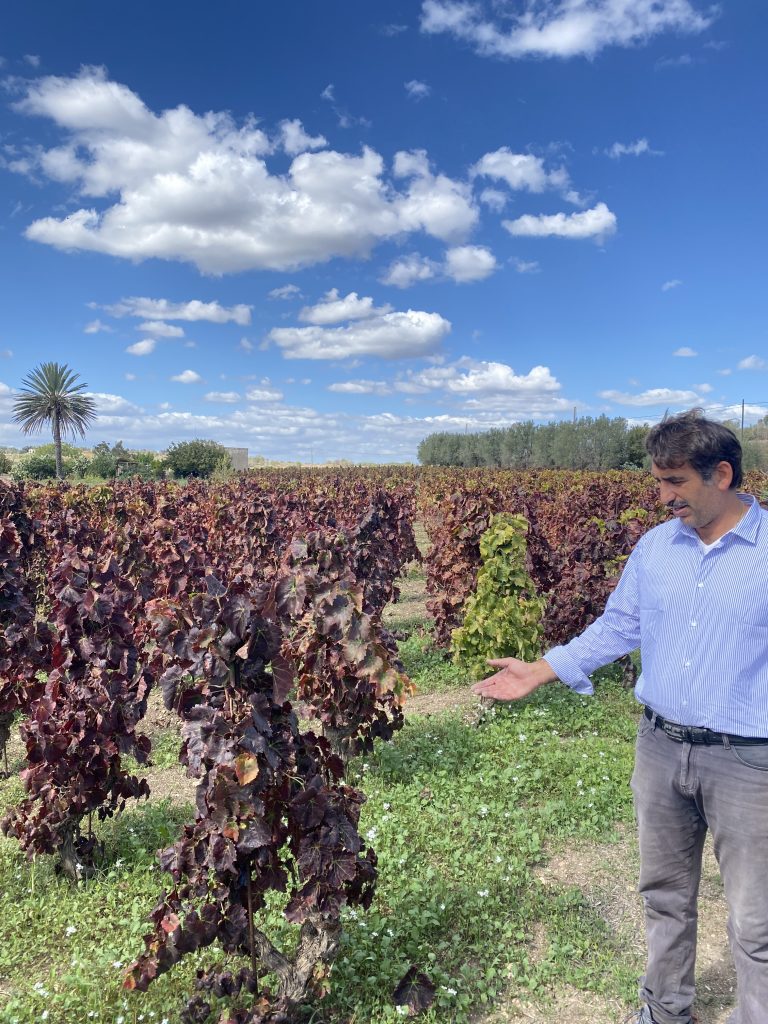
Located in Contrada Buonivini—“the place where you make good wine”—his vineyard sits near the Natural Reserve of Vendicari. Pachino has over 2,000 years of winemaking history, and Turi works to honor it. He cultivates bush vines, follows the lunar calendar, and relies entirely on manual labor. His most trusted tools? A hoe and shears, just like his grandparents before him.
Beyond vineyards, his farm includes wheat, olives, and fruit trees, embracing a mixed-farming approach. He focuses on traditional methods and a deep understanding of the land. His wines—Catarratto (“Mantiddatu”), Nero d’Avola, Pignatello, and Frappato—are structured, food-friendly, and expressive of their terroir. His Futurism-inspired labels are a nod to early 20th-century Italian art and are instantly recognizable to those who seek out his wines.
The Journey to Winemaking
Salvatore officially launched his project in 2018, determined to bottle wine from his wife’s family land. “I’ve been working these vineyards for at least 23 or 24 years,” he says. His first bottling was just 1,000 liters of red, later expanding to include a Catarratto white, a Syrah rosé, and the distinctive Moscato Ligorosa and Per Sempre—all expressions of southeastern Sicily’s terroir. His family also produces olive oil, almonds, wheat (for pasta and flour), and jams, with a small vegetable garden supporting their self-sufficient approach.
Pachino’s winemaking has always been small-scale, with no cooperatives or mass production. “The largest producers here might have 50–60 hectares. I am among the smallest,” he says. One of the few still championing the Pachino DOC subzone, he continues to bottle under this designation, preserving its legacy despite its declining use.
The Vineyards and Terroir
Turi’s farm covers 13–14 hectares, with about seven planted to vines. The rest is almonds, carob, olives, and wheat. “The vineyards are the heart of everything,” he says. The land, 20–45 meters above sea level, is mostly calcareous and covered in white stones. “Some areas are so white and reflective in summer that you can’t look at them too long,” he notes.
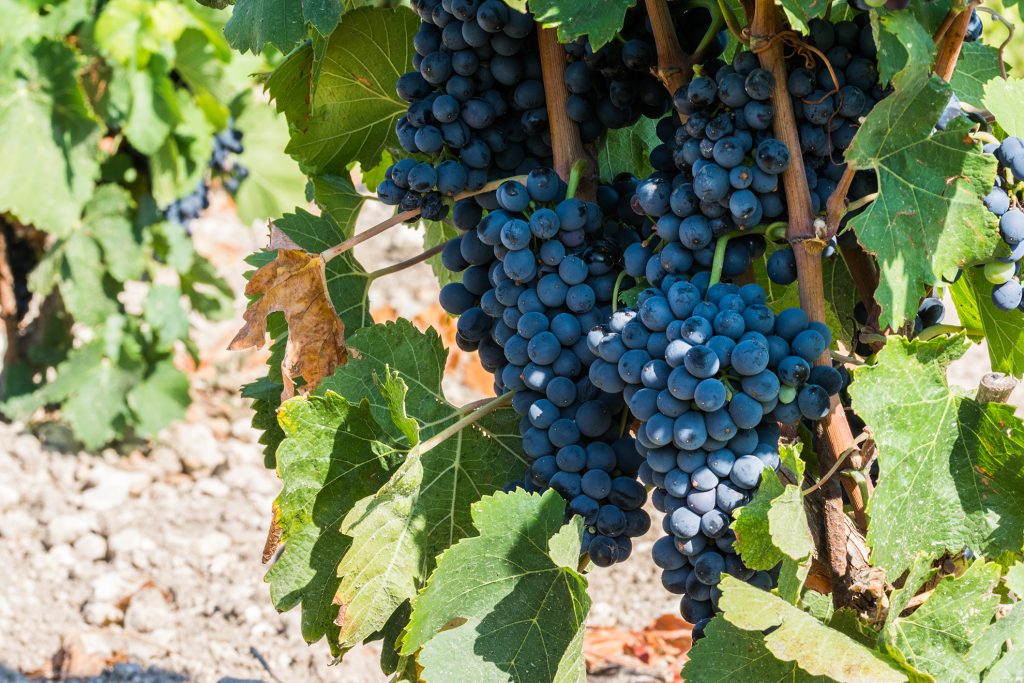
Soil composition varies with elevation—clay-rich in the valleys, drier and rockier higher up. Higher-altitude soils reduce yields but enhance structure and acidity in his reds and golden-hued whites. His vines range from two to 35 years old
Working in the Vineyard
“All work, from pruning to harvesting, is done manually,” Turi says. He shuns chemical fertilizers, using only locally sourced organic manure. Sulfur and copper are his only treatments against disease. Despite a positive view of biodynamics, he finds its full application impractical. “Biodynamics requires an organizational structure I don’t yet have,” he admits.
He’s skeptical of organic certifications. “I follow organic principles but dislike the idea of private associations certifying my work,” he explains. Instead, he builds trust by welcoming clients to his vineyard and cellar, offering transparency firsthand.
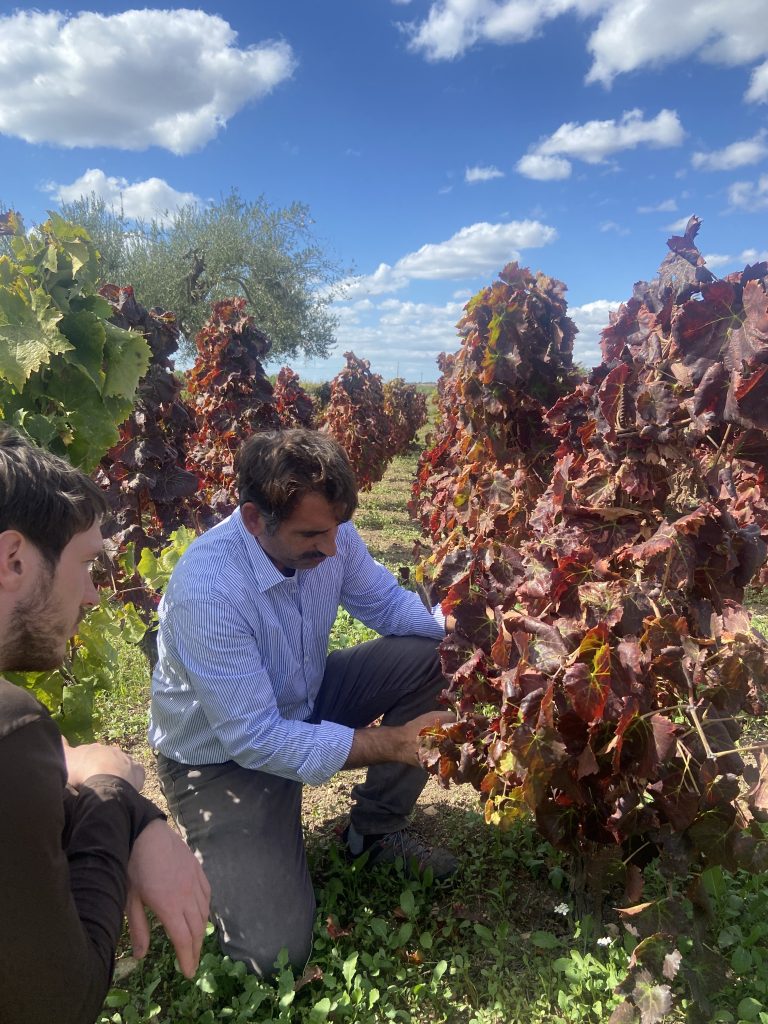
Turi’s vineyards require intensive manual work. The narrow rows prevent large machinery, so he uses a walking tractor, rotary tiller, and hand tools, tending each vine individually—a month-long process. Pruning, green pruning, and sulfur/copper treatments are done by hand, with manure spread by wheelbarrow. “It’s demanding, but it’s the only way to respect the land,” he says.
Harvest
Harvest is done entirely by hand. Grapes are picked into small crates, quickly transported to the winery, and sorted again before processing. “We decide the harvest date through both analysis and tasting,” Turi says. Crew size varies—four workers for Syrah rosé, up to eight for whites, and Nero d’Avola. Harvest runs from August (rosé, whites) to mid-September (Nero d’Avola), though some years extend into October due to climate shifts.
Winemaking and the Cellar
In the winery, grapes are carefully sorted. Whites ferment for about five days, reds for seven, both at controlled temperatures. Whites age in cement tanks, reds in steel. “We avoid wood aging to preserve freshness and varietal character,” Turi says. Before bottling, the wines undergo coarse filtration at five microns to remove solids, then are stabilized with minimal sulfur dioxide. Bottling runs from March to June—rosé first, then white, then red.
Despite new technology, Turi follows traditional methods. “Most producers here have always worked this way,” he says. Temperature control, now standard, was once managed by cooling tanks with water.
Climate Change and the Challenge of Dryness
Pachino’s climate is becoming increasingly extreme. “This year, maybe 150 millimeters of rain have fallen—basically nothing,” Turi laments. With summer temperatures soaring to 46–47°C, vines struggle. “Above 32–33°C, vines shut down to conserve water. Irrigation will sooner or later become increasingly widespread and essential.” Still, the economic and environmental costs are significant. Salvatore emphasizes that irrigation, when allowed, is strictly a “rescue practice” under DOC rules, not a means to boost yields artificially.
Despite the challenges, the vines show resilience. “This year, my Catarratto produced more than last year,” he says. “I have no idea where the vines found the water because there’s no irrigation. It might be because they’re young—around seven years old—but all the bunches were full and juicy.”
His wines, shaped by Pachino’s terroir, continue to gain recognition. “I’m happy people enjoy them,” he says. Looking ahead, he’s expanding his vineyards and developing new wines, including Grecanico and possibly Trebbiano.
