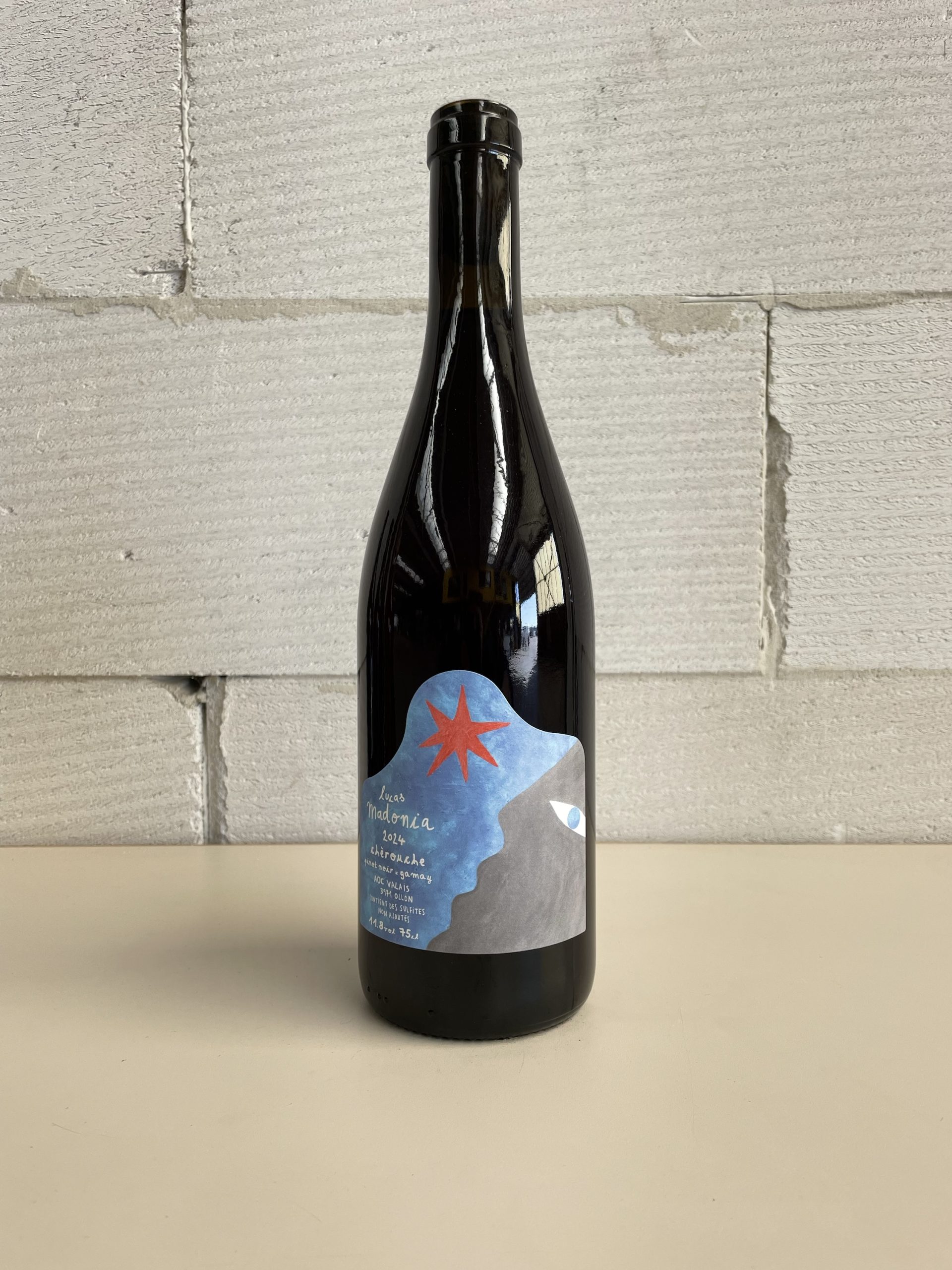
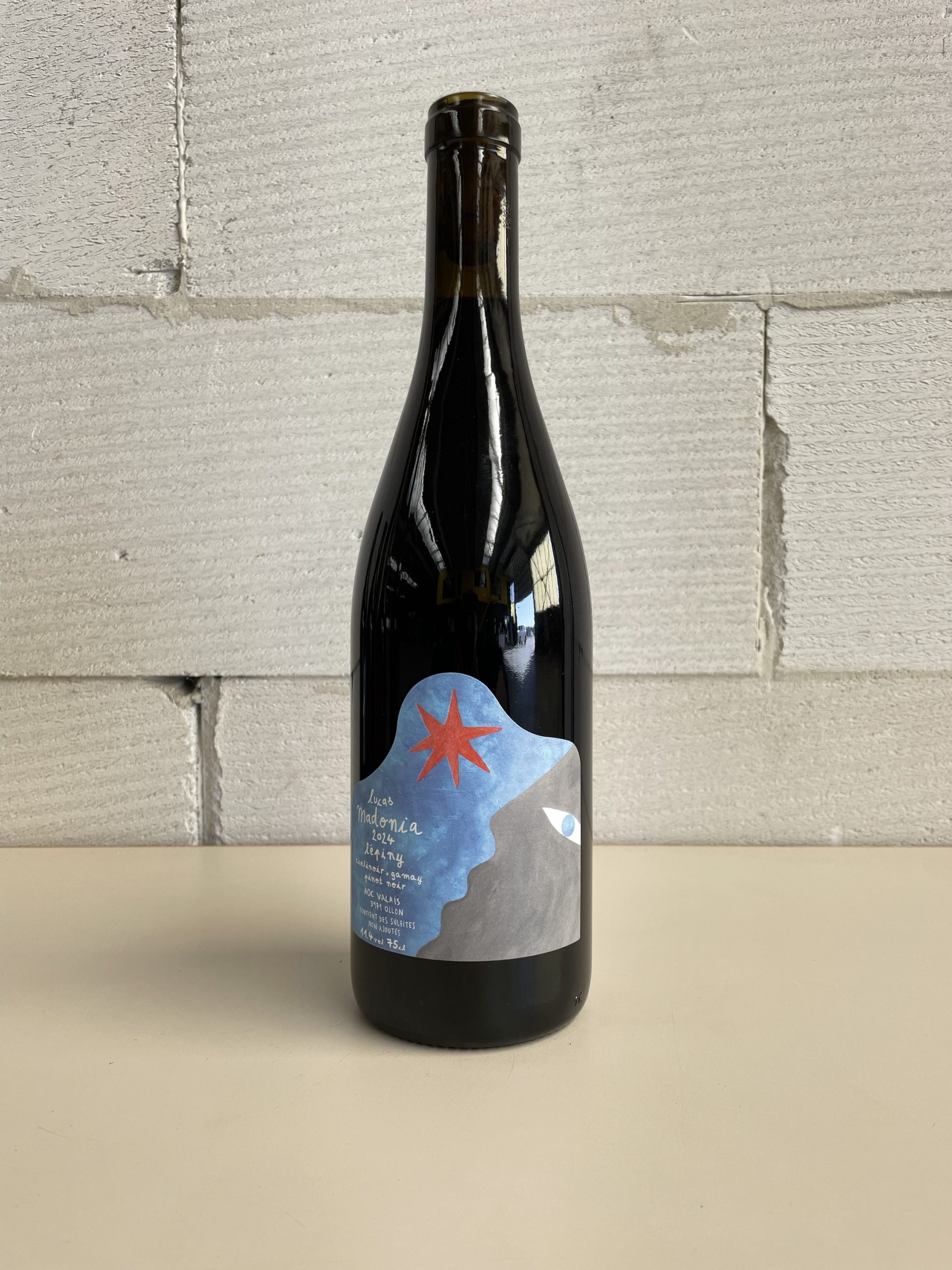
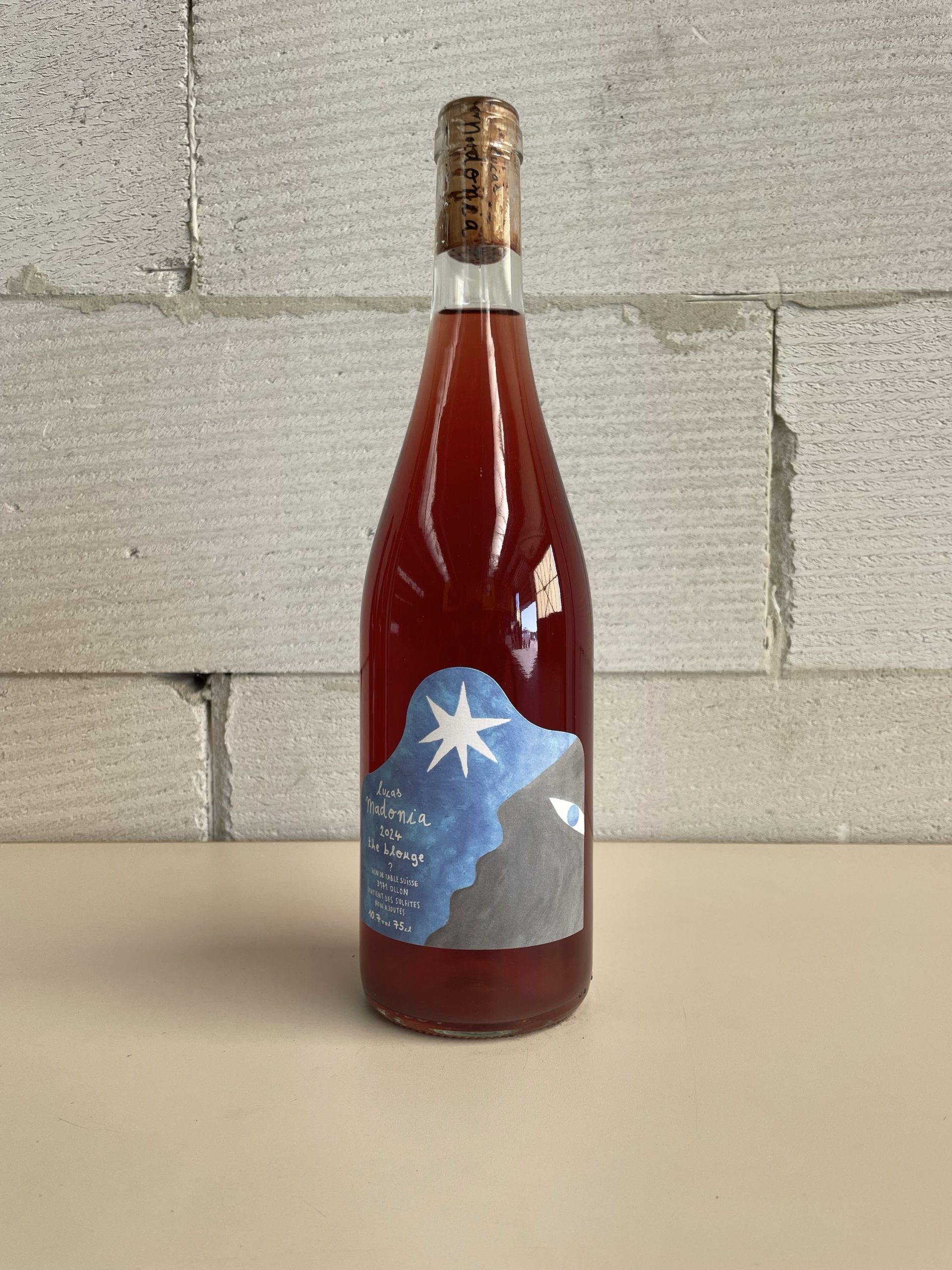
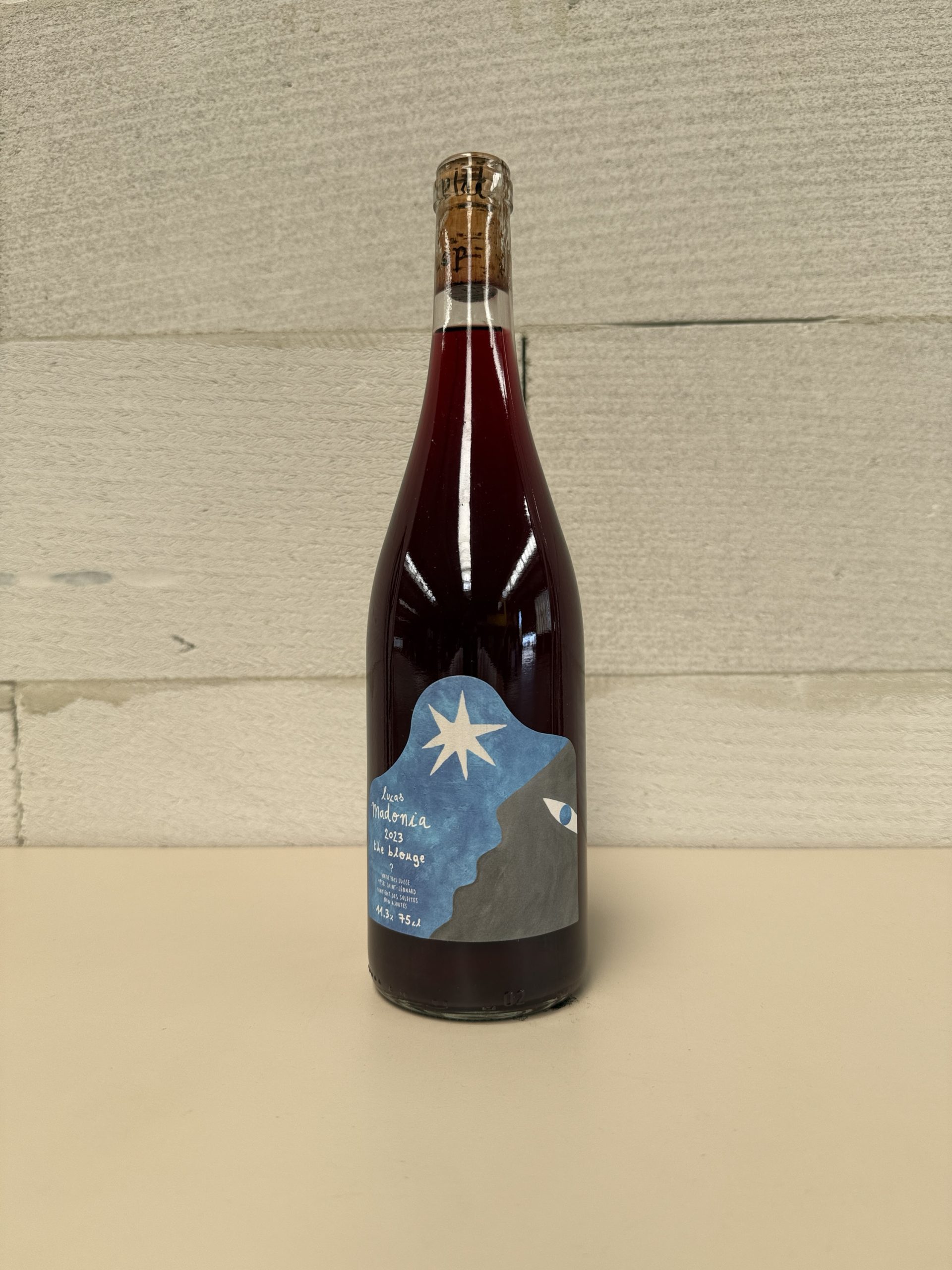
Origins
Growing up, Lucas’s house sat literally among the vines. His father’s friends were working in the vineyards and when adolescence arrived with no clear direction, viticulture offered something more than a career. “It became logical to start working with my hands in the vines. It was kind of the obvious solution, especially if I wanted to stay independent. It was mainly about being free from authority.”His first formal training came at Domaine de la Cras on the outskirts of Dijon, working under Marc Soyard, where he absorbed the Burgundian precision and respect for terroirs and “climats”.
Travel followed — harvests in Australia and New Zealand — before he returned to Europe and found his way to Pupillin in the Jura, spending several years with Tony Bornard. It was there he learned to trust indigenous yeasts and let the cellar breathe, a hands-off philosophy that would come to define his approach. In 2021, aged 26, he set off on a road trip through Switzerland. Passing through Valais, he stopped at Domaine de Chèrouche: “I visited the Chèrouche estate and tasted wines that I’d never encountered elsewhere. As a young consumer, I really loved small, light, natural reds at around 11% alcohol, very vibrant fruitiness.” Within months he had relocated entirely.
“I didn’t come here with a plan, but when I saw the vineyards, the light, and the altitude, it became clear there was something to be done.”
Since 2023 he has been joined by Ariane, his partner, who works alongside him every day. What began as entirely his vision is gradually becoming theirs.
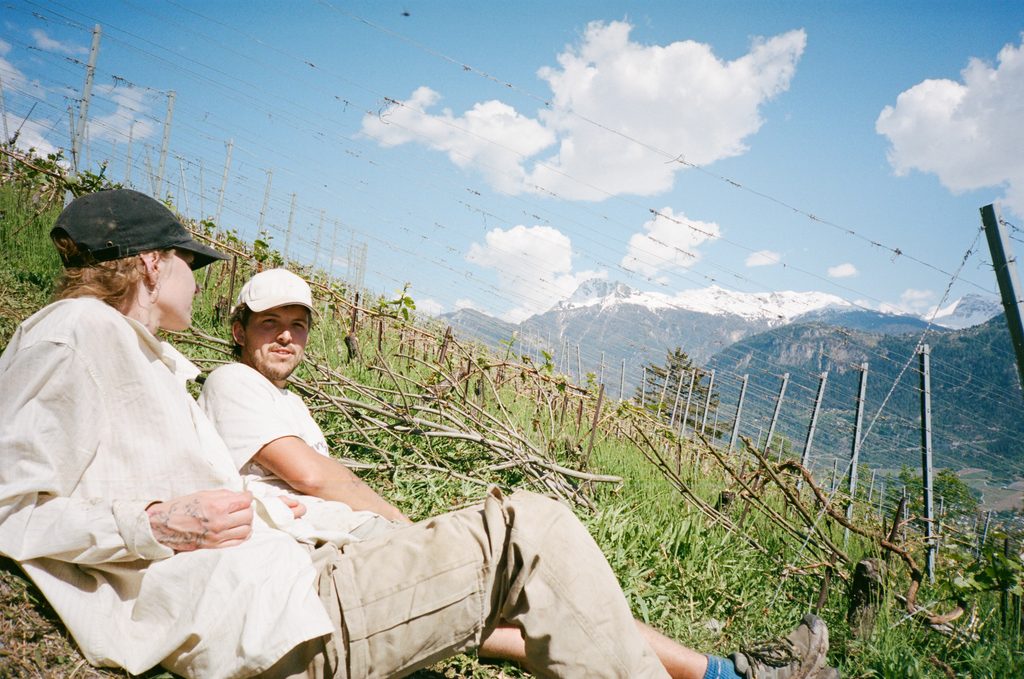
Ariane and Lucas taking a break in the Savagnin parcel of the cuvée “Bahian”
The Land
The Valais is a dramatic alpine valley, carved by the Rhône River as it storms through 45 kilometers of steep, terraced vineyards. Jagged schist and limestone pierce the slopes, creating a raw, mineral landscape.
The Valais’ natural winemaking has been shaped by pioneers like Domaine de Chèrouche and Mythopia. Both transformed depleted vineyards into biodiverse ecosystems, highlighting the nuances in the terroir of the Valais.
In a region where roughly 90% of production still passes through cooperative bulk producers, what Lucas does is radical. The conventional methods in the Valais do not even fall under any European Union rulings. More non-native varieties are allowed to be cultivated and more chemicals can be used. We even witnessed helicopters spraying weed-killers and copper sulfate over the terraces — an uncanny sight, as if taken straight from a dark science fiction film.

Schist formation above the Lépiny & Chérouche vineyards.
Lucas’ Vision
His vineyards climb to 800 meters, facing full south, delivering minerality, freshness, and purity to his wines. Lucas separates parcels meticulously, even within the same variety, to express distinct terroirs transparently: “I want people to taste the difference in the soils. For me, this is essential if you really want to create something exciting and special.”
Lucas’s viticulture is thoughtful and pioneering yet pragmatic for the region’s standard. Rather than a dogmatic adherence to strict methods (organic, biodynamic, or permaculture), he favors intuition and direct observation, guiding vineyards from chemical dependency toward natural balance: “I genuinely save vineyards — it’s more like emergency intervention, not homeopathy.”
The parcels Lucas works are extremely fragmented, often just a few hundred square meters, on steep slopes without access for tractors. All work is done manually. The approach is restorative: vine by vine, he brings exhausted parcels back to health and structure. “I try to extend their lifespan. These vines were pushed to produce too much, too fast. I slow everything down.”
The process of recovery takes time and some hard work. In the first two or three years, Lucas steps back and watches before intervening. Weeds are allowed to grow: after years of chemical use, they likely absorb and store residual compounds in their stems, quietly cleaning the soil before any active farming begins. Only once the land starts to rebalance does he introduce cover crops, reseed selectively, and begin reducing yields by hand.
The transformation Lucas brings to each parcel is visible long before the wine is drunk. Owners who hand over exhausted, chemically dependent vineyards watch them slowly recover — structure returning to the vines, balance returning to the soil.
“When (the previous owners) see that I’m restoring all the vineyards I take over, it gives these parcels renewed value. When I take them, they’re depleted, poisoned with chemicals, poorly managed, and then I put all my energy into revitalising them. And in the end, you can see the results.”
Lucas seems to be spending every waking hour of any day in his vineyards or cellar. He’s genuinely frustrated by the strict “no work on sunday” rule in place in the Valais. He likes going to his vineyards and tending to his vines. He’s also always on the lookout for new parcels, especially Savagnin ones. He is one of the most captivating vignerons we have met. He does not theorise his work through idealistic farming practices. He goes out and pragmatically looks at what needs to be done. The level of winemaking shown by his wines is quite remarkable and gracious for someone this young. Working entirely by hand and by gravity, Lucas manages to capture his aesthetic vision in a genuinely delicious bottle.
How the majority chooses to work: mechanically spraying toxic chemicals, barely protecting themselves.
Harvest
With no machinery capable of reaching the steep, fragmented terraces, every bunch is picked by hand and carried out on foot. Sorting happens directly in the vineyard. Only clean, healthy fruit makes it into the crate. Once in the cellar, reds are destemmed manually on a homemade wooden screen Lucas built himself from spruce. It is low-tech by any measure, and deliberately so.
Yields average around 35 hectoliters per hectare — low, but not fetishistically so. “With 12,000 vines per hectare and no tractor, if I don’t achieve at least 35 hectoliters per hectare, I’d have to shut down. Some people say they make 10 hectoliters per hectare, but obviously, they only have 2,000 vines per hectare with 14 trees scattered through the vineyard, whereas I have 12,000 vines.”
In the Cellar
In the cellar, Lucas practices minimal intervention: manual destemming, gentle infusions in old burgundian oak casks, no sulfur, and gravity bottling. His method echoes the high-end natural winemaking of the Jura and Burgundy — highlighting salinity, minerality, and herbal purity through careful handling: “No pumping-over during maceration. I just push the cap gently, keeping the juice uniform.”
Lucas focuses on clean fermentations and slow extractions. Vinifications are carried out by gravity and he opts for no bâtonnage to be as gentle as possible.
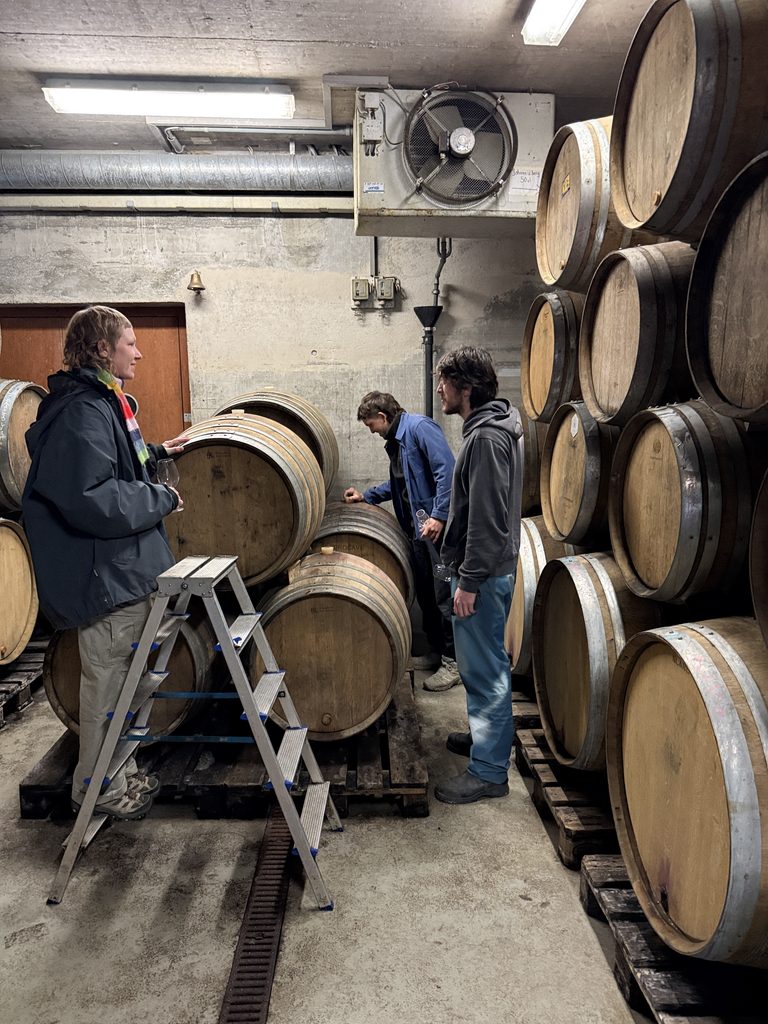


Tasting the phenomenal 2025’s on barrel. The Vaselin press and the handmade spruce Jura-style destemmer.
Though inspired by peers like Domaine de Chèrouche and Mythopia, Lucas maintains his individuality, creating distinct wines deeply reflective of his Burgundian roots and Jura experiences. His wines stand apart, yet he acknowledges the collective spirit that shapes Valais’s emerging wine identity.
“There aren’t many of us making wines this way, and we all produce very different wines — each with our own unique skills and approaches. As for me, my style really originates from my Burgundian roots and my experiences in Jura.”
Like Lucas, we had driven the great motorway in the clouds that races through Valais. With its steep vineyards shooting off the dark schist rock, its imposing terraces, the rushing Rhône and the snowy alps as backdrop, we thought there must be great wines here. We’re delighted to have met Ariane and Lucas and their wines and are proud to import them to the Netherlands.