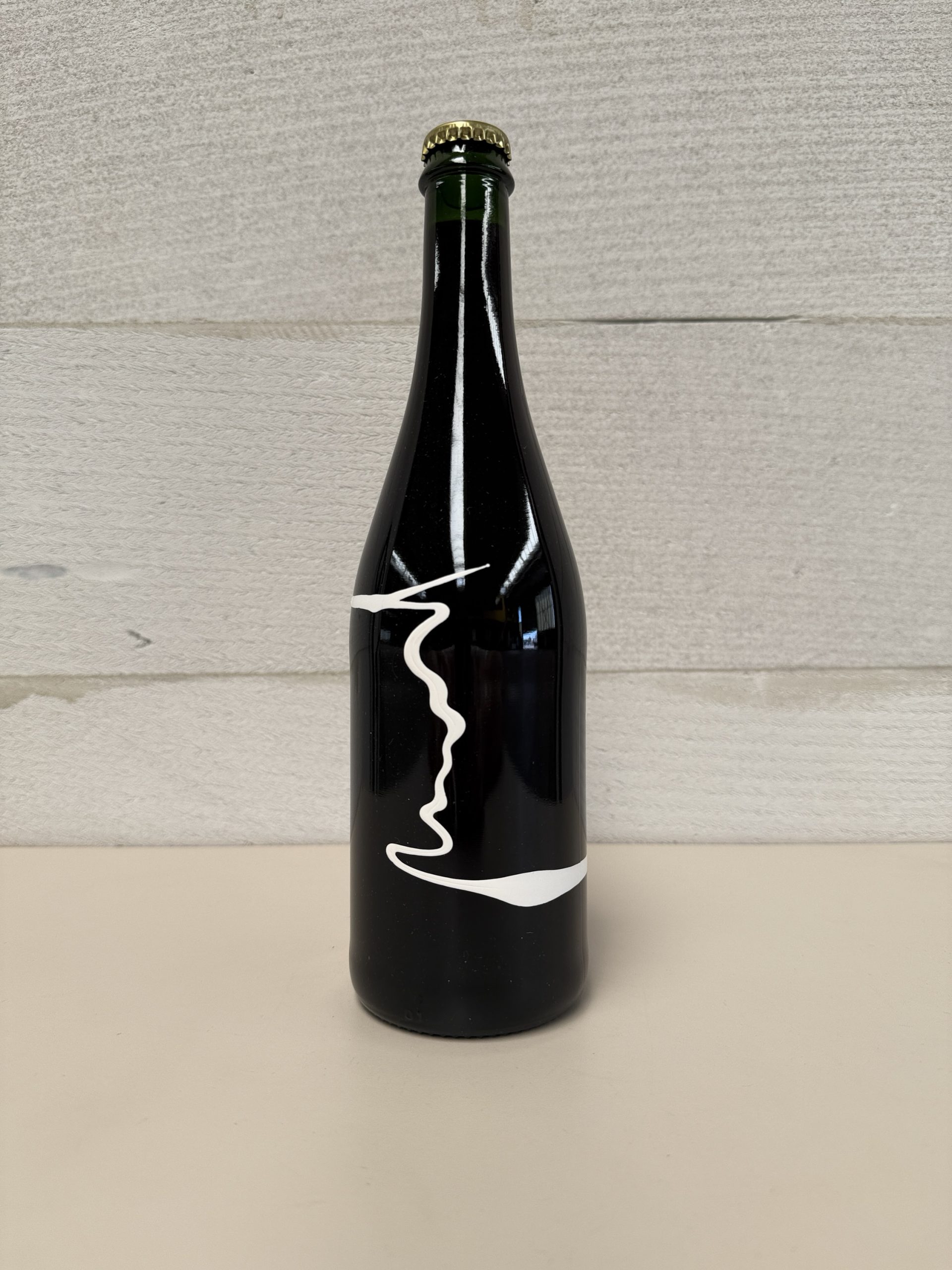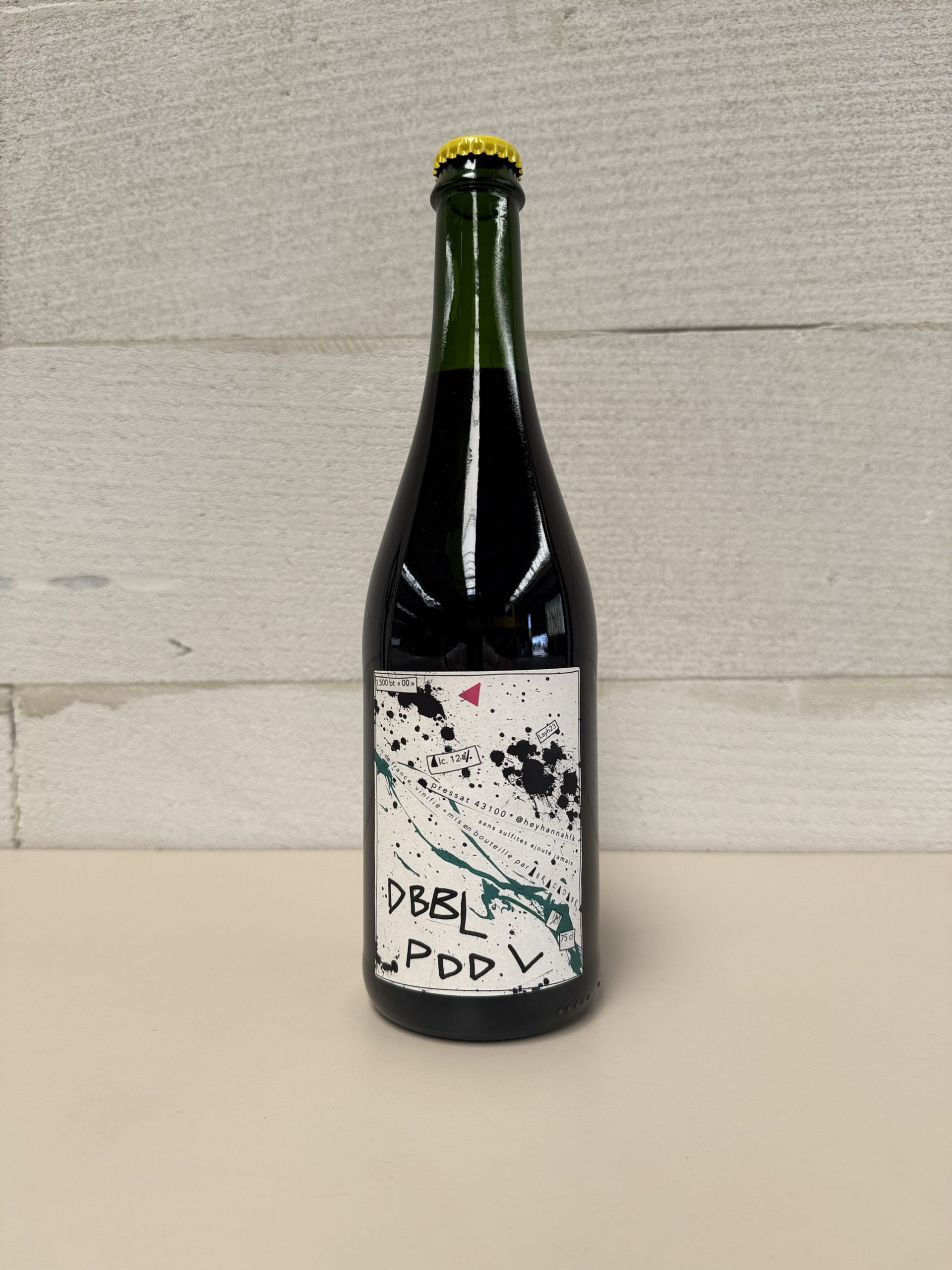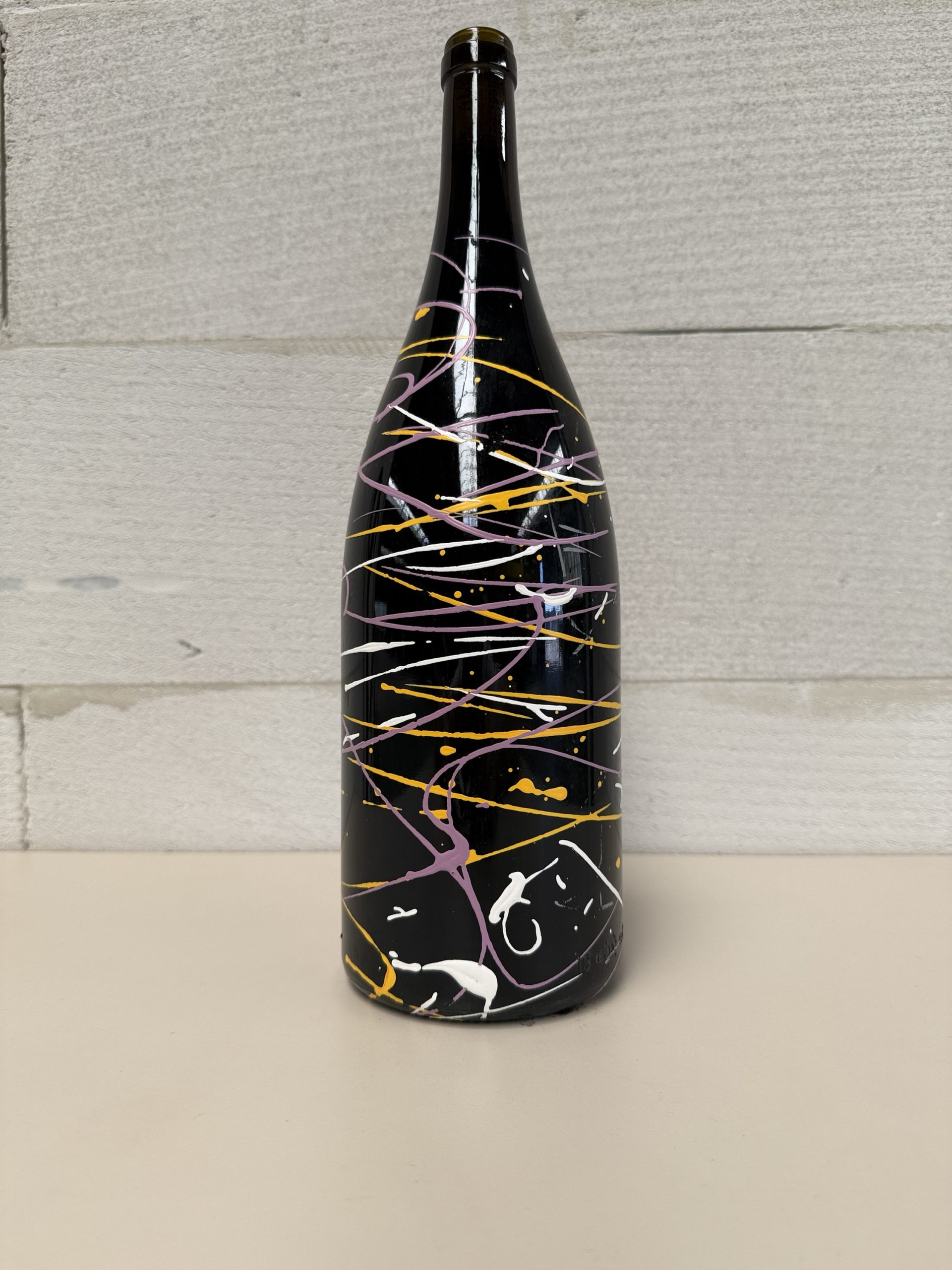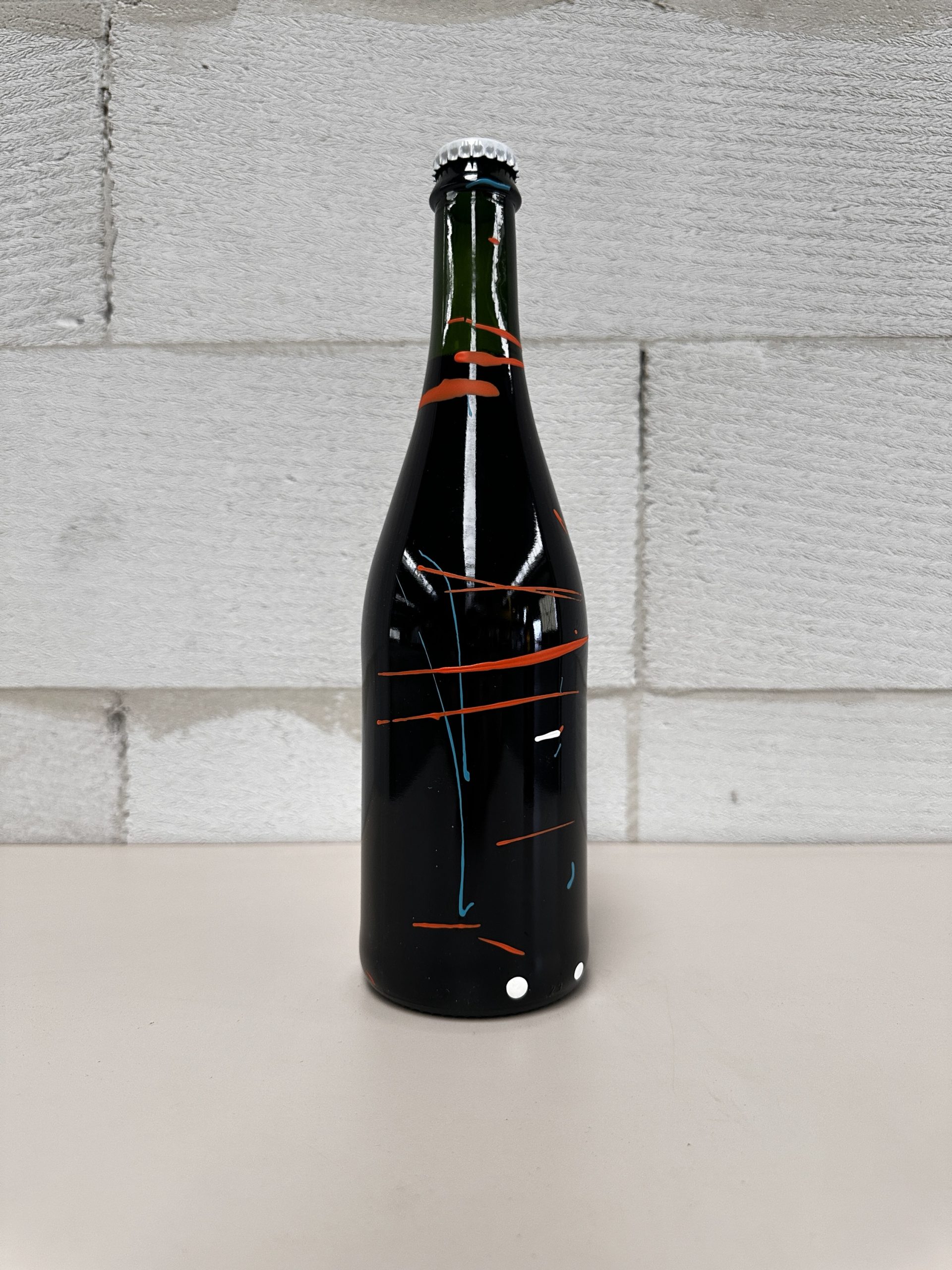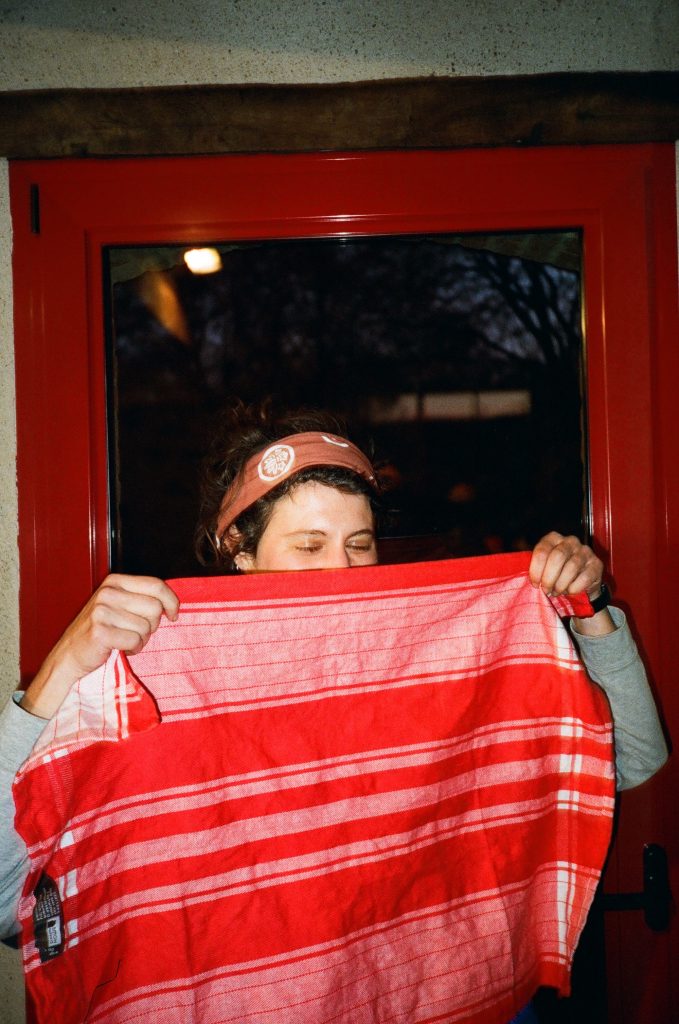
Rather than following a rigid formula, Hannah adapts to what each vintage offers, likening her process to cooking: “I work with what I have. Since I don’t have formal training or a specialization, for me, it’s an adventure. It’s fun to travel, to work with different profiles, to experiment, like cooking with whatever ingredients I find.”
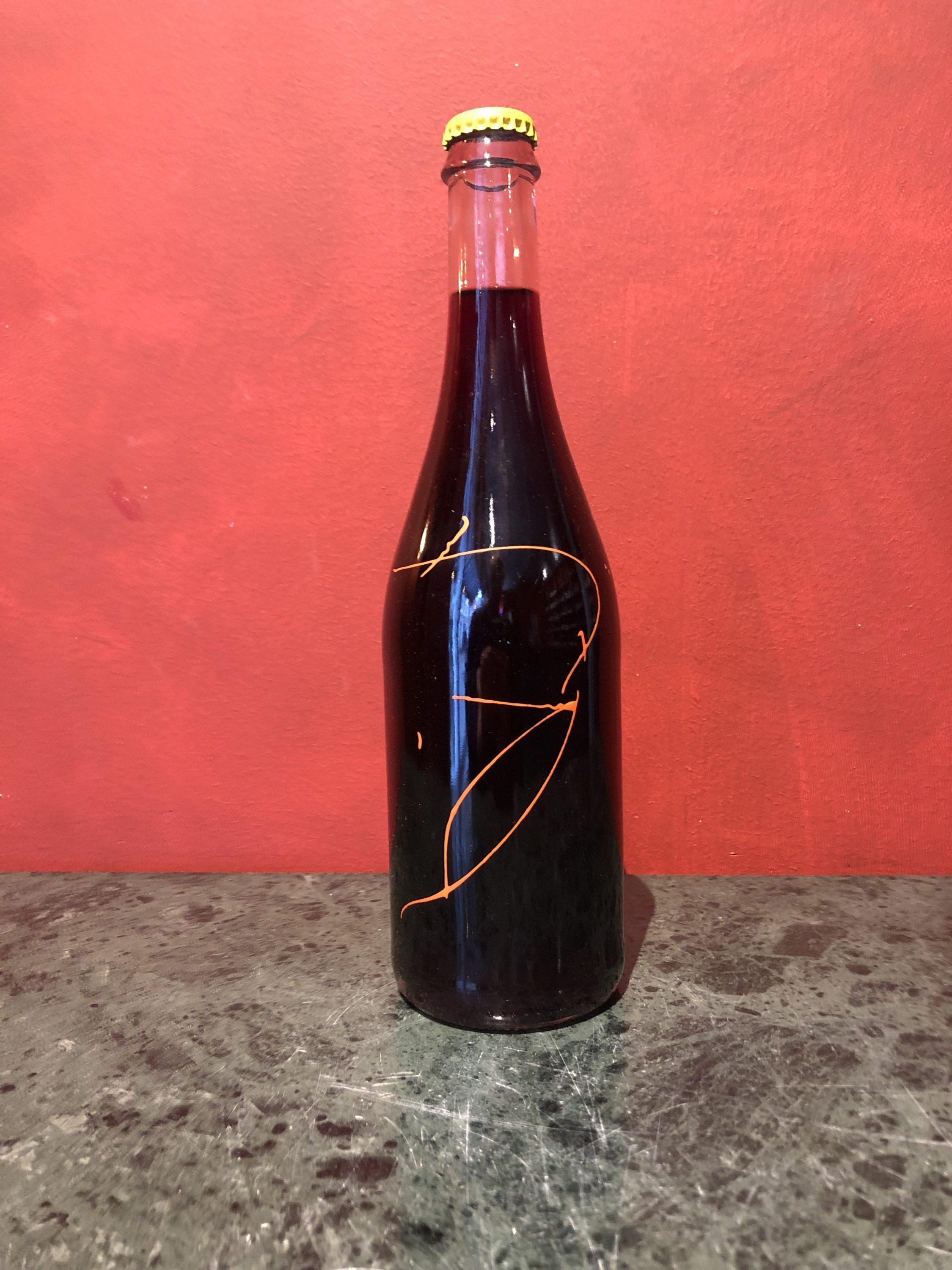
This approach has resulted in a series of distinctive wines, dynamic, expressive, and ever-changing. The small quantities and shifting blends make each bottling feel unique. While no two vintages are the same, her paint-splattered bottles with witty names and crown caps are a constant presence on our shelves. These wines strike a balance between depth and drinkability, suited for celebrations, casual lunches, or simply unwinding with a book.
Journey to Winemaking
Hannah Fuellenkemper never set out to be a winemaker. Born in Germany and raised between the U.S. and the U.K., she earned a master’s in law in Amsterdam before realizing it wasn’t the right path. With a talent for writing (acknowledged by Louis Roederer), she began blogging about food, which eventually led her to wine. Her first encounter with natural wine, through a revelatory bottle of Ploussard, drew her to the Jura, where she knocked on Renaud Bruyère’s door. A spontaneous visit turned into a deep curiosity, leading her further into the world of natural wine.
In 2016, she worked her first harvest with Baptiste Cousin in the Loire, marking the start of her hands-on winemaking journey. She then traveled across France, gaining experience with winemakers such as Manuel di Vecchi (Vinyer de la Ruca) in Banyuls, Sylvain Bock and Gérald Oustric (Le Mazel) in Ardèche, and François Saint-Lo and Jérôme Saurigny in the Loire. In Beaujolais, she worked with Julie Balagny. Each stop deepened her understanding of winemaking’s challenges, from mildew and rot to the realities of farming. By 2019, she had begun making her own wine in small quantities while continuing to learn. She officially launched her label in 2021, starting with just 1,500 bottles, growing to 11,000 in 2023 before scaling back to a more manageable 8,000.
A Cellar and Some Vines in Auvergne
In 2020, Hannah settled in Auvergne, a rugged, lesser-known winemaking region. Historically planted with vines, much of the land was never replanted after phylloxera, and today it is largely used for grain farming. Acquiring vineyard parcels is difficult, yet Auvergne has become a haven for independent winemakers drawn to its raw landscape and freedom from convention.
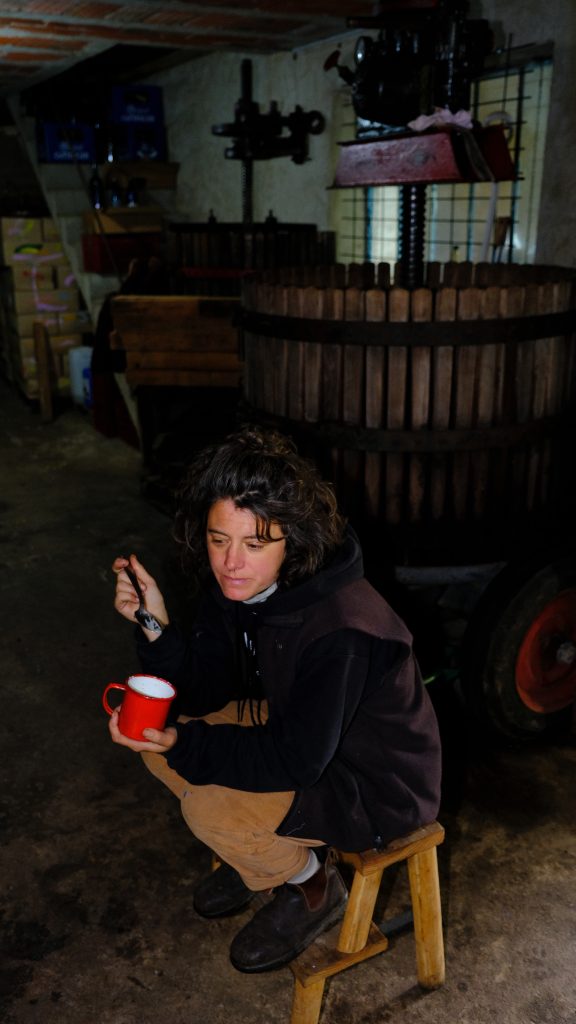
Hannah’s current cellar is in Brioude, about an hour and a half south of Clermont-Ferrand. Forty-five minutes away, she tends a tiny vineyard in Boude, more of a “cemetery” than a vineyard, as she describes it. The parcel itself covers 3 hectares, but with struggling Pinot Noir and Gamay vines, only 0.15 hectares are productive, yielding just 60 liters per year, mostly for friends. She also collaborates on a 0.30-hectare parcel of Gamay d’Auvergne near Volvic with her friend Victor, a former sommelier at Saint Eutrope. They share the workload, with Hannah making the wine while Victor handles vineyard treatments.
Grapes from Elsewhere
As a négociant, Hannah sources grapes from trusted growers, primarily in the south of France, Hérault, Roussillon, and occasionally Spain or Italy. With climate change making sourcing increasingly unpredictable, she prioritizes strong relationships, valuing collaboration over simple transactions. “Every year, some relationships continue, and others change. Some growers treat it commercially, they just call and say, ‘Come tomorrow.’ Others are more engaged, asking about my plans, which parcels might work best, and what alcohol level I’m aiming for. That’s the kind of relationship I want, not just a ‘supermarket’ of grapes.”
Since 2019, she has worked with a variety of grape varieties, adjusting to availability. Early wines included Cabernet Franc and Grolleau from the Loire, followed by Chenin and Gamay from Beaujolais. Since 2021, she has focused on Cinsault, a grape she finds underrated yet versatile. Alongside Cinsault, she works with Grenache, Mourvèdre, Bourboulenc, Barbera, Cornalin, Chardonnay, and Gamay, among others.

Working in the Cellar
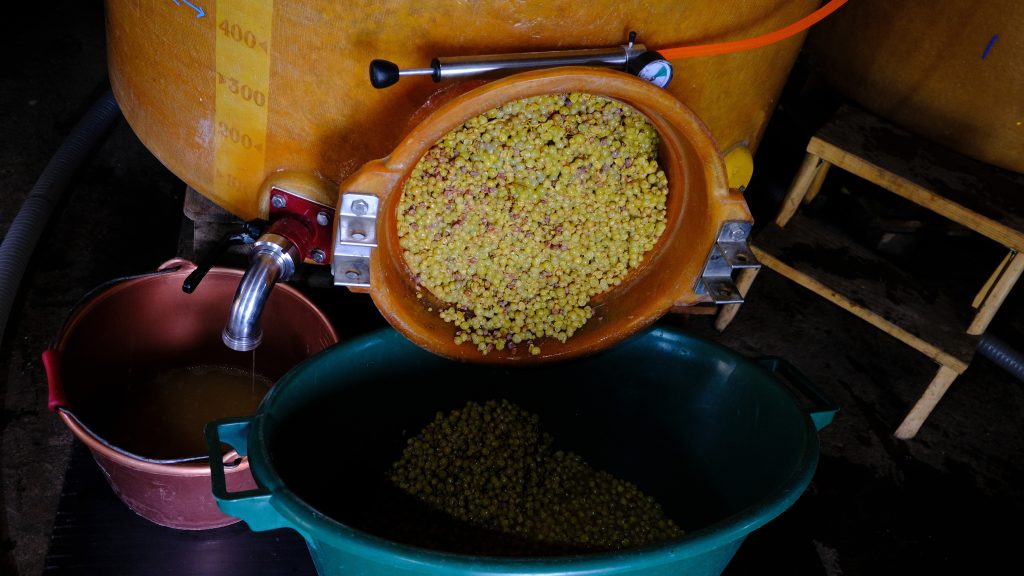
Hannah’s approach is flexible and intuitive, guided by the fruit and the moment. She favors whole-bunch fermentationsbut will destem when needed, working primarily with closed-top vats and semi-carbonic maceration. “I don’t have formal training,” she says. “I just do what I can. I’m not working with the ‘best’ terroirs, so the least I can do is give the wines time.”
Aging is central to her process. She works mostly with fiberglass tanks, releasing wines only after at least a year in bottle, often longer. Instead of a strict annual cycle, she releases wines twice a year, blending vintages as needed. “There’s no real recipe,” she adds. “Just things I like, and if they work, I might repeat them.”
Her wines are natural, unfiltered, and untouched by machinery or chemical interventions. “I wouldn’t even know how to use sulfur if someone handed it to me,” she says. “Does it come in a packet? I have no idea! It just seems more complicated to make wine with manipulations than without.”
Hannah’s production is entirely hands-on. Without a labeling machine, she hand-paints every bottle, each passing through her hands at least four times. While this DIY approach has been part of her identity, she’s now incorporating more traditional labels, though small cuvées and magnums will still be painted. “Call them collectors’ editions or the last wines you can’t put in an ice bucket,” she jokes.
Reflections on Auvergne and the Future
Hannah sees Auvergne as a place of independence. “I don’t know if it’s the region that makes you this way, or if the people who come here already are.” Few local winemakers are originally from the region, most have arrived from elsewhere, drawn by the challenge and solitude.
She acknowledges the increasing challenges of climate change, making sourcing unpredictable. Heatwaves, drought, and frost impact every vintage. “It’s a constant battle. My life keeps getting more complicated as I adapt and find new sources. Competition will only increase.”
As for the future, she remains open-ended. “I don’t have a grand vision. I just want to keep making wine, working with good fruit, and taking my time. That’s enough.” With her operation stabilizing, she’s looking forward to not having to move cellars again soon, making long-term planning easier. We’re excited to see what her future releases bring and are happy to have saved bottles from previous vintages to revisit as they age.