Alexandre’s cellar, a traditional troglodyte cave dug into the tuffeau limestone beneath his vineyard in Noizay, provides naturally stable temperatures essential for his low-intervention winemaking approach.
His methods are intentionally simple and modest; he farms without tractors, working his soils exclusively with horses. This commitment began with his curiosity about traditional farming practices, leading him to take specialized courses in animal traction. He remains one of the few growers in the region to rely entirely on animal power. Alexandre’s wines embody precision, depth, and respect for the local traditions while simultaneously expressing a fresh and youthful interpretation of Vouvray’s untapped potential.
Journey to Winemaking
Alexandre’s path to winemaking was indirect. Until his mid-20s, he studied accounting and worked in office environments. A pivotal moment came during an internship at a winery in Bordeaux, where he experienced vineyard and cellar work for the first time. “I was mostly in the office, but sometimes they sent us out into the vineyard. I had to talk with the cellar master, and I found the whole environment fascinating. It just clicked for me—I realized I didn’t want to be behind a desk. I wanted to be in the vines, creating something tangible.”
In 2013–2014, he enrolled in a Brevet Professionnel (BP) in viticulture, a practical vocational qualification focused on vineyard management, followed by a Brevet de Technicien Supérieur (BTS), a higher-level technical diploma in viticulture and oenology. His first hands-on vineyard experiences came in 2014, working across Indre-et-Loire and Loir-et-Cher.
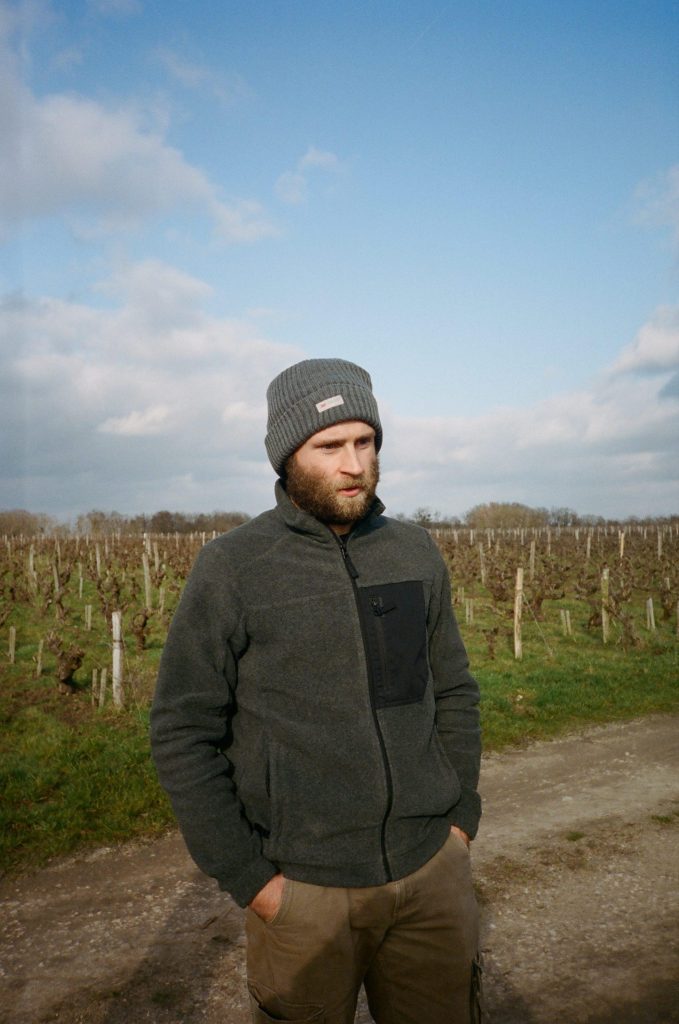
During these formative years, Alexandre developed an interest in traditional viticultural practices, particularly animal traction. He met Philippe Chigard of La Table Rouge, a renowned expert in working vineyards with horses, who became both a mentor and close friend. Alexandre’s mare, Doline, now grazes alongside Philippe’s herd of Bretons, Comtois, and Percherons.
Alexandre began making wine as a négociant in 2017 using purchased grapes. In 2018, he acquired his first vineyard parcels and started producing wine from his own vines. His decision to focus on Vouvray was both intuitive and well-timed: “I’m originally from Amboise, which is just next door. Working in the region allowed me to connect with local vignerons, and through word of mouth, I found my first parcels. That’s how it all came together.”
Vineyards
Alexandre has deliberately expanded his domaine over time, beginning with just 50 ares in 2018 and reaching a little over 3 hectares by 2020. In 2023, he acquired an additional 4.5 hectares of organically farmed Chenin Blanc vines located directly above his cellar in Noizay. Today, his domaine comprises roughly 9 hectares, including the prized Gamay parcel Maluseaux in Limre, planted in 1967, and a small plot of Côt.
His Chenin Blanc vineyards are divided between two distinct soil types: clay-silex (flint) and gravelly clay. Alexandre explains, “I use the clay-silex parcels for my sparkling wines—they’re lighter and bring mineral tension. The gravelly clay gives more weight and acidity, better suited to still wines.” Vouvray’s terroir is marked by tuffeau limestone subsoils and diverse clay surface soils. Alexandre emphasizes this connection, remarking that, “There is a long-established harmony between Chenin and this terroir. The limestone subsoil brings real freshness to the wines.”
The Maluseaux Gamay parcel was deliberately selected for its unique massal selection vines (planted from cuttings sourced from multiple mother plants rather than a single clone) chosen specifically to ensure lower yields and optimal ripeness without relying on interventions like chaptalization (the addition of sugar to fermenting wine). “When I first started, I was looking for very specific Gamay vines. I wanted an early-ripening selection on argilo-limoneux (clay-silt) soil because I had tasted wines from similar conditions made from old massal selections, and they were stunning.”
In 2024, Alexandre added Grolleau vines on deep clay-silex soils rich in chailles (hard silica stones), located on the south-facing slopes of a lieu-dit called Le Grand Poids.
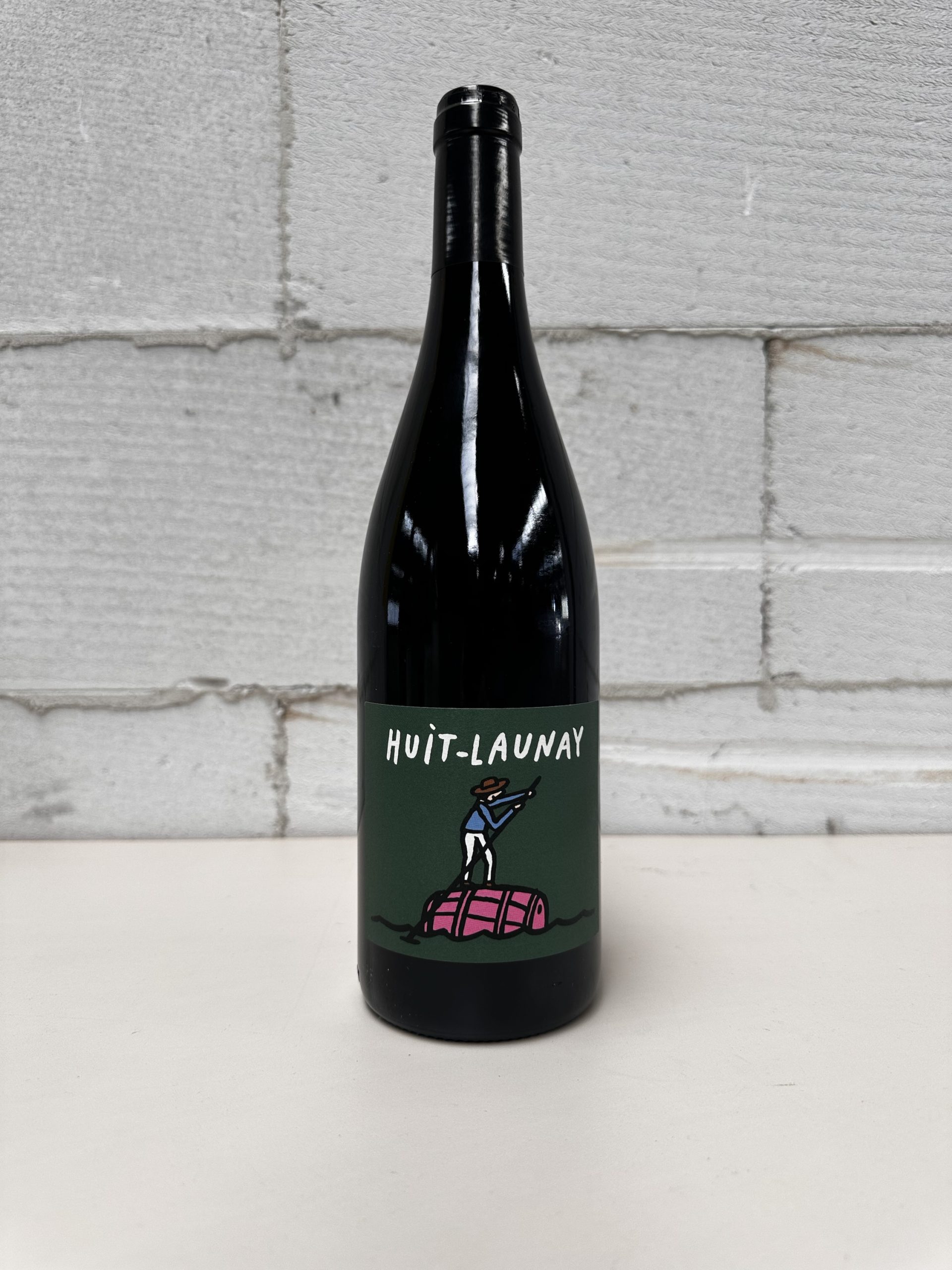
In addition to wines from his own parcels, Alexandre occasionally produces wines under the name ‘Huit-Launay,’ made from purchased grapes. Each vintage of Huit-Launay is unique, varying dramatically in style from year to year. Past vintages include a white Chenin Blanc in 2017, a sparkling Gamay rosé in 2019, a vegetal, lighter-bodied red in 2021, and a medium-bodied red blend of Côt and Grolleau in 2023.
Working in the vineyard
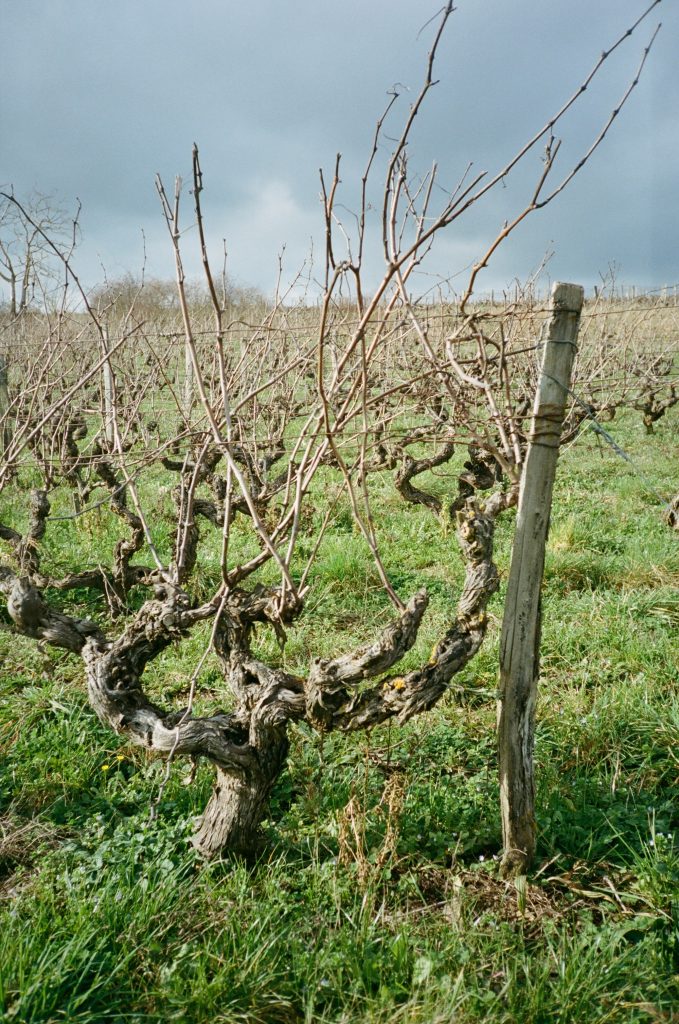
Alexandre manages his vineyards with meticulous care, emphasizing natural practices that encourage balance and vine health. All his parcels are maintained with permanent grass cover to boost biodiversity and protect the soil structure. He is committed to avoiding soil compaction, applying sulfur and copper treatments exclusively with a backpack sprayer, a physically demanding yet gentle practice.
He initially strictly adhered to biodynamic methods, preparing horn manure and silica sprays and dynamizing them by hand. However, as his vineyard area expanded, he found maintaining this rigorous schedule unsustainable. “I used to dynamize by hand—it took an hour each time. Once I expanded the vineyard, it became too demanding, but now that things have stabilized, I’m considering bringing it back.”
To further protect soil integrity, Alexandre carries out all cultivation using animal traction with his mare, Doline. Soil work remains consistently shallow, approximately five centimeters deep, to preserve both soil health and structure. “Working the soil with a horse is precise and gentle. It respects the vineyard’s natural rhythms,” Alexandre explains. While he once offered horse-plowing services to other growers, Doline now works exclusively in his own vineyards, underscoring his commitment to attentive, sustainable farming.
Harvest
Harvest timing is Alexandre’s greatest challenge. “It’s not easy,” he admits. “2019 was perfect—we had acidity and lower alcohol with phenolic maturity. But 2018 was very challenging. We had high alcohol levels without proper maturity. You must approach the limit of ripeness, but if you go too far, you risk 15% or 16% alcohol, which is tough for white wine.”
Harvesting is entirely manual, with grapes carefully picked into small crates to avoid premature crushing. Sorting is meticulous and carried out directly in the vineyard: noble rot is embraced for its aromatic complexity and textural richness, while sour rot is carefully removed. Alexandre explains, “I love noble rot—it brings something unique to Chenin Blanc, a real signature when well-integrated.”
He harvests each vineyard in a single pass, carefully selecting grapes at their optimal balance, avoiding multiple harvests.
Cellar
The cellar at Alexandre’s domaine is an essential element of his winemaking philosophy. Carved directly into the tuffeau limestone beneath his vineyards in Noizay, the traditional troglodyte cave naturally maintains stable temperatures and humidity levels throughout the year, significantly reducing the need for temperature regulation and other interventions.
Grapes are hand-harvested into small crates to prevent premature crushing and oxidation, then undergo direct pressing using a pneumatic press. Alexandre emphasizes the benefits of gentle, long press cycles: “Since I use a pneumatic press and harvest carefully, the juice is naturally clean, so débourbage (settling) rarely removes much.”
Fermentation and aging predominantly occur in old oak barrels, ensuring minimal oak influence on the wines. Alexandre clarifies, “I only use old barrels—nothing new. My goal is to let the wine express the vineyard, not the oak.”

He is careful about oxygen management, preferring to transfer the juice into barrels during active fermentation. “At this stage, the wine isn’t sensitive; in fact, the yeast needs oxygen to ferment healthily. It’s an ideal time for moving the wine,” he explains.
Alexandre practices minimal intervention in the cellar, with no fining or filtration. Sulfur use is restrained, typically a small addition at pressing to protect native yeast populations, followed by a minimal dose at bottling. He elaborates, “I like adding a very small amount of sulfites at the start. It secures the healthy yeasts for natural fermentation. Most of the sulfur gets consumed during fermentation and often doesn’t show up in final analyses, but I think it makes a significant difference in wine stability and purity.”
Occasionally, Alexandre encounters challenges related to volatile acidity, particularly in his Chenin Blanc. He explains that this is sometimes misunderstood by the appellation committee, which assesses wines shortly after bottling, when they may not yet fully express their true character. Alexandre recalls, “In 2022, my Chenin cuvée wasn’t approved by the committee due to volatile acidity detected immediately after bottling. But after resting a bit, the wine became beautifully balanced. I believe the committee should reconsider the timing and criteria for evaluation to better reflect the natural evolution of wines.”
For red wines, particularly his Gamay, Alexandre adopts a semi-carbonic maceration method using whole bunches. Maceration typically lasts between two and three weeks, providing structure and age-worthiness. Alexandre reflects, “I like using whole bunches for Gamay. Even if the stems give slightly green tannins at first, they’re beautiful tannins for aging. This approach creates a Gamay with tension, structure, and longevity—it’s a great way to convince people about the potential of Loire Gamay.”
Recently, Alexandre began experimenting with skin-contact Chenin Blanc. The initial trials involved a 15-day maceration in tank, resulting in unexpectedly vibrant and intriguing wines. “It was a small volume, but the aromatics really impressed me—mentholated, fresh, entirely new. A pleasant surprise,” he shares. Encouraged by these results, he intends to continue exploring orange wines in upcoming vintages.