Journey to Winemaking
Filippo grew up among his parents’ vines and began tending them as a teenager. When he founded Alla Costiera in his early twenties, he wanted to make wine that reflected his land rather than the market. The name, “to the coast,” recalls the area’s ancient geological history, when these volcanic hills rose from the sea millions of years ago. While much of Veneto went the way of forever more volume and technical precision, Filippo turned instead to organic farming and natural fermentation, which had become quite rare at a local level. His early experiments with col fondo bottlings and skin-contact whites defined the style that now anchors the estate. Two decades later he and his wife Elisa still run the cellar and vineyards themselves, keeping production small enough that every vine and fermenter can be handled directly.
Vineyards
The winery farms about five hectares around the family farmhouse in Vo’ Vecchio on the western side of the Colli Euganei, with additional parcels on the volcanic slopes of Monte della Madonna in Teolo. The Vo’ Vecchio plots sit on pale, limestone-marl soils known as terreni bianchi; the Teolo vineyards rest on dark trachite, a dense volcanic rock typical of the area. The contrast between these two soil types shapes much of the range. Marl brings breadth and fruit, while trachite gives structure and minerality.
Old vines are central to the estate. Some Friulano (Tai) and Merlot plantings are more than seventy years old, producing small, thick-skinned berries with naturally concentrated juice. Other blocks are mixed field blends of Garganega, Moscato Giallo, Pinella, Glera, and local varieties rarely seen today. The reds include Merlot, Cabernet Franc, and Carmenère, long established in the Euganean Hills. Training systems vary from Guyot and cordon to the old free-standing silvo method for ancient vines. All vineyard work is manual, from pruning to harvest, often in several passes to capture each variety at the right ripeness.
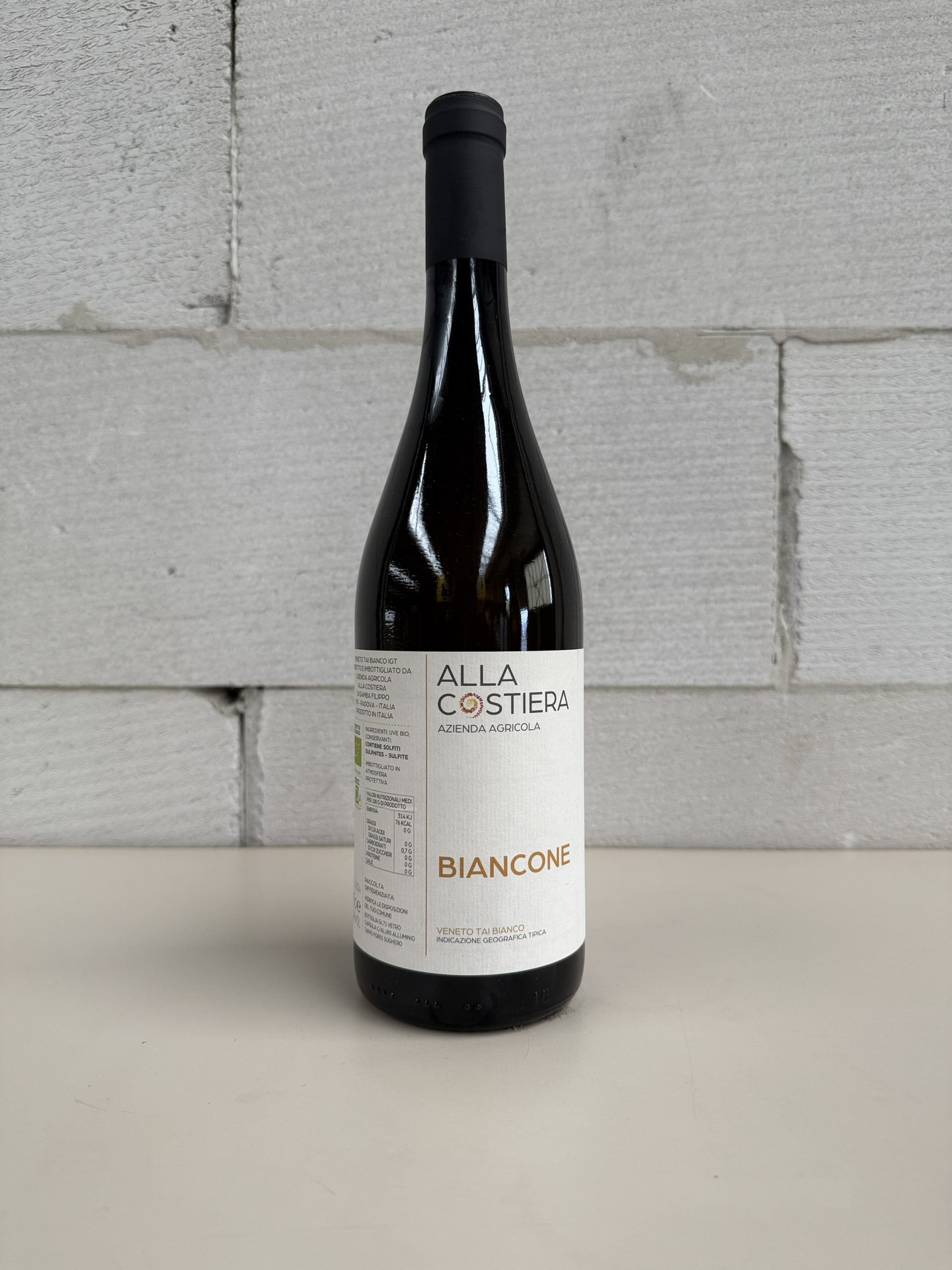
Filippo now vinifies by soil type, producing wines such as Terreni Bianchi, Via Nina, and Biancone from the marl, and Trachite white and red from the volcanic side. The limestone plots yield wines with round fruit and saline lift, while the volcanic sites give vertical, taut profiles with smoky minerality.
Farming Practices
Alla Costiera has been certified organic since its founding. No synthetic fertilizers, herbicides, or pesticides are used. Biodynamic composts and teas have been applied since 2005 to maintain soil vitality and vine balance. Cover crops and native grasses grow between the rows, and biodiversity is encouraged rather than controlled. Vine yields are kept low, usually 1.5 to 2 kg per vine for older plants. Many of these vines remain productive well past the average lifespan, which Filippo attributes to the absence of chemical stress and the vitality of living soils.
The estate is part of VinNatur, Italy’s leading natural-wine growers’ association, whose standards permit only minimal sulfite additions and forbid other additives. Every decision in the vineyard follows this principle: intervene less, observe more. When Filippo discovered an abandoned parcel of ungrafted old vines, he adopted it to preserve its heritage rather than see it uprooted. This sense of stewardship, cultural as much as agricultural, defines the farm’s ethos.
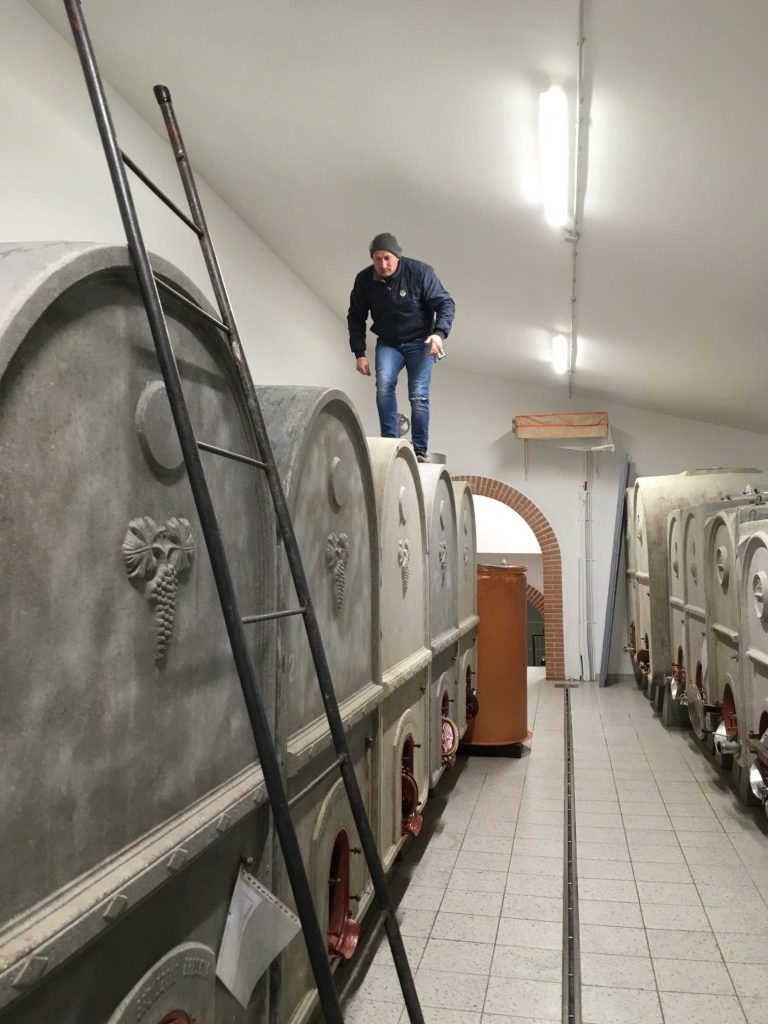
Filipo Gamba on top of his concrete tanks.
Philosophy
Gamba calls Alla Costiera an azienda agricola biologica artigianale—an organic, artisanal farm—and that description sums up his approach. The goal is not polish but authenticity. Wines vary with the season, each vintage expressing its conditions without correction. Local varieties and traditional methods remain central, approached with curiosity and precision rather than nostalgia.
For Filippo, wine is both work and community. He often says a glass of wine should be “everyone’s right,” so he keeps his bottles fairly priced and made for the table, not the cellar. His idea of quality is rooted in honesty rather than refinement: wines that are alive, digestible, and expressive of their place.
Cultural continuity also matters. While he focuses on wild-yeast, ancestral fermentations, he still produces small quantities of classic Fior d’Arancio Moscato for local drinkers, maintaining ties with regional tradition even as he experiments with forgotten grapes and techniques.
Winemaking
The cellar philosophy mirrors the vineyard: minimal intervention, maximum transparency. All fermentations occur spontaneously with native yeasts. Filippo avoids enzymes, nutrients, or commercial cultures. Fermentation and aging take place mainly in enamel-lined cement tanks, which maintain stable temperatures and neutrality. Whites and reds age eight to twelve months on fine lees, undergoing natural malolactic fermentation in spring. Wines are neither fined nor filtered; small deposits or haze are part of their texture and identity.
Additions are limited to small amounts of sulfur dioxide at bottling, generally 20–30 mg/L total. There are no acid or tannin adjustments. Clean fruit and strict hygiene allow this low-input approach to work consistently.
Alla Costiera is best known in the Netherlands for its col fondo and sui lieviti sparkling wines, ancestral-method bottlings left undisgorged on their lees. The Bianco blends Glera and Moscato Bianco; the Rosa is 100 percent Raboso. Both ferment with native yeast, finish dry, and retain the lees in bottle, creating gentle, cloudy wines with natural sparkle. These frizzante wines embody the estate’s spirit: simple, vital, and honest.The still whites, Terreni Bianchi and Trachite Bianco, feature brief skin contact for texture and color. Reds such as Rosso Costiera ferment longer on skins for depth. Across the range, the wines share brisk acidity, modest alcohol, and a tactile mineral line that reflects the hills’ volcanic and calcareous soils.