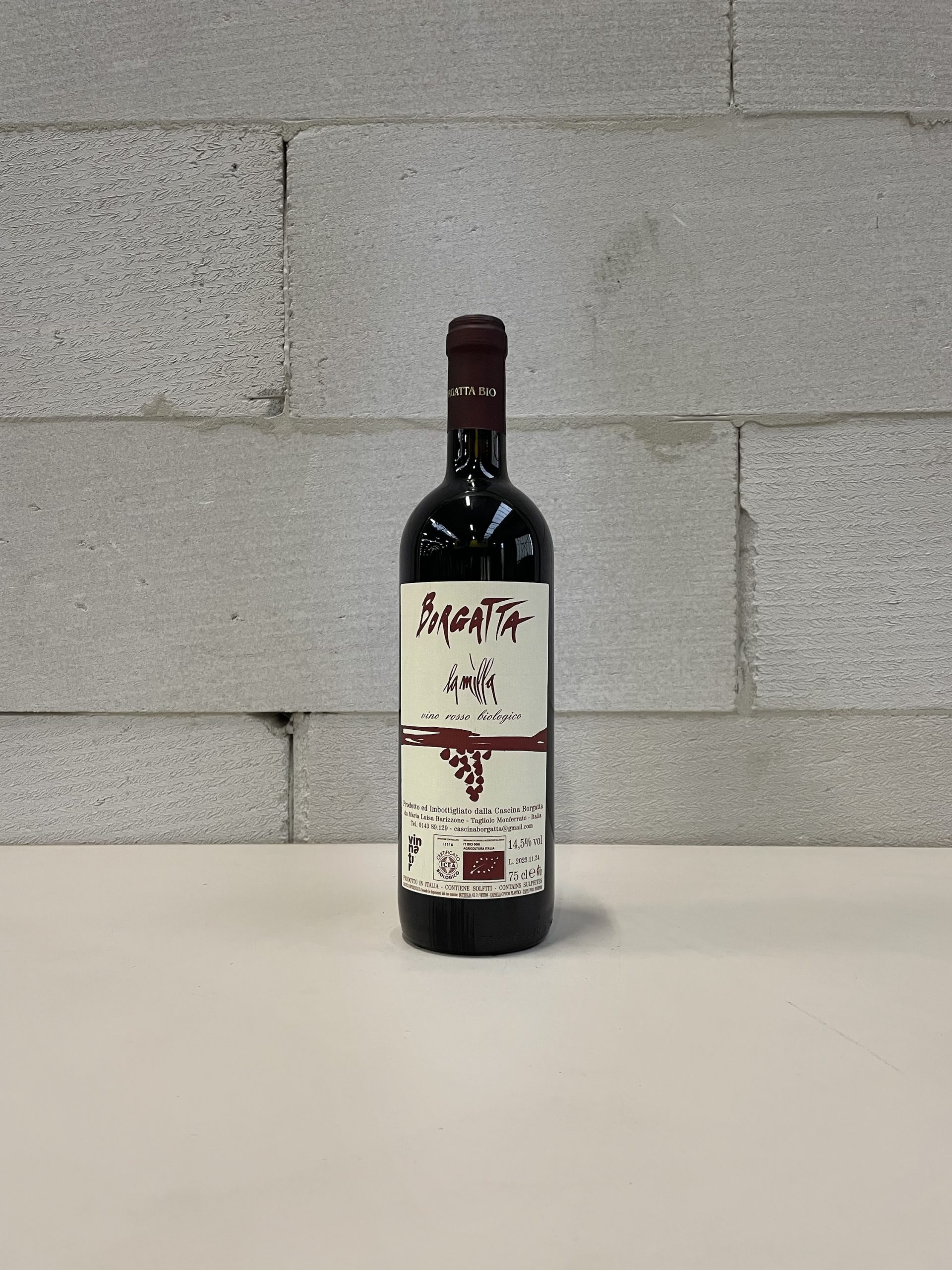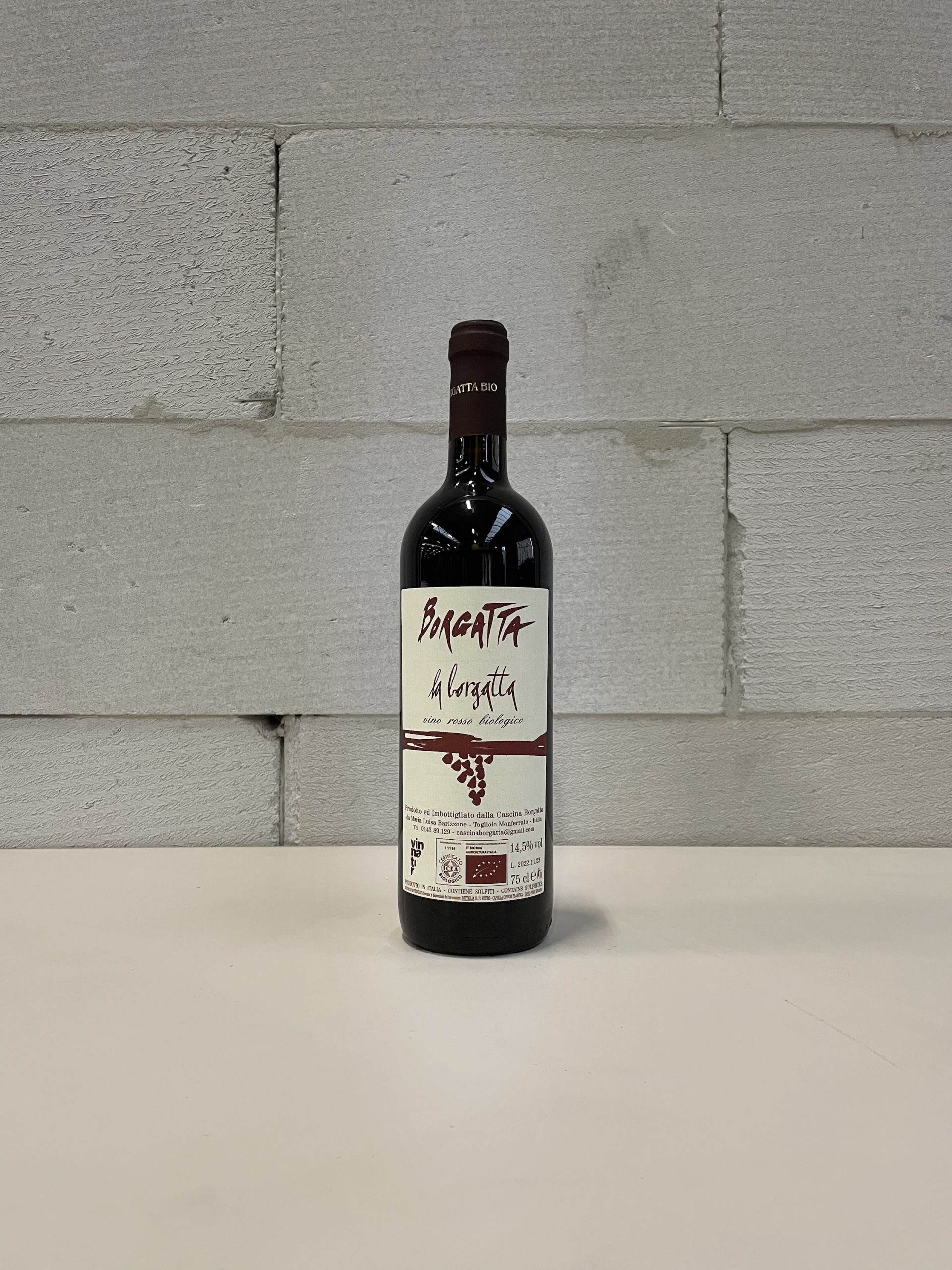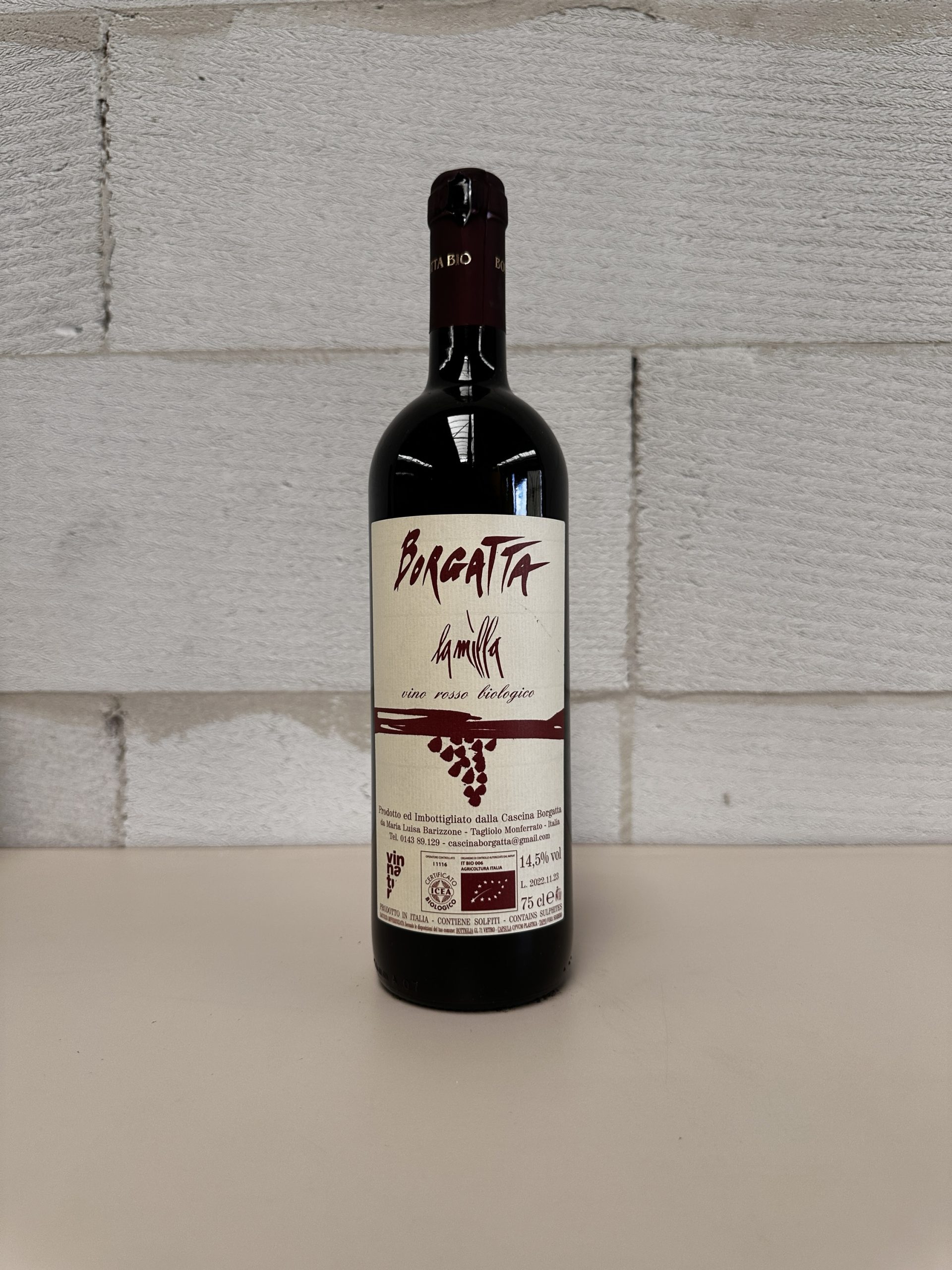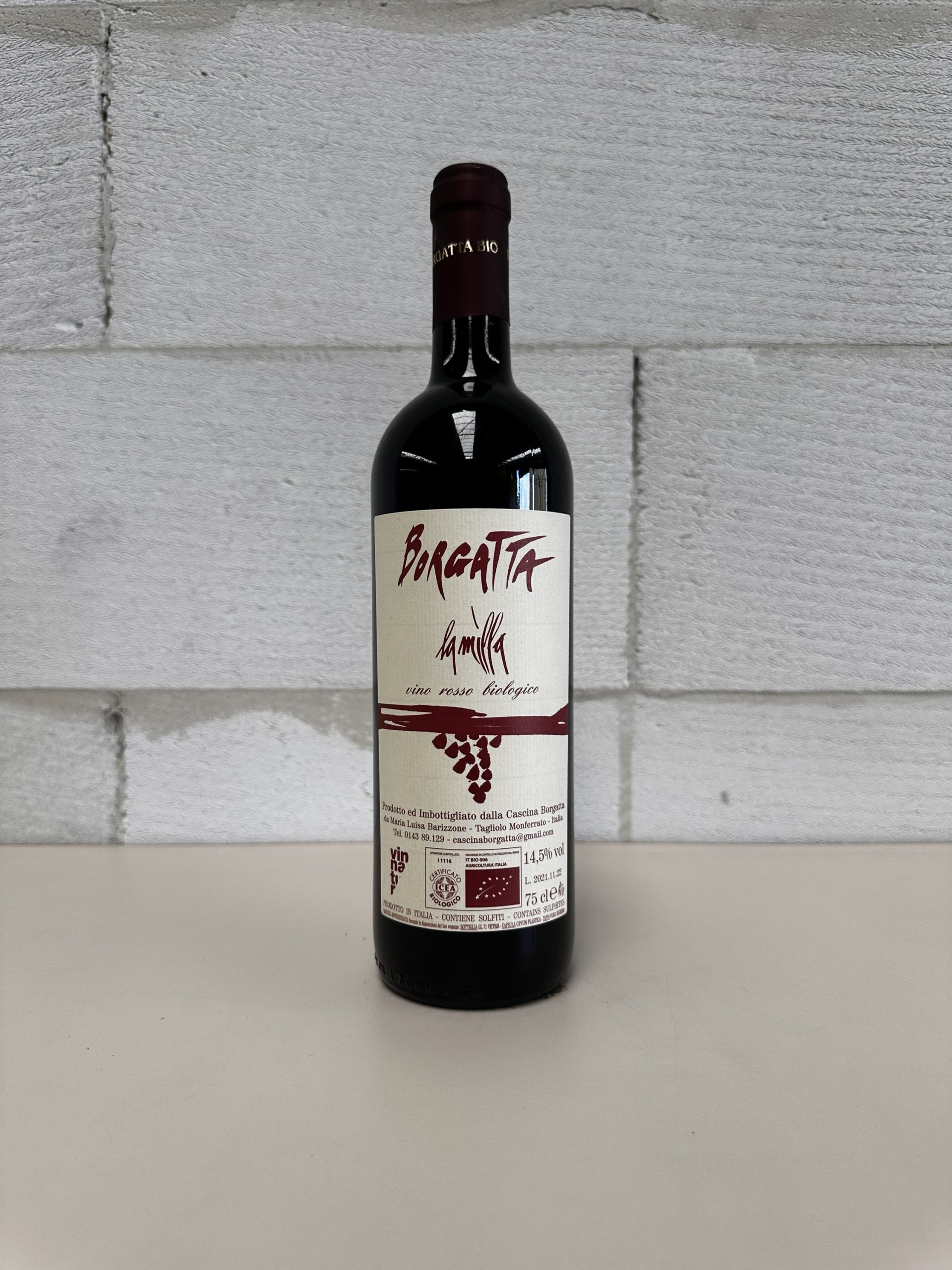
History of the Cascina
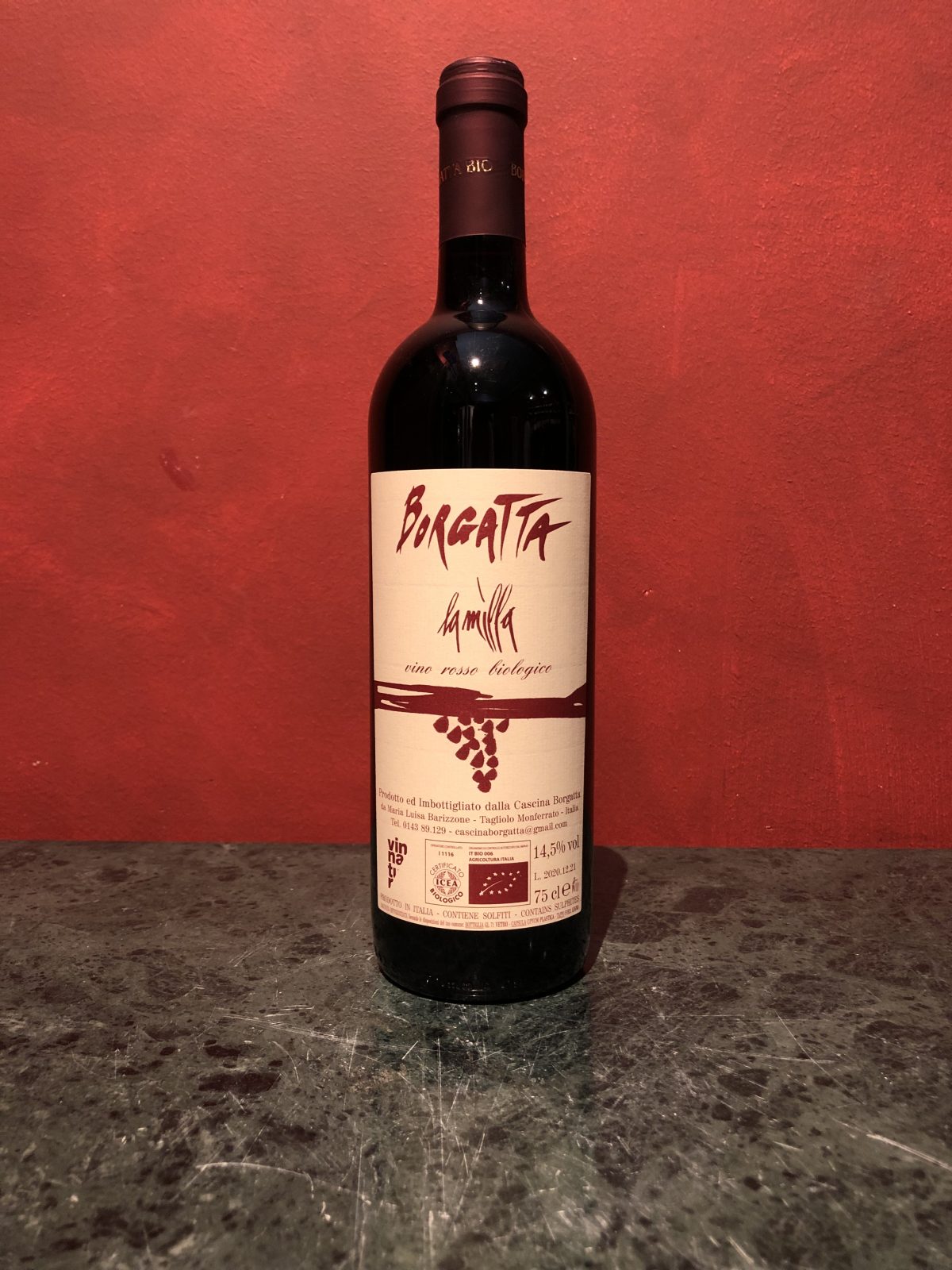
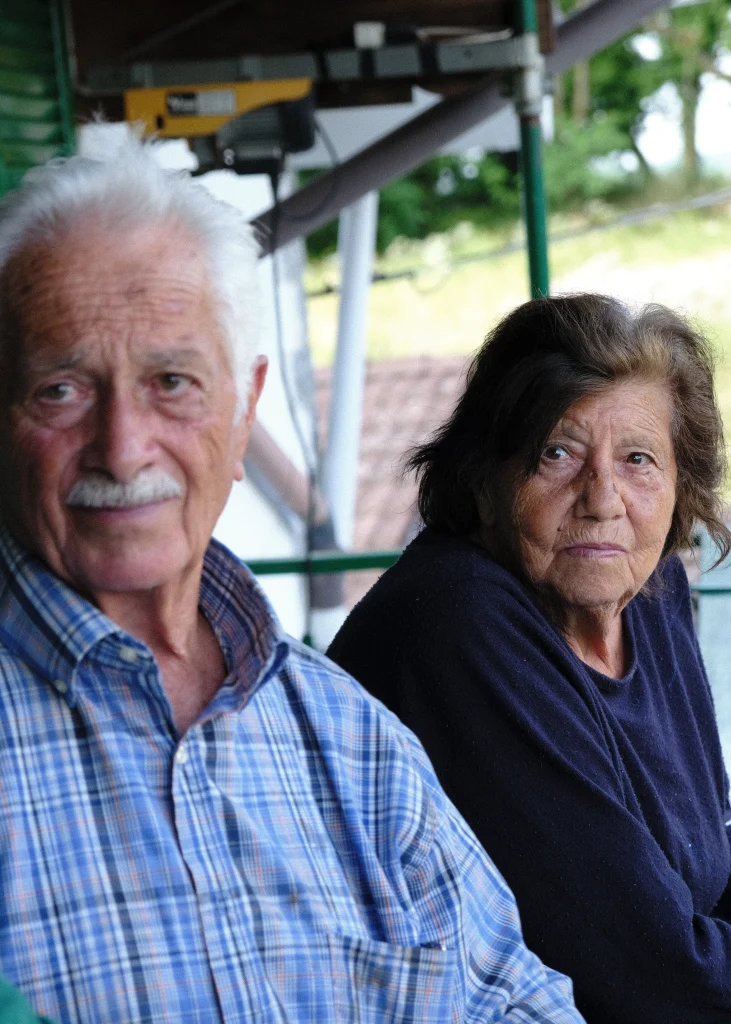
We finally visited the vines and the cellar of Maria Luisa and Emilio (and had a plate or two of antipasti and pasta) in early summer 2024. They value time spent with visitors more than the sales of their wine, and insist on importers or buyers coming to spend time with them before selling any of it. Cascina Borgatta was founded in 1949, when Maria Luisa Barizzone’s parents bought a small farm on the sandy slopes of Tagliolo Monferrato, in the hills of southern Piemonte. It now covers 4 hectares with 2 hectares of planted vines, reduced from 3.5 hectares a few years ago. It is planted mainly with Dolcetto and a little Barbera. The vineyards were part of a mixed farm until the 1960s, as was common in Piemonte. Maria Luisa was only eleven years old when she arrived here. She grew up among the Dolcetto and Barbera vines, learning the work season by season as she grew up. She describes viticulture as a way of life, absorbing the rhythm of the land as second nature rather than as a profession. They cultivated vegetables and cereals, although wine was the main focus. Emilio and Maria Luisa took over full-time after the passing of her father in the 1980s. It was then that they decided to focus entirely on wine, gradually reducing the estate to a more manageable two hectares.
Vineyard & Farming
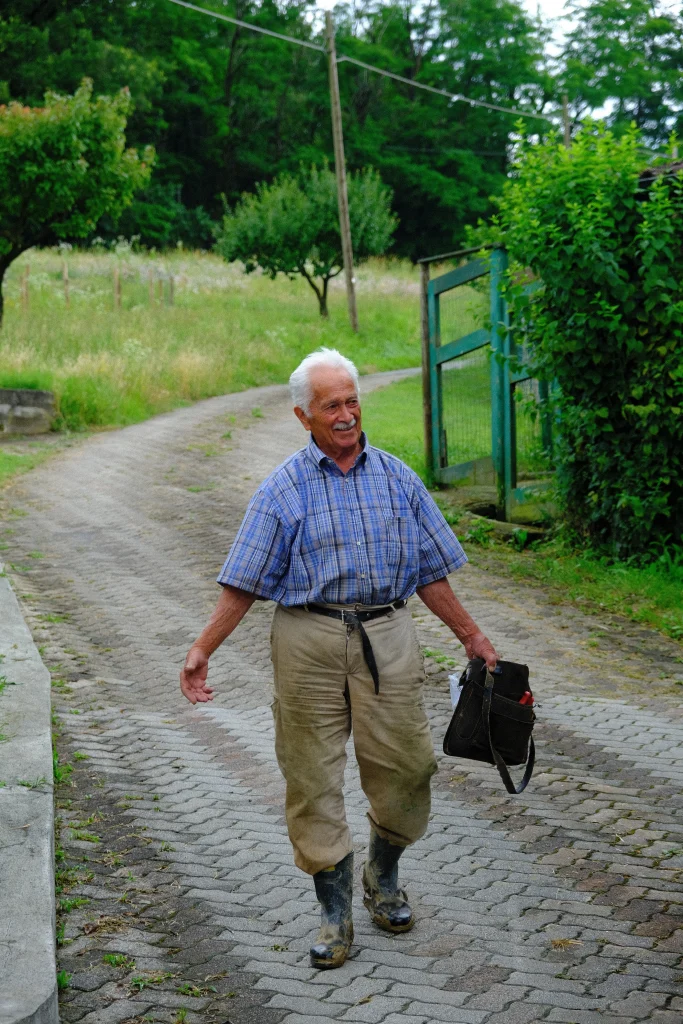
The vineyards of the Cascina were planted in the early 1950s and are amongst the oldest in the area. The oldest Dolcetto and Barbera vines, planted by Maria Luisa’s parents, remain the heart of the estate. Another vineyard was planted about twenty years ago. Whereas the 1950s marked the arrival of big farming equipment, first in France and then in Italy through the Marshall Plan, viticulture here remained completely manual. They only have a small crawler tractor to help with a few key tasks such as tilling or moving heavier loads. As Maria Luisa says, she can live without the wine but could not without her vines, showing an intimate connection with the land.
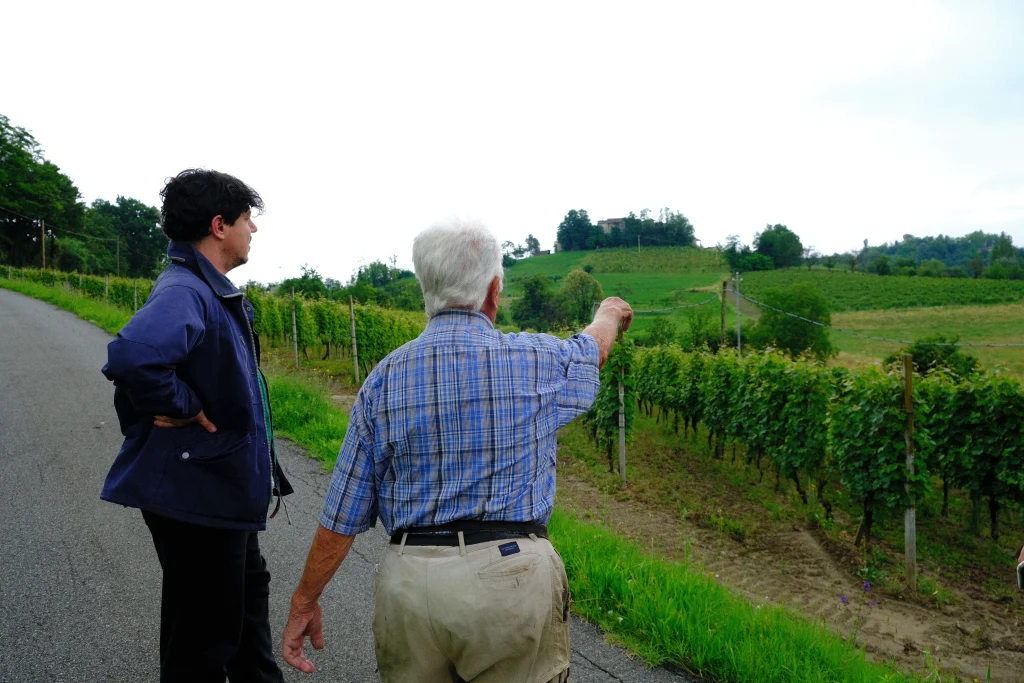
In recent years they have begun pruning as early as December since snow rarely delays the work. Their vines are trained in Guyot style and tied to wires in the spring. Excess shoots and buds are removed and thinned by hand. The soil is only worked when necessary. When it is too dry, it can form a hard crust, especially around the base of the vines. Loosening it allows the roots to breathe and for rain to soak in. During a rainy season, weeds and other grasses can grow too vigorously and compete with the old vines. Tilling, alongside mowing between rows with their crawler tractor, becomes a tool to manage such competition. They prefer, however, to leave grasses, wild plants and flowers to grow freely, as this prevents erosion and promotes biodiversity. In summer, leaf-thinning is performed cautiously: late in the season, when the risk of sunburn has passed, and only on the most shaded northern parts of their vineyards.
“At my age, using chemical products would be a contradiction, it would just make me sick. My life goes from today to tomorrow, to the day after. It wouldn’t make sense.”
Farming is all done by hand, shaped by the couple’s intimate bond with their land. Winter pruning begins as early as December, a change from the past when snow delayed the work. By spring, the vines are tied to Guyot wires, and as the season advances, excess shoots are carefully thinned by hand. Soil is worked when necessary, weeds are cleared, and the grass between rows is cut with the help of their tractor. In summer, leaf-thinning is performed cautiously, only on the shaded north side, and only late in the season when the risk of sunburn has passed. Treatments are minimal: small doses of copper and sulphur against oidium and mildew, and otherwise nothing. The rows are alive with grasses and wild plants, managed only as much as balance requires. They do almost everything themselves, with help only at harvest, when family and more recently acquaintances from the village join in.

Cellar & Winemaking
The cellar at Cascina Borgatta is simple. Fermentation takes place in old vitrified concrete tanks, once common across Piemonte but now increasingly rare. Grapes are harvested by hand in the cool morning hours, destemmed, and fermentation starts. They might move a bit of must, usually draining from the bottom and adding it to the top of the vat during maceration to keep the temperature of the tanks uniform. Aeration also promotes a healthier yeast culture. There are otherwise no punch-downs, and tannins are infused rather than forcibly extracted. They use a pneumatic press purchased in the 1990s. Sulphur use is kept to a minimum: just three to four grams per quintal of grapes at destemming, and none thereafter. No other additives are introduced, and the wines are neither fined nor filtered. Bottling takes place the year after harvest, in autumn, using a small bottling line with manual corking.
“We bring in very ripe grapes, overripe, with a lot of sugar, so the fermentation lasts longer. Our wines are not about body or structure. They are a deep infusion of fruit, the way wine used to be made.”
The style that results is not exactly modern Dolcetto or Barbera. These are wines of deep fruit infusion, made from fully ripe grapes, with long fermentations that allow both varieties to show their richness and character. One might call them rustic, but their grain is profound and recalls the way wine was made in Piemonte half a century ago. Emilio is not concerned with fashionable notions of structure or body, but is focused instead on the taste of the land itself.

Values & Future
For Maria Luisa and Emilio, farming with or without chemicals was never a choice or even a debate. It was simply the way things were done. Even though they believe that visitors should see with their own eyes, the estate and the wines are certified organic. Emilio and Maria Luisa often say that what they cherish the most is when people who drink their wines come to see the cellar and vineyard themselves. For them, the act of tasting is inseparable from the act of visiting the terroir: the place and the people.
“What I really appreciate is when people who drink my wine come here to see the cellar and the vineyard in person. To see where it all comes from.”
Now in their nineties, the couple continues. Climate change is perhaps what has changed their habits and calendar the most. Harvest arrives earlier in the year, starts earlier in the day, and the heat forces them to stop at eleven in the morning. Hailstorms and the unpredictability of rain bring diseases such as mildew or oidium, and additional work in the vines. They remain pragmatic, without illusion, knowing that nature is changing beyond the sanctuary they have tended for the last seventy years.
Cascina Borgatta’s wines, like many other natural wines, are sold worldwide: Denmark, Sweden, London, Germany, and above all Japan. Emilio has even visited Japan twice, an experience he describes as intense but exciting. Importers have become friends and return year after year. Most of the bottles remain drunk close to home, sold directly to visitors and neighbouring restaurants. We are proud to share their wines with our friends and clients in Amsterdam.