

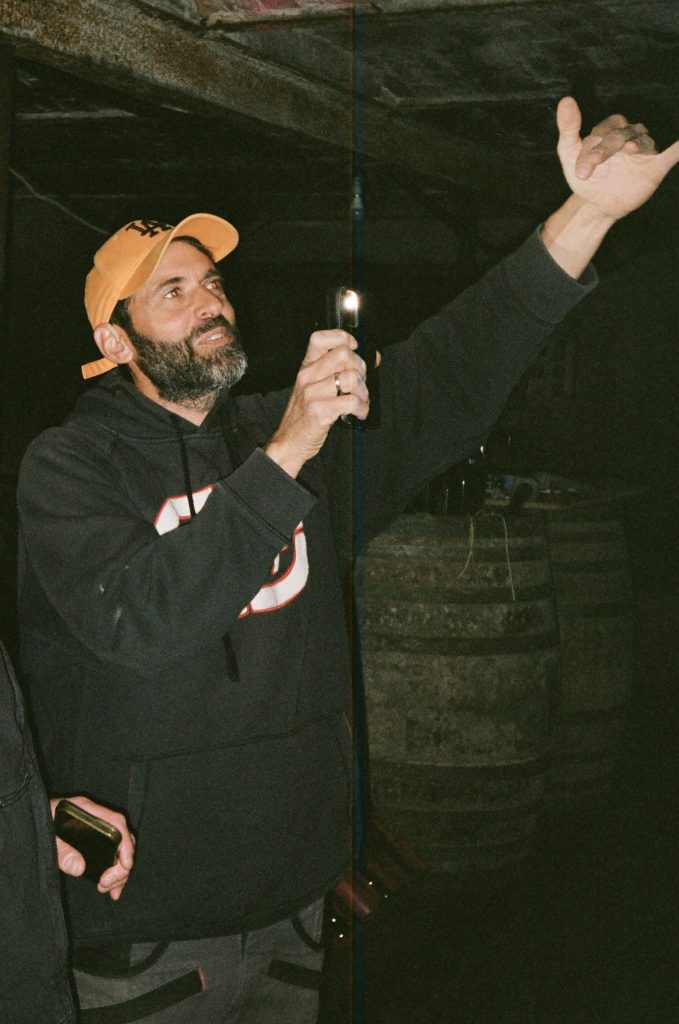
We came across Nicolas Arnou’s wines at Masa Vins in Barcelona, a little bar with amazing dishes and a solid zero-zero natural wine list at great prices. We had finished a bottle of Aurélien Lefort and wanted another glass of white. We drank Murmures 2020 and were more than pleasantly surprised. We knew we could expect more from a by-the-glass menu in Catalonia than in Amsterdam or other northern cities, but this Chenin Blanc was vivid, concentrated, mineral, and also aged. We took a picture of the bottle and booked a visit with him for the following spring. Nicolas Arnou settled in Champ-sur-Layon in 2018, a small commune on one of the wine-famous tributaries of the Loire. Nicolas vinifies next to a few producers we already knew and drank, but also quite a few that we import directly. So it was a pleasant surprise to find yet another ambitious and like-minded vigneron in a region we had already fallen in love with.
Nicolas discovered wine in the early 2000s during his post-master’s internship at Airbus in Toulouse. Together with his friend Aymeric, he attended and hosted informal wine tastings. Aymeric would go on to found Domaine Mélaric in 2008 in Doué-la-Fontaine, another town in the Pays Angevin, about 30 km from Champ-sur-Layon. Nicolas, at that time and for the next 15 years, was enthralled by his work as an aeronautical engineer and worked in both France and Canada, while keeping wine alive in the back of his mind. Then he began asking himself what the second part of his professional life might look like. Wine, alongside a desire for a more thoughtful relationship with nature, led him to return to school. In 2017 he started the BTS programme in organic viticulture and oenology at the famous Lycée Montmorot in the Jura. In his own words, “It’s the first time I was excited to wake up and go to class,” and he approached his studies with great enthusiasm. He had also, perhaps unknowingly, landed in what is arguably the most famous natural winemaking region in the world. Without many connections in the Jura, he asked his teacher where he should do his stage. That led him to the home of one of its most prized domaines, Maison Overnoy-Houillon. His first assignment was to go out and cut wood for the winter with Emmanuel Houillon, a subtle nod to the polycultural past of the Jura as a winegrowing region. The following year was filled with learning experiences in both the vines and the cellar, alongside many incredible bottles and lunchtime tastings.
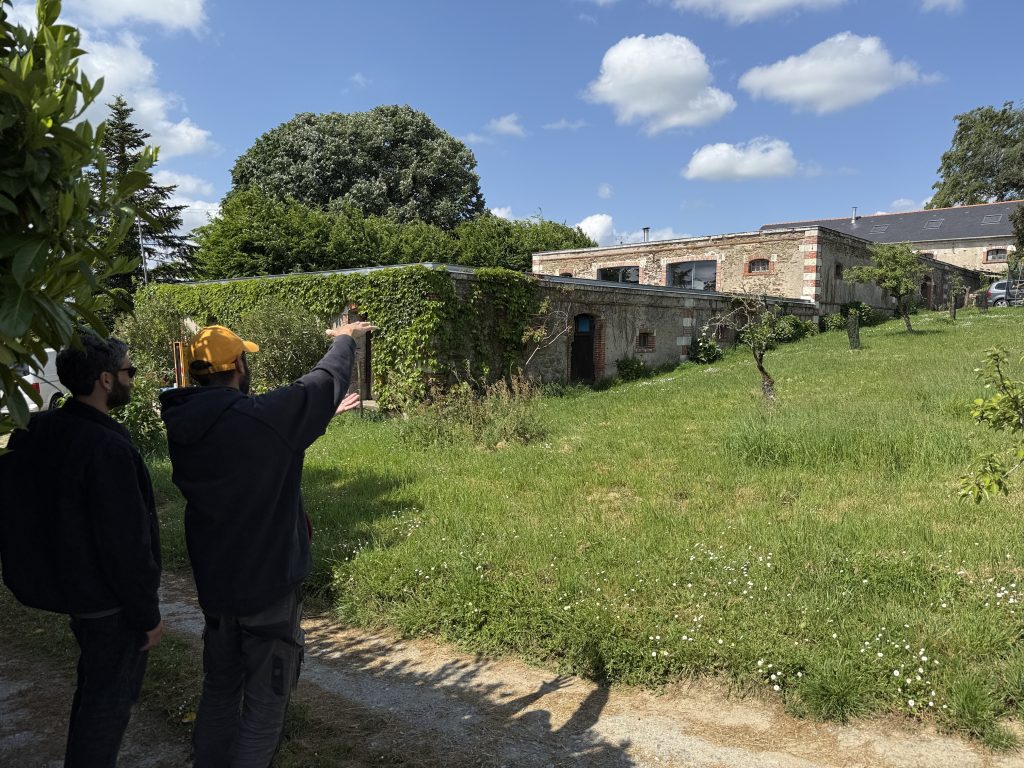
Nicolas and his wife Fanny had fallen in love with the Jura, but due to family circumstances and other logistical reasons they settled closer to Angers, where they found an old winemaking property with about eight planted hectares in the surrounding area. Nicolas’ parents’ family farm was not far from there in Cholet, where he grew up. The land had been farmed organically for five years, and the unusual building offered the opportunity to renovate the second floor as living quarters while reserving the semi-buried cellar and ground floor for winemaking. The building dates back to 1895 and is a fine example of a gravity-fed cellar built in the late nineteenth century, after the Industrial Revolution but before the arrival of electricity and gasoline-powered tools. No wine had been made there in more than 20 years. The domaine was planted with Chenin Blanc, Grolleau, Cabernet Franc, and a little Chardonnay. The oldest vines date back to 1950.
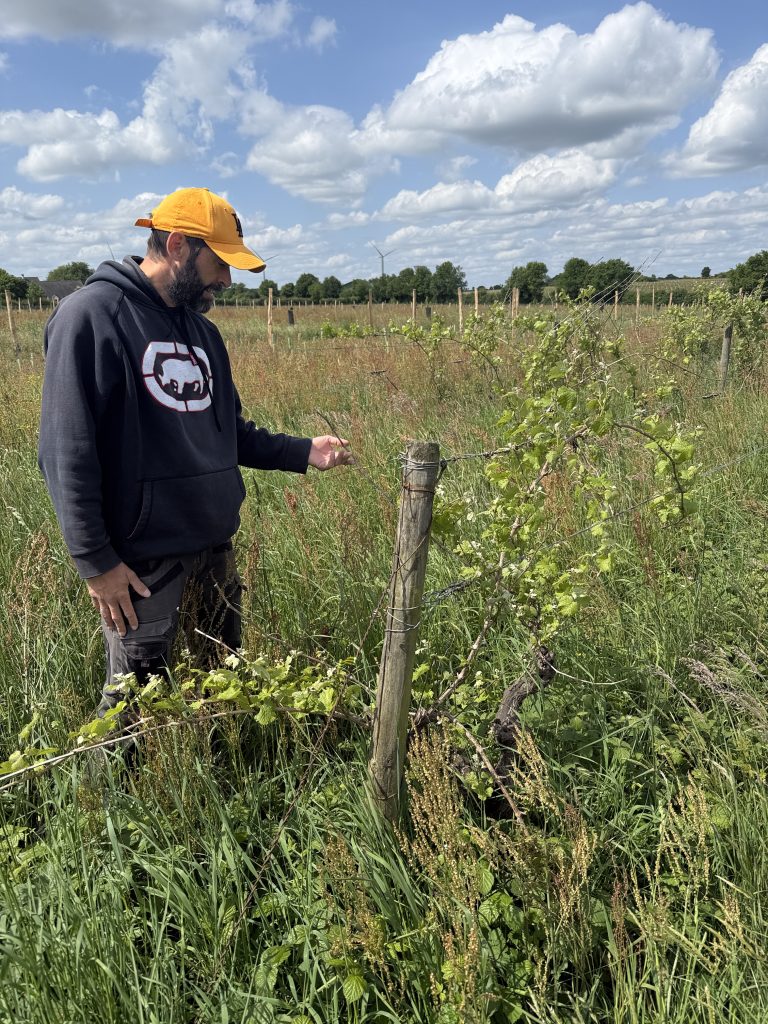
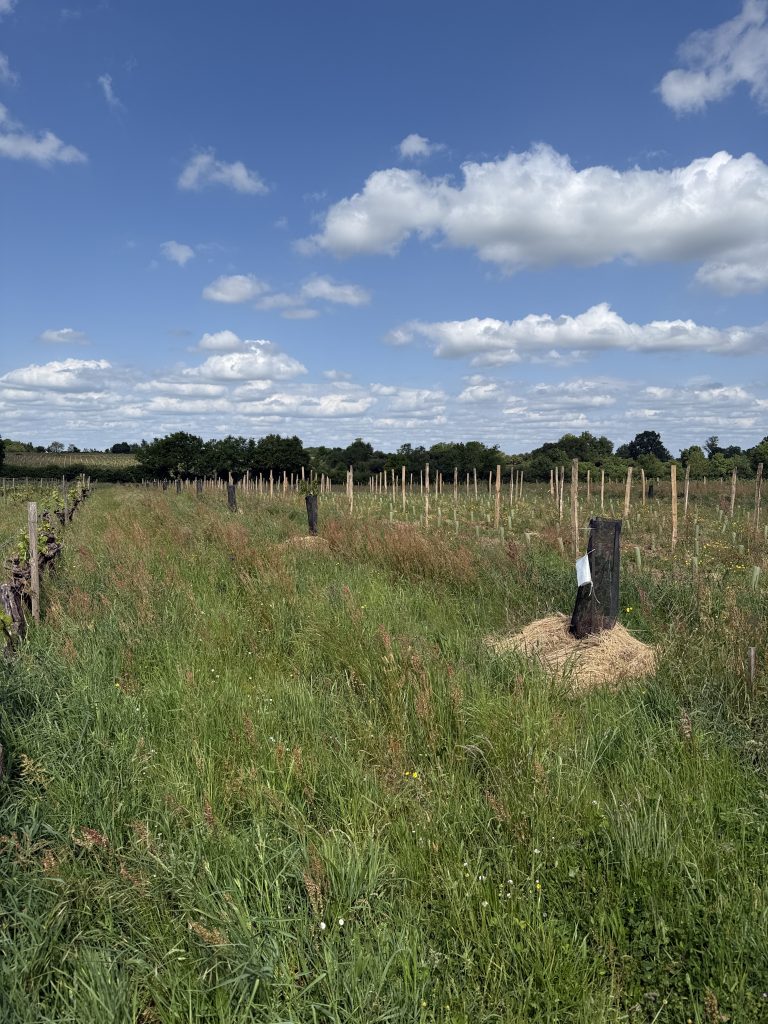
More than 15 years later, Nicolas had rekindled his relationship with wine and with his friend Aymeric, though his time in the Jura had firmly grounded him in a desire to go beyond organic agriculture through agroforestry and to make wine with nothing added and nothing removed. A friend of ours from the region, Houas Boukella, often says, “There’s bio without sulfur and then there’s natural wine.” Nicolas makes the latter. He planted trees and worked only the topsoil in every other row of vines. He also experimented with pruning, leaving parts of the vineyard in a wild state for periods of time. He keeps sheep as well, which he sends in to graze the vineyard. In the cellar, the grapes are pressed with an old horizontal Vaslin press. During our last conversation, I told him I liked his approach because it felt pragmatic and relaxed, with the energy of someone who takes his time. He spent the first few years enjoying experimentation with different winemaking techniques and cuvées: macerations of whites, the use of oak, concrete, or fibreglass for ageing, direct presses, pét-nats, and deeper infusions of reds. So far we particularly like his Chenin Blanc, but we have also been very impressed by the evolution of his 2023 reds. All of the wines are made without any additives or SO2. We made our first purchase of his wines during the salon period in winter 2026. At the time, the reds felt youthful and perhaps a bit rough, but also very composed. We’re delighted to introduce his wines to Amsterdam and happy to have yet another great place, and friend, to visit in the Layon during our adventures on the wine road.

