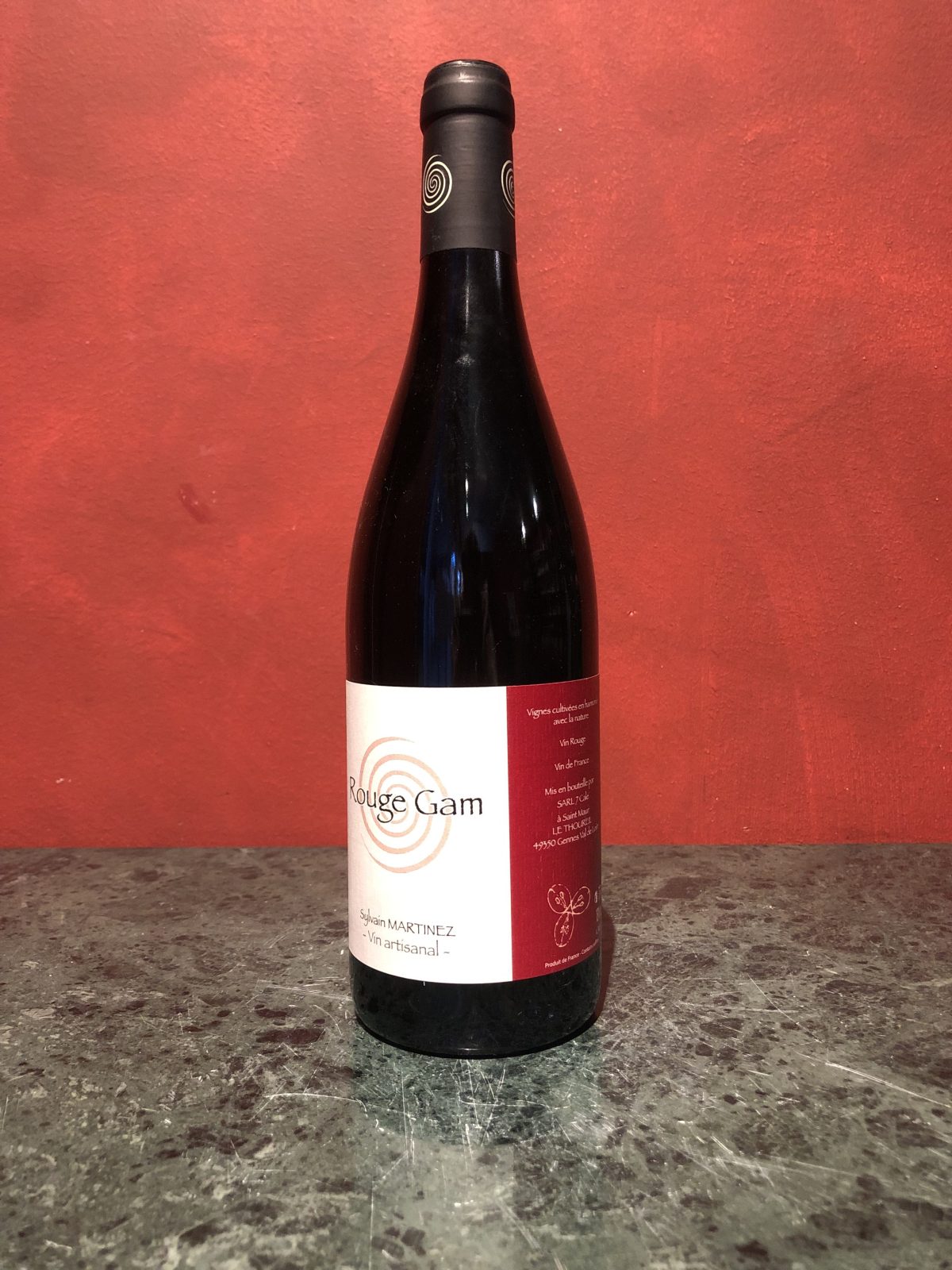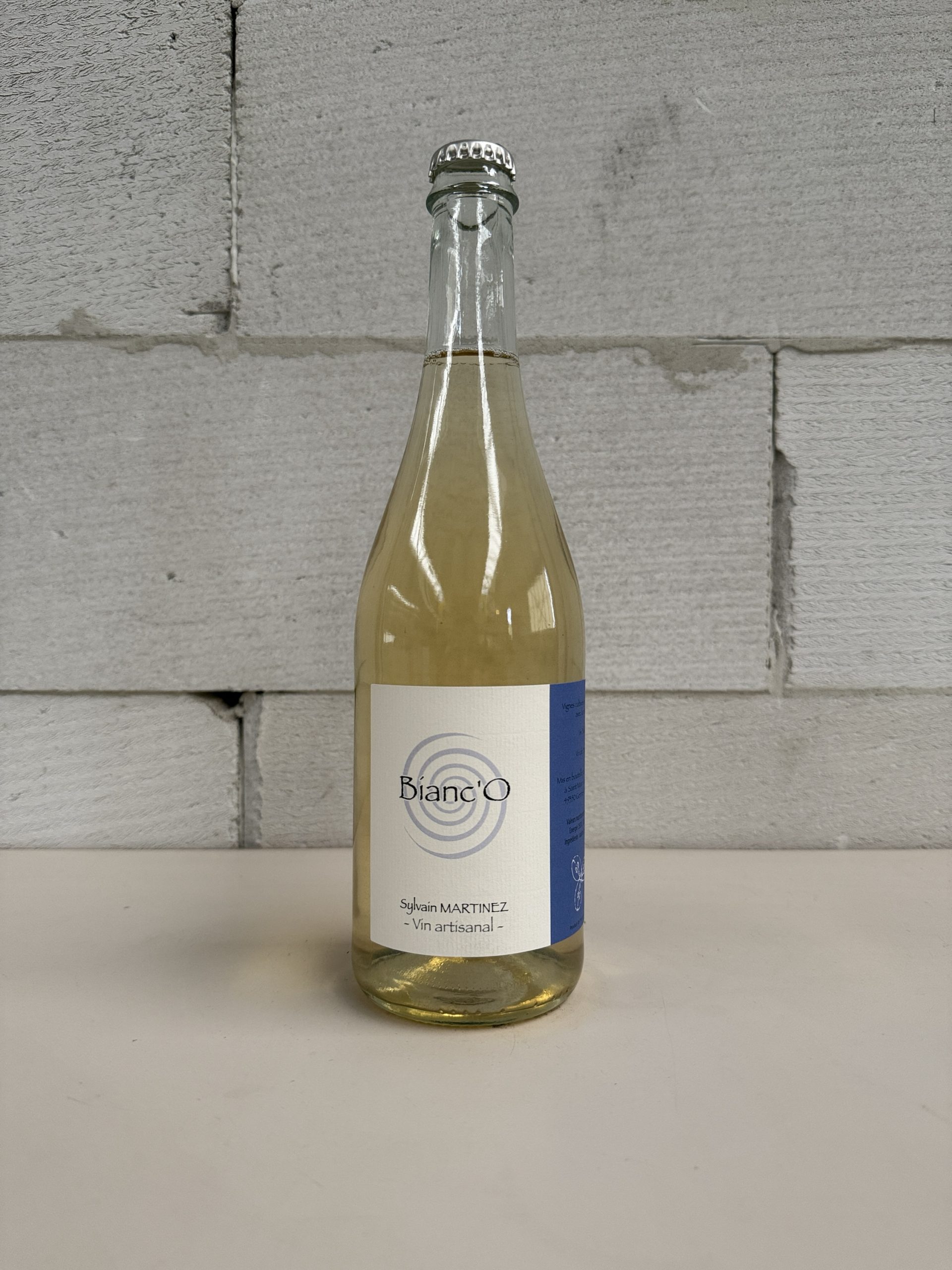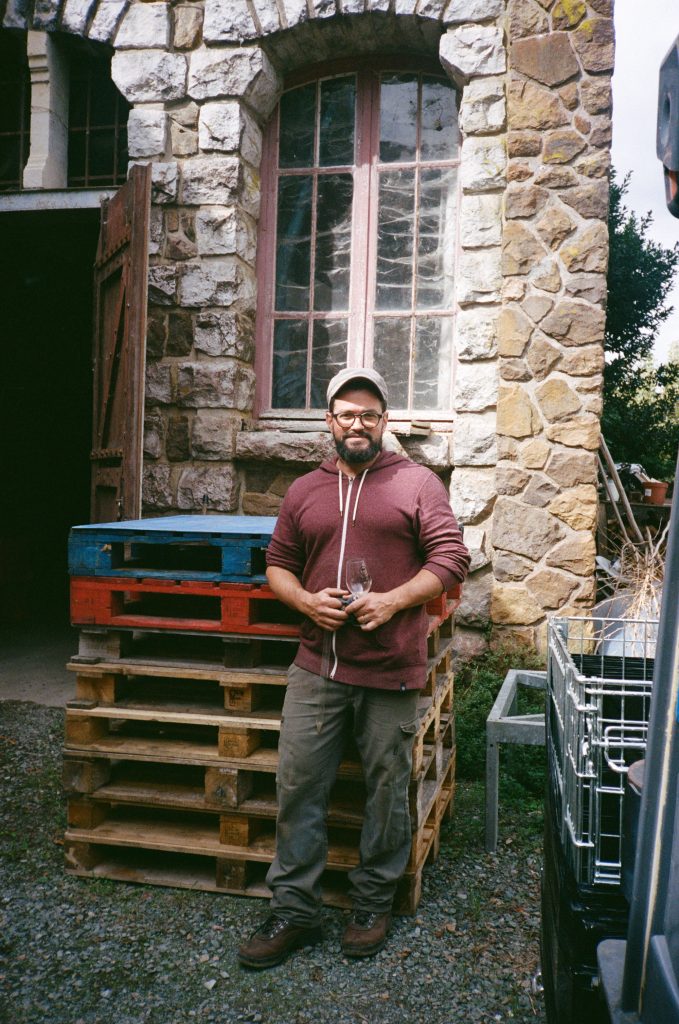
Journey to Winemaking
Unlike many winemakers, Sylvain doesn’t come from a family of winemakers. “My family moved to this region in the 2000s. My parents were schoolteachers, and my grandfather on my mother’s side was a farmer, but there was no family legacy in wine. I built this entirely from scratch.” His earliest connection to agriculture came through vacations spent on his grandfather’s polyculture farm, where he developed what he calls a “farming instinct.”
Sylvain’s formal journey into winemaking began with apprenticeships under celebrated Loire winemakers such as Marc Angeli, René Mosse, and Olivier Cousin. His decade-long collaboration with Cousin was particularly formative, teaching him natural winemaking techniques and organic vineyard management. During this time, Olivier Cousin, an avid sailor desiring to spend more time on the Ocean lent Sylvain two hectares of vines. This gave him practical experience, balancing part-time vineyard work with his winemaking projects. “Starting small allowed me to learn, experiment, and grow naturally into the profession I love,” he reflects.
“It was a gradual process. Over about ten years, I transitioned from being a micro-winemaker to fully independent, acquiring old vines and a cellar that I completely renovated myself,” he adds.
While still working with Cousin, Sylvain first rented a hectare of uncultivated Chenin Blanc vines near the Abbey of Saint-Maur. “There were fewer vineyards here, which is why it took so long to find this cellar,” he says. “But I wanted to stay in this area, ideally with vineyards with a view of the Loire River. That added to the challenge.” The historic vineyard area in Thoureil, where Chenin Blanc has been grown since at least 845, became the centre point of his operation.
From the outset, Sylvain was committed to natural winemaking. “I wanted to make wine without any additives. It was about purity, staying connected to nature, and exploring the chemistry of transforming grapes into wine.” Although his early years involved trial and error, his vision remained steadfast: to create wines that were honest expressions of the land.
Vineyards & Terroir
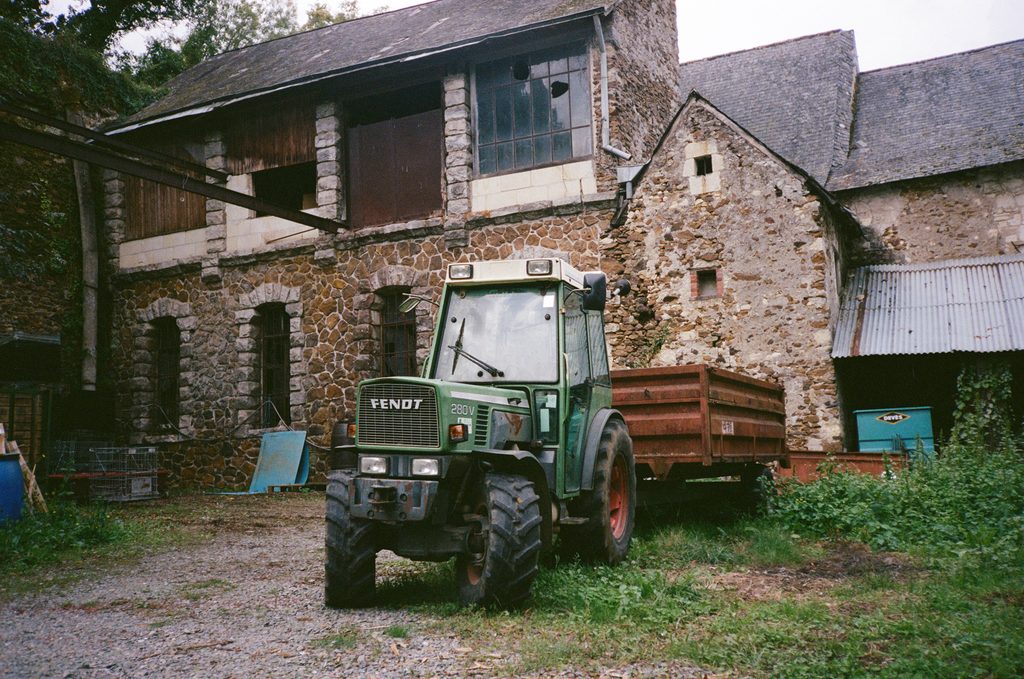
Sylvain manages three hectares of vineyards in the southern Loire, planted with Chenin Blanc, Grolleau, Gamay, and the historic Pineau d’Aunis. His parcels combine century-old vines with younger plantings, contributing to the revival of traditional Loire varietals. Situated in the Anjou Blanc area, the soil is mostly alluvial and limestone from the Turonian Massif, which impart a distinct minerality. Fossils of oysters can be found on the plot, and an old lime kiln once extracted marl from the area.
“When we dig, we quickly hit a very chalky, marl-like rock. That’s the kind of soil we have. On my older vines in a nearby village, the terroir is more sandy. That gives you an idea of the two areas,” Sylvain explains.
This contrasts with the schist-rich terroirs of the Anjou Noir region. Sylvain also works an older parcel on sandy, alluvial soils, where phylloxera is less of an issue. These ancient vines, growing in a bush-like form and ungrafted, are a testament to the region’s diverse geology and old winemaking history.
One of his key plots, abandoned for over 20 years, was revived in 2018 after clearing brambles and trees. “The land was already organic, making it perfect for replanting,” Sylvain notes.
A special focus for Sylvain is his Pineau d’Aunis pre-philoxeric vines, once common in the region, which are now experiencing a resurgence due to their unique, spicy, peppery character. “Pineau d’Aunis used to be widely planted here, but it was replaced by Cabernet Franc, which was more marketable and suited to Bordeaux-style wines,” Sylvain explains. “Pineau d’Aunis is a passion of mine. It embodies the history and identity of this region, and reviving it, along with other forgotten varieties, is at the heart of what makes my work meaningful.”
For Sylvain, terroir is about more than just soil and climate—it’s about honoring the traditions and biodiversity that define the Loire Valley. “For me, terroir first and foremost implies a sense of territory—a specific place with a particular type of soil. This soil imparts a very distinct character and taste to the wine, as long as the cultivation and winemaking methods respect the natural qualities of the soil. That’s how I see it.”
Farming Practices
Sylvain employs low-intervention farming techniques to maintain biodiversity and soil health. Sheep graze in the vineyards during winter, reducing the need for mechanical maintenance while naturally fertilizing the soil. In spring, they are moved to avoid damaging the fresh buds.
Sylvain also plans to reintroduce draft horses to his operations, a practice he learned while working with Olivier Cousin. “Until 2013, I used Olivier’s horses in my vineyards. It’s something I’d like to incorporate again, but for now, I’m taking incremental steps. For instance, we use a donkey to transport grapes during harvest.”
Certified organic since 2009, Sylvain’s farming practices reflect his commitment to ecological balance and preserving the land’s integrity. “Organic farming allows me to express the terroir through high-quality fruit, working manually and avoiding synthetic chemicals to preserve the soil’s natural character.”
On the newer plantings in Saint-Maur, Sylvain initially works the soil across all rows during the first two years to encourage root development. Once the vines are established, he grasses the rows to improve biodiversity and reduce erosion. Beneath the vines, he carefully manages the “cavaillon”—the soil strip directly under the vines—through light hilling and blade work to control weeds.
Harvesting
Harvesting is a precise and communal effort. A team of about 12 local workers labors for 10–12 days to hand-pick the grapes, producing roughly 120 hectoliters, or 15,000 bottles. Careful sorting is done directly in the vineyard to eliminate the need for mechanical sorting later. The grapes are transported in small bins to preserve their integrity and quality.
“We focus on removing gray rot and acetic rot, which can occur every year. Any affected clusters are discarded on the spot. Sorting for issues like fly damage or underripe berries takes a lot of time and attention, but it ensures that only the best grapes make it to the cellar.”
Renovating and vinifying his historical cellar
The historic Abbey of Saint-Maur’s semi-troglodyte cellars are at the heart of Sylvain’s operations. When he took over the space, however, it was in disrepair. “The cellar was in terrible condition—seven tons of metal to remove, walls blackened with mold, and 200 hectoliters of vinegar that had sat there for 20 years. It took nine months of hard work to restore it.”
Sylvain power-washed the walls, upgraded the electrical systems, and applied traditional limewashing to preserve the structure. “We used natural lime, a time-honored method for maintaining cellar hygiene. It’s about respecting the history of this place while making it functional for my wines.”
He had some problems with slower fermentations in 2016 in his cleaned cellar, but over time the cellar has developed its natural yeast activity.
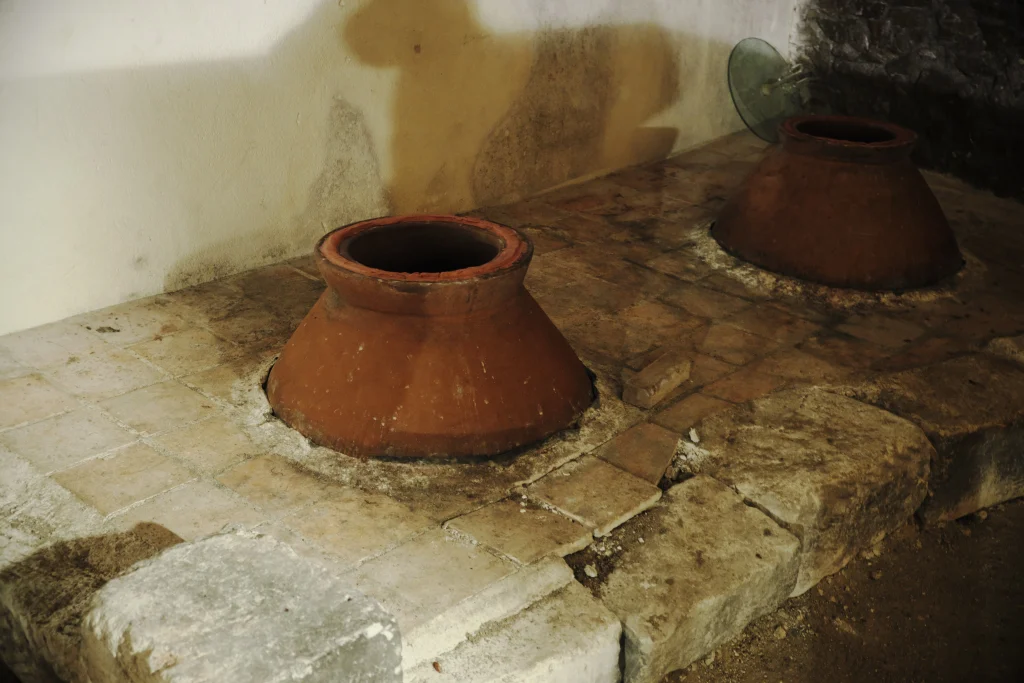
He uses neutral vessels—qvevri, tanks, barrels, or large foudres—to allow the wine to express itself. For reds, Sylvain uses whole clusters, while for his Chenin Blanc, he destems. For reds, he ferments in a large tank, filled completely to promote a semi-carbonic maceration, a technique that preserves the primary aromas. With the reds, Sylvain initiates fermentation with a “pied de cuve”, a starter culture prepared a week ahead to ensure rapid fermentation and gas saturation.
During carbonic maceration, fermentation happens inside the grape berries, enhancing the wine’s aromatic profile. After pressing, sugar levels may rise slightly due to aeration, which accelerates fermentation. The wine is aged on fine lees, and Sylvain racks it once or twice before winter to avoid reductive flavors from heavy deposits.

In the past two to three years, Sylvain has stopped using barrels for red wine aging, finding that wood sometimes imparts a drying quality and he believes that longer aging can diminish the vitality and minerality of reds of certain varieties.
For whites, the direct press wine is aged for two years in large barrels or foudres, while the macerated wine spends six months fermenting in amphoras buried halfway in the ground, with the floor raised to accommodate the rock that is too hard to cut into.
Sylvain bottles his wines in June or July, capturing the wine’s salinity and allowing it to breathe during fermentation, releasing excess gases. Sylvain’s philosophy centers on purity and minimal intervention: “I work with indigenous yeasts, avoid filtration and fining, and don’t use additives or sulfur. For me, it’s about letting the fruit and terroir speak for themselves.”