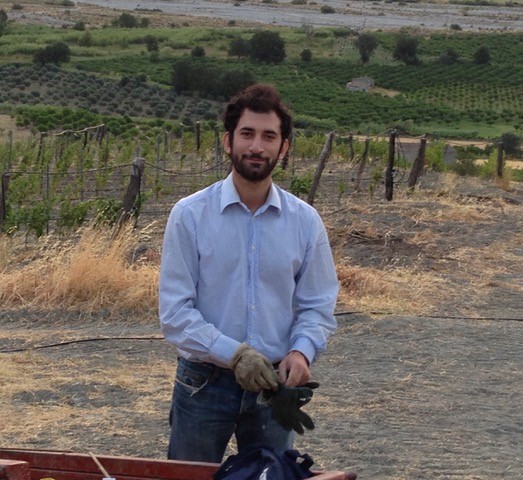
The Nasciri estate enjoys a distinctive microclimate, nestled between the Ionian Sea and the Aspromonte Mountains. “It’s a hilly, pristine area, free from highways, factories, or industries—just a true oasis,” says Domenico, the winemaker and owner of the winery.
Journey to Winemaking
Domenico, born and raised in Calabria, has always felt a strong connection to the land. His father owned a large tract of land that had been in the family for generations. Despite studying economics and working in regulatory compliance for large corporations, Domenico’s passion for natural wine emerged after noticing the adverse effects of conventional wines on his body during business trips. Sensitive to the additives in industrial wines, he sought an alternative. “I’ve always struggled with digestive issues, and the discomfort I experienced made me rethink the wines I was consuming. I wanted to craft a wine that was not only pleasurable but also gentle on the stomach—one that wouldn’t cause headaches or discomfort.” In 2009, he took the bold step of planting vineyards on his family’s estate. Between 2011 and 2012, he dedicated himself to research and experimentation, and, by 2013, he and his team bottled their first vintage. “From 2013 to 2016, we were supported by a young enologist from Abruzzo who had trained under Stefano Bellotti. Her expertise was invaluable, as I was still gaining confidence in managing the production side, coming from an economics background rather than enology.” By 2018, Domenico had fully assumed control of the winery, refining his winemaking techniques and honing his craft alongside his team.
Vineyards & Terroir
Nasciri Azienda Agricola spans 20 hectares, with 7.5 hectares dedicated to vineyards. The remaining land is devoted to olive groves that produce a variety of exquisite oils, as well as bergamot, a citrus fruit native to the Ionian coast of Reggio Calabria.

The large vineyard Domenico planted spans a single, expansive block and is situated at 250 meters above sea level, benefiting from an ideal microclimate. Its north-facing orientation is particularly advantageous, offering protection from the rising temperatures associated with climate change. The combination of clay-rich soil, daily temperature fluctuations, and steady breezes from both the sea and the mountains creates perfect conditions for grape growing. At Nasciri, the estate cultivates a variety of grapes, including Greco Bianco, Falanghina, Calabrese Nero, Greco Nero, Aglianico, and Gaglioppo. Additionally, the estate preserves a small, historic 0.3-hectare vineyard—Domenico’s grandfather’s original plot—planted with ancient indigenous varieties, from which the distinctive ‘Chillu chi Volimu’ wine is produced.
Working in the Vineyard & Philosophy
Domenico and Francesca take a hands-on, natural approach to viticulture, emphasizing soil health and vine resilience through organic and biodynamic practices. “A vineyard is a living entity, and our role is to nurture, not dominate,” says Domenico. To combat soil depletion and the effects of climate change, they apply biodynamic compost annually, usually in late September or early October, before the rains. Enriched with cow manure, this compost unlocks the nutrients in their clay-rich soils, ensuring better nourishment for the vines.
Water management is increasingly crucial as rising temperatures and reduced rainfall pose challenges. In 2024, they ran out of water by early August, having had no rain since March. To address this, the team is deepening their well to access the aquifer for emergency irrigation.
To help vines cope with thermal stress, they’ve turned to algae-based treatments, such as spirulina. “When temperatures suddenly rise by 5–10 degrees in a day, vines can go into stasis. Since we started spraying spirulina, the vines stay healthy, with green leaves and strong growth.” They also use a second type of algae and organic liquid fertilizer to provide ongoing vine support. “Everything we use is organic and biodynamic, aiming to bring strong, healthy grapes full of life.”
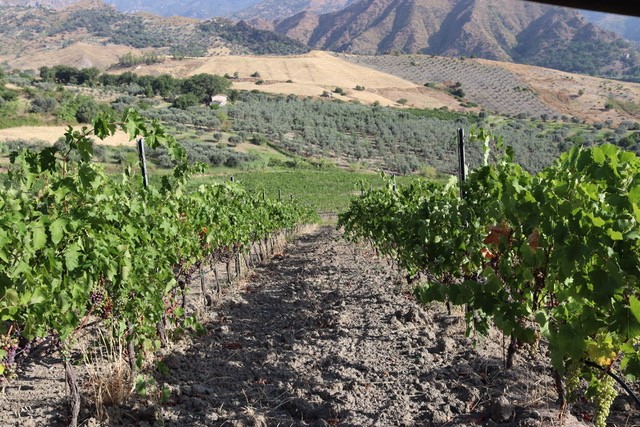
Their vineyard work adapts to the land’s needs throughout the year. In spring, they use an inter-row tool with rotating blades to manage grass growth without herbicides. For soil aeration, they rely on a seven-tine ripper, followed by a roller that ensures the soil stays loose enough to breathe while retaining moisture during the summer heat. In autumn, they sow cover crops and use a spader, which works vertically to preserve the subsoil and ensure deep moisture retention.
They also apply biodynamic horn manure (preparation 500) in late winter or early autumn, when the rain is more consistent, allowing it to integrate into the soil. “Spraying it in 35°C heat would be pointless—it would just evaporate.”
Their approach is flexible and observant, adjusting to varying climate conditions each year. “In the dry season, there’s little we can do except prepare the soil in advance,” Domenico explains. “Climate change is here, but we adapt.”
Harvest
Harvest at Nasciri is the culmination of all of the patience and hard work from the last year. “It’s when we see the true reward of our work,” says Domenico. Grapes are hand-picked at peak ripeness during the coolest hours of the morning to preserve their freshness and aromatics. “We used to harvest in the evening, but found the grapes retained too much heat, so now we focus on early mornings.”

Harvesting whites and rosés is a laborious task in the August heat, with temperatures reaching 40°C, while reds are picked later in September when temperatures drop to 32–33°C. After picking, the grapes are moved to the cellar to cool before processing. If harvesting occurs later in the day, they wait until the evening to begin destemming, crushing, and pressing, ensuring the juice stays between 20–25°C to preserve its aromas.
Working in the Cellar & Winemaking Philosophy
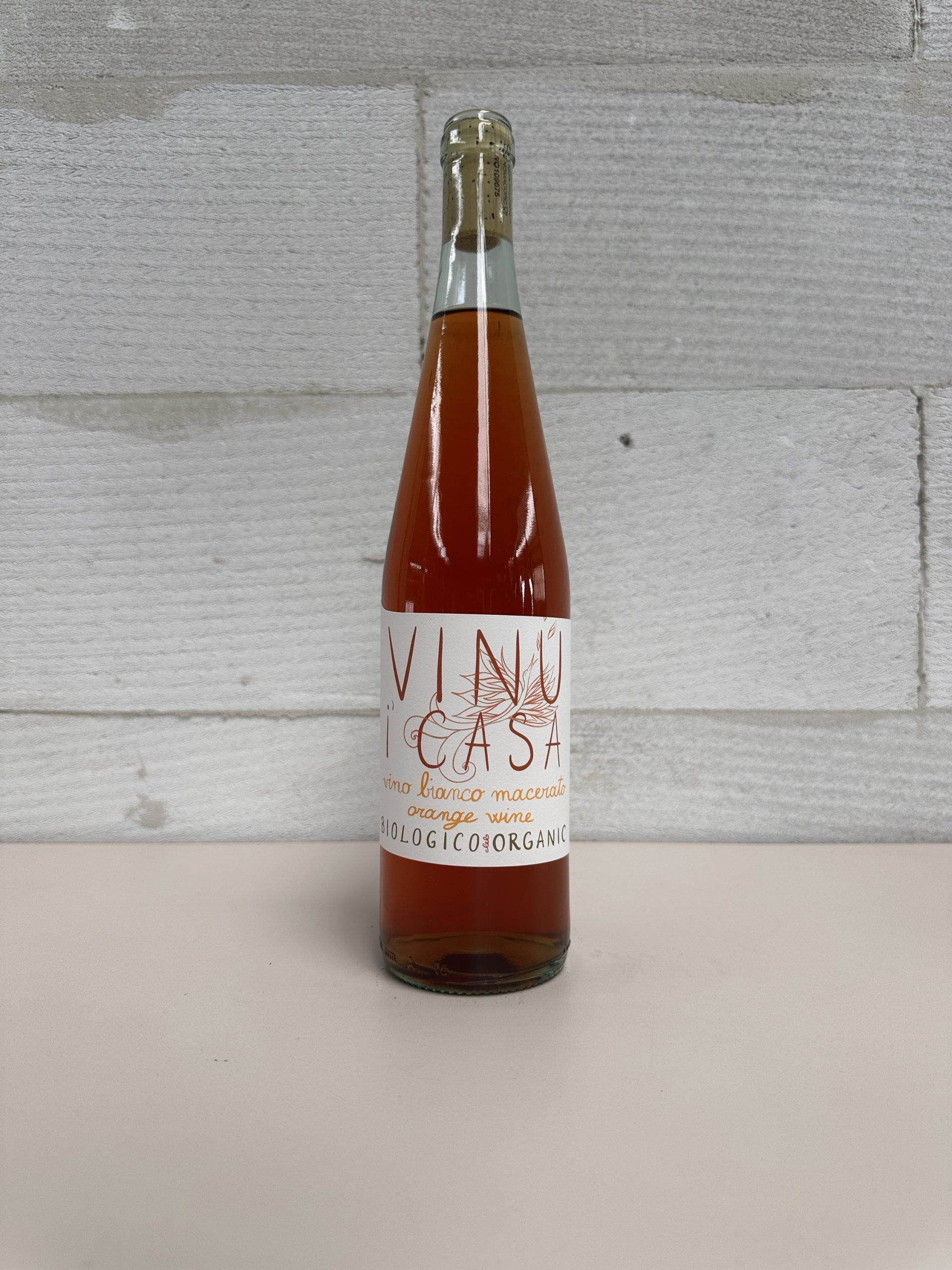
At Nasciri, the winemaking philosophy is based on minimal intervention, allowing the vineyard’s natural expression to shine. Fermentation occurs spontaneously with native yeasts, and aside from minimal sulfur when necessary, no additives are used. “Wine should be alive, evolving, and honest,” says Domenico.
The winery uses only stainless steel tanks to preserve the purity and freshness of the grapes. “We avoid barrels and amphoras to maintain the natural flavor without wood influences.” Temperature-controlled fermentation ensures stability, especially for whites and rosés.
Lees stirring enhances complexity and smooths out bitterness, especially in reds, which can develop vegetal or harsh notes from the summer heat. Aging takes at least nine months in steel tanks, followed by six months in bottle before release. Wine is racked during a waning moon for natural clarification, with minimal sulfur added at key stages. The result is a collection of expressive, balanced wines that are deeply connected to their terroir.