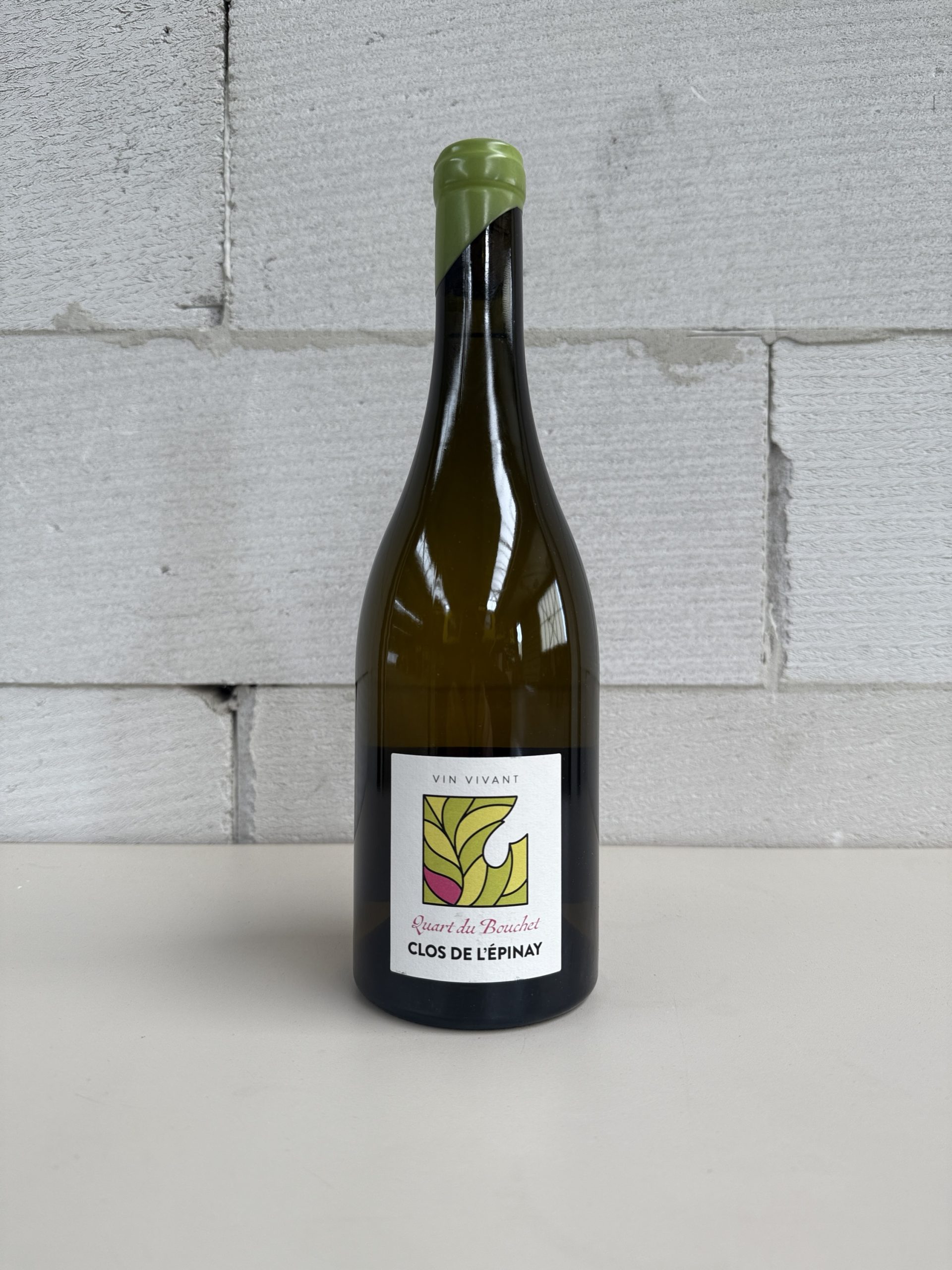
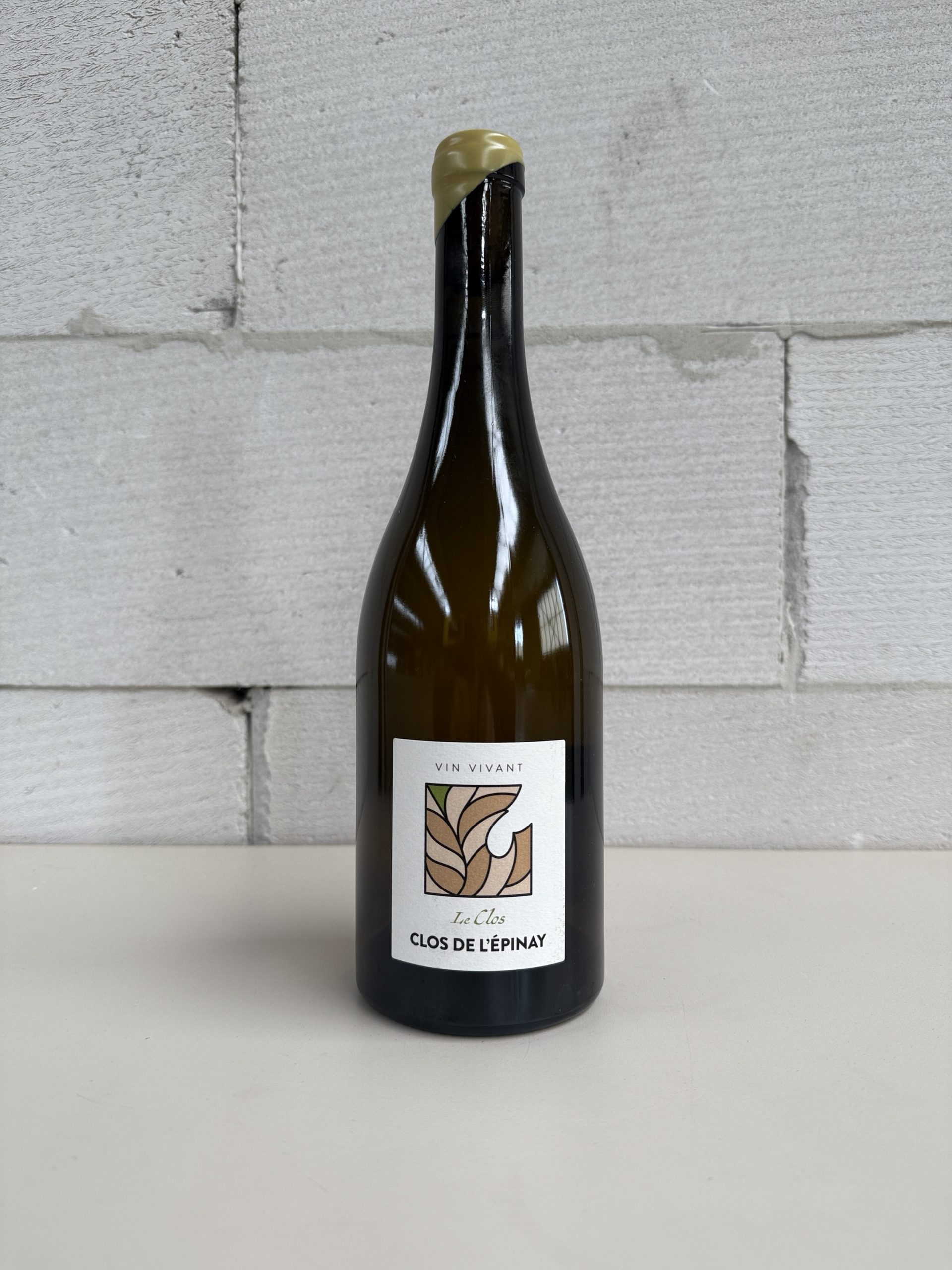
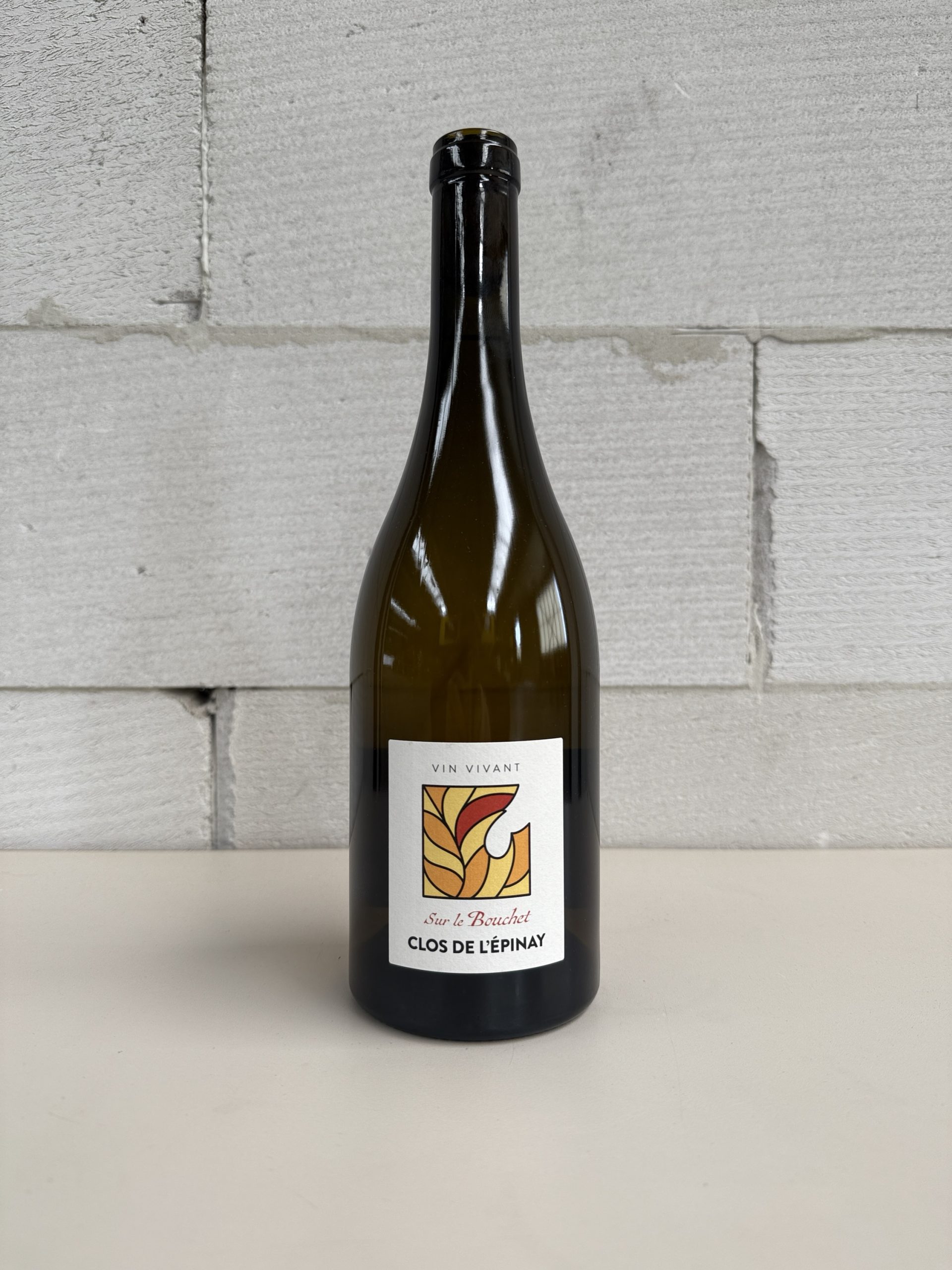
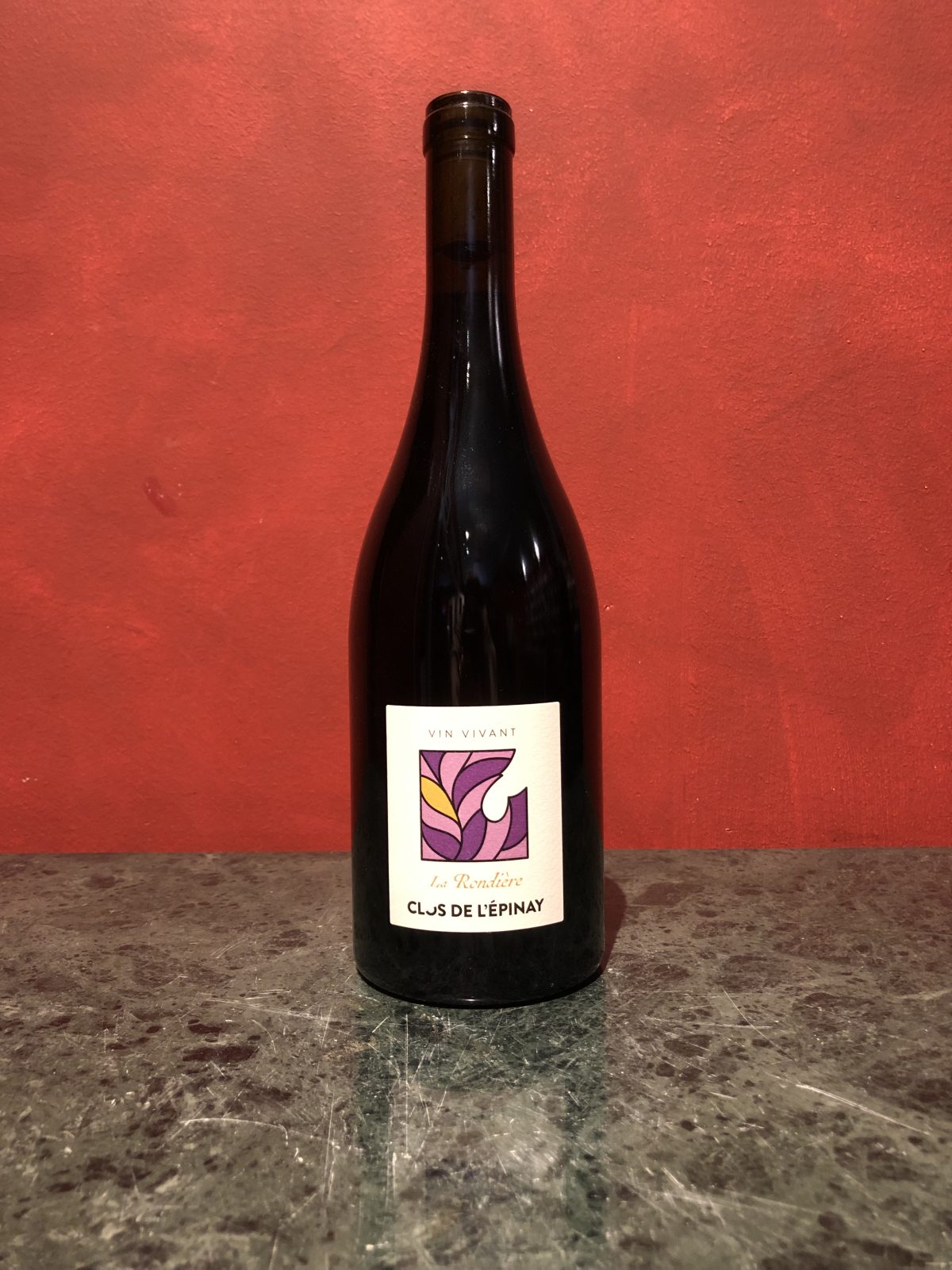
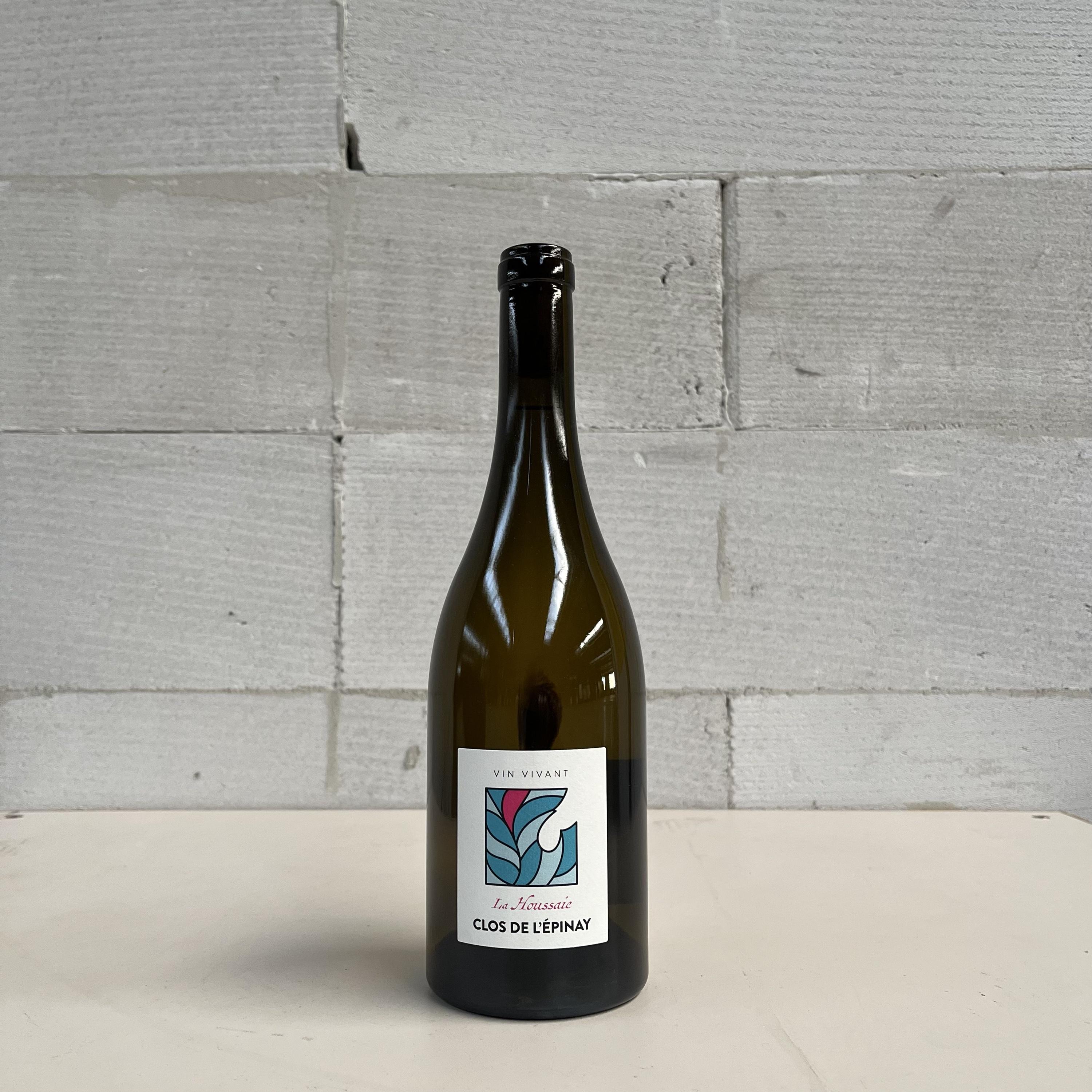
The Domaine is situated on the first slope of Vouvray, surrounded by the rolling hills and micro-valleys of the Loire Valley. Although still in its early stages under new leadership, the estate boasts 300 years of history and is perched on clay-limestone soils rich in flint—ideal for crafting fine Chenin Blanc. Previously focused on bulk wine production, the estate has made impressive strides in a short time, particularly considering the ambitious scale while maintaining a strong commitment to quality. Led by Antoine and Henri Bruneau, it emphasizes natural winemaking, environmental restoration, and a genuine expression of its terroir. We are excited to follow its evolution, as it has already shown great promise
Journey to Winemaking
Antoine’s foray into winemaking came later in life. “The truth is, I had no clue,” he says with a laugh. “Especially when it comes to high-end natural wines—it’s all about flair, experience, and taste. That’s where Henri comes in. He’s young and talented, and I learn from him every day.” Their partnership thrives on complementary strengths: Henri handles the technical craft of winemaking, while Antoine leverages his corporate background to manage the estate’s administrative, logistical, and strategic needs. “Henri is happy to leave all the admin to me! That’s the only thing I know how to do after years in corporate life,” Antoine jokes.
Their arrival at Clos de L’Epinay was a blend of serendipity and intention. Antoine, a devoted fan of Chenin Blanc, knew he wanted to work in the Loire Valley. “It could have been Montlouis or Savennières,” he recalls, “but Vouvray it the opportunity that crossed our paths” In 2023, he and Henri took over the struggling estate, which had been neglected despite its exceptional terroir. “The previous owner made bulk wine—two euros per liter! The place had just fallen apart.” Despite the challenges, they recognized the potential in the land, nestled among historic neighbors like Domaine Huet, Foreau, and François Chidaine. Clos de L’Epinay had everything needed to fulfill their vision: creating vibrant, terroir-driven natural wines worthy of the finest tables.
The Vineyard and Its Terroir
Clos de L’Epinay spans 18 hectares of Chenin Blanc and 1 hectare of red varieties (Grolleau, Gamay, Côt and Pinot Noir), situated on Vouvray’s ridgeline. The varied slope orientations create subtle microclimate differences, giving each parcel its own character while sharing the common thread of clay-limestone soils. Since taking over the estate, the team has conducted extensive research into the soil types, identifying 10 distinct terroirs. Each is vinified separately to ensure every cuvée fully reflects its origins. The first year, 2023, was one of intense learning and adaptation. They crafted 10 distinct wines, each requiring unique vinification processes. “Logistically, it was a nightmare,” Antoine admits, “but we wanted to capture the uniqueness of every parcel.” Each wine and plot is named after cadastral plots recorded on Napoleonic-era maps, a practice encouraged by the local syndicate to highlight historic lieux-dits and elevate the profile of the wines.
Clos de L’Epinay is certified organic, a legacy left by the previous owner. “The best thing he did” Antoine remarks with a touch of humor, “was converting to organic” Building on this foundation, they have embraced a range of ecological practices, including horse tilling for select plots. While they prefer using horses to reduce soil compaction, tractors are still employed when practicality dictates. “There simply aren’t enough horses—or people trained to work with them—to manage our 18 hectares,” Antoine acknowledges. The vineyard is also harvested entirely by hand. “A living wine begins with a living environment” Antoine explains. In their first year, they planted 350 meters of hedgerows and 65 native fruit trees to support biodiversity. Additionally, they began replanting Orbois, a rare grape variety that had nearly gone extinct in Vouvray.
The 2023 harvest was a baptism by fire. A challenging season brought the threat of rot, requiring rigorous sorting to maintain the quality of the grapes. “We sorted three times,” Antoine recalls. “First in the field, then in the crates, and finally on the sorting table. By the end, we were left with just 40% of the original harvest.” Despite these obstacles, their enthusiasm remains undiminished. If anything, the experience has only strengthened their resolve to produce wines of exceptional character. “The terroirs here can make great wines,” Antoine asserts. “We tasted the former winemaker’s bulk wine and thought, ‘How can you taste the terroir through that?’ But we knew it was there, waiting to be unlocked.”
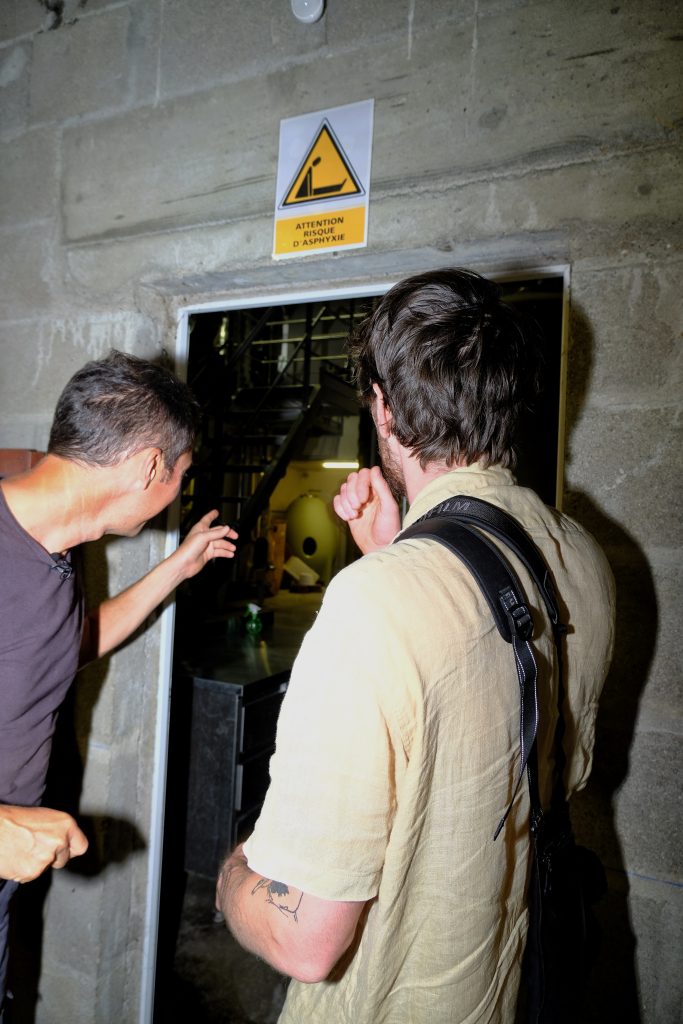
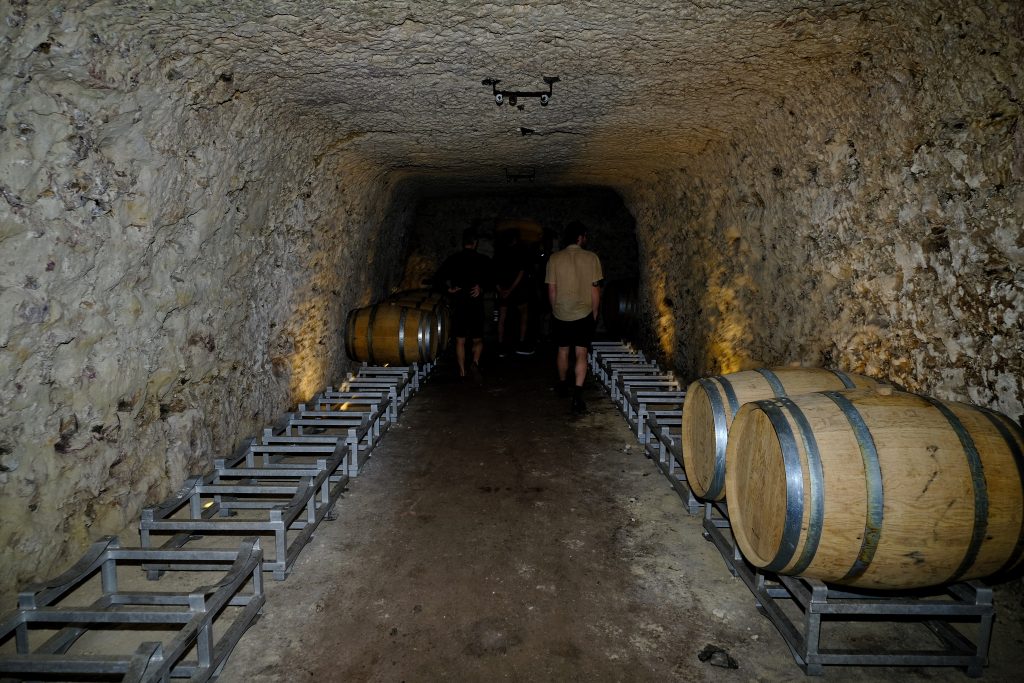
The winemaking process at Clos de L’Epinay is shaped by the unique terroir and vintage of each wine. Some wines mature in oak barrels within the estate’s limestone caves, while others rest in concrete vats. As Antoine puts it, “The wines decide. Our role is to guide them on their journey, ensuring the vessels nurture their life without overshadowing the wine’s natural character.” The caves themselves tell a story of rebirth. Once inhabited by commercial yeast, they underwent a painstaking sterilization process to become the perfect sanctuary for Clos de L’Epinay’s wines. “Yeast cells can survive for millennia,” Antoine notes. “We had to eliminate every single one, meticulously disinfecting each screw, bolt, and railing before introducing our own natural yeasts.”
In the cellar, Henri continues to innovate, experimenting with different pressing methods. This is especially important for Chenin, as much of its flavor and texture is derived from the skin. Clos de L’Epinay adopts a practical and flexible approach to winemaking, embracing technology when it offers clear benefits. For example, producing sparkling wine once required workers to spend hours turning bottles by hand—a labor-intensive process that often led to wrist injuries, without any substantial advantage over using machines. Today, machines handle up to 500 bottles at once, turning them a quarter turn every few hours. After a few days, the sediment collects in the neck, ready for disgorgement. For this final step, they hire a specialist who brings in the necessary equipment, as they do not own the disgorging machinery themselves.
Looking Ahead
As Clos de L’Epinay celebrates its second year under new ownership, the future is full of promise. The 2023 vintage, the first entirely crafted under the guidance of Antoine and Henri, is set to highlight the estate’s true potential. “Our one-year anniversary was August 1, 2024. It’s incredible how much we’ve achieved in just 12 months,” Antoine reflects. With a philosophy grounded in a deep respect for nature, an unwavering commitment to quality, and a spirit of bold innovation, Clos de L’Epinay is primed to become a beacon of both Vouvray’s rich traditions and its modern aspirations.