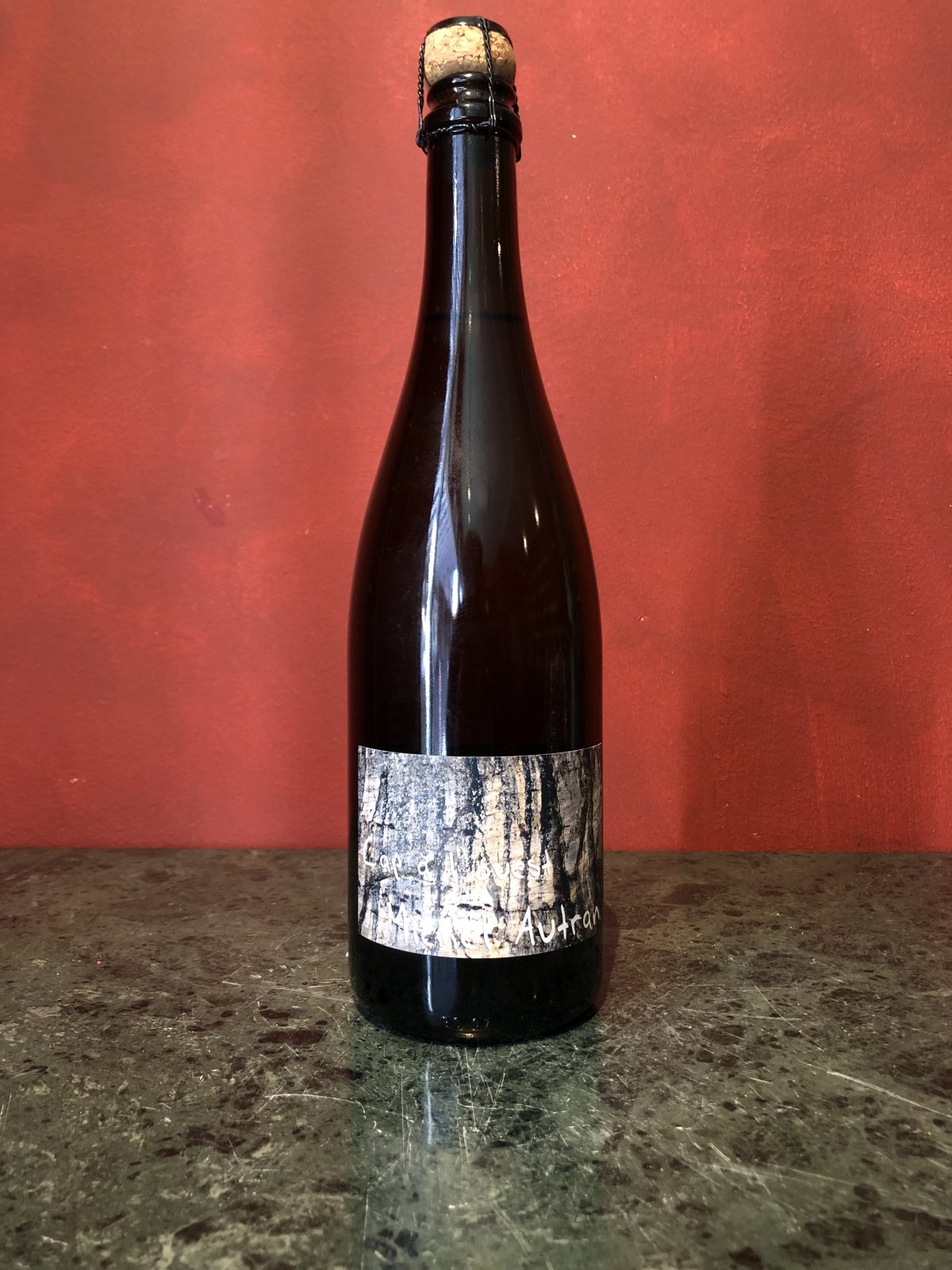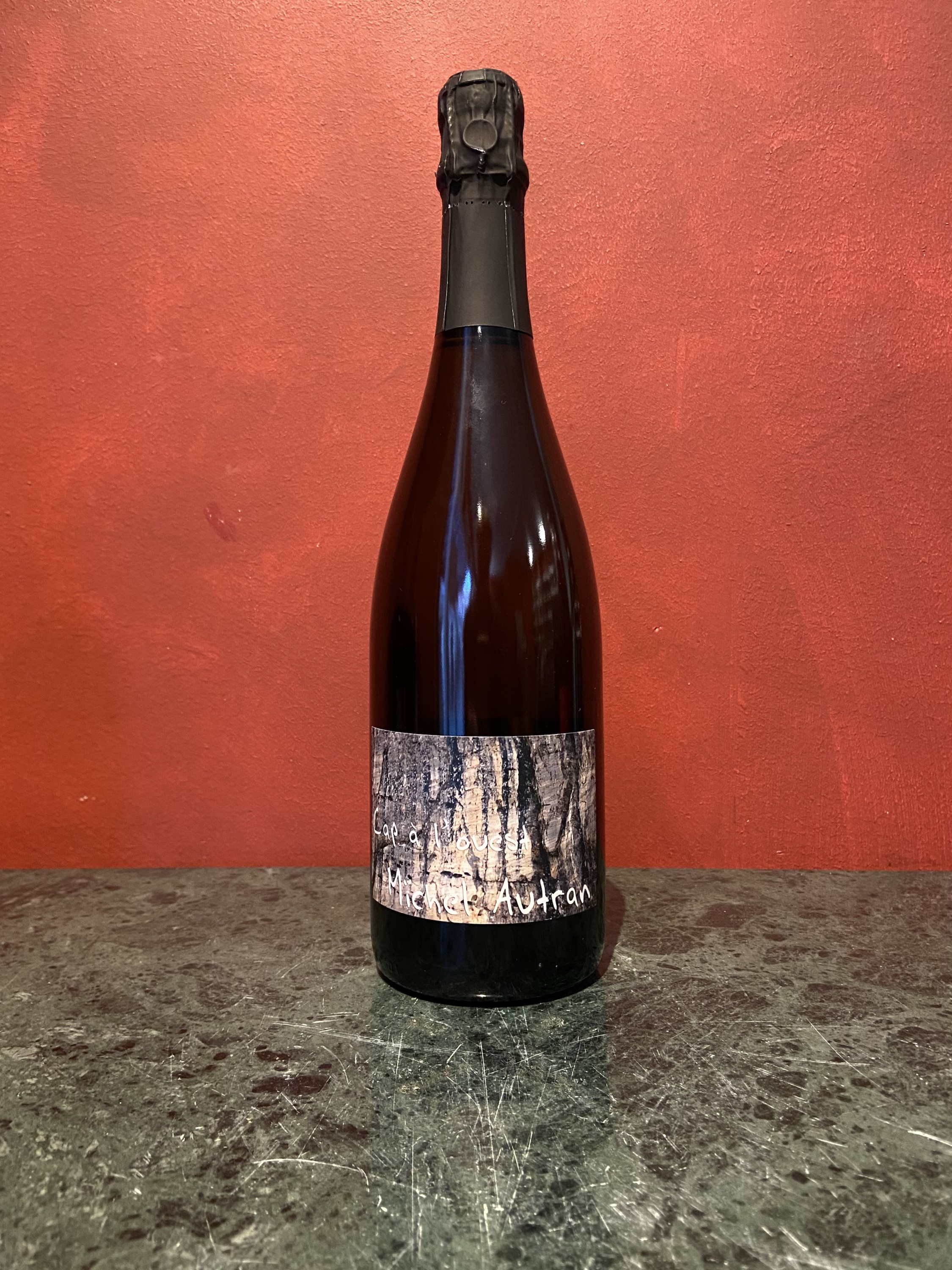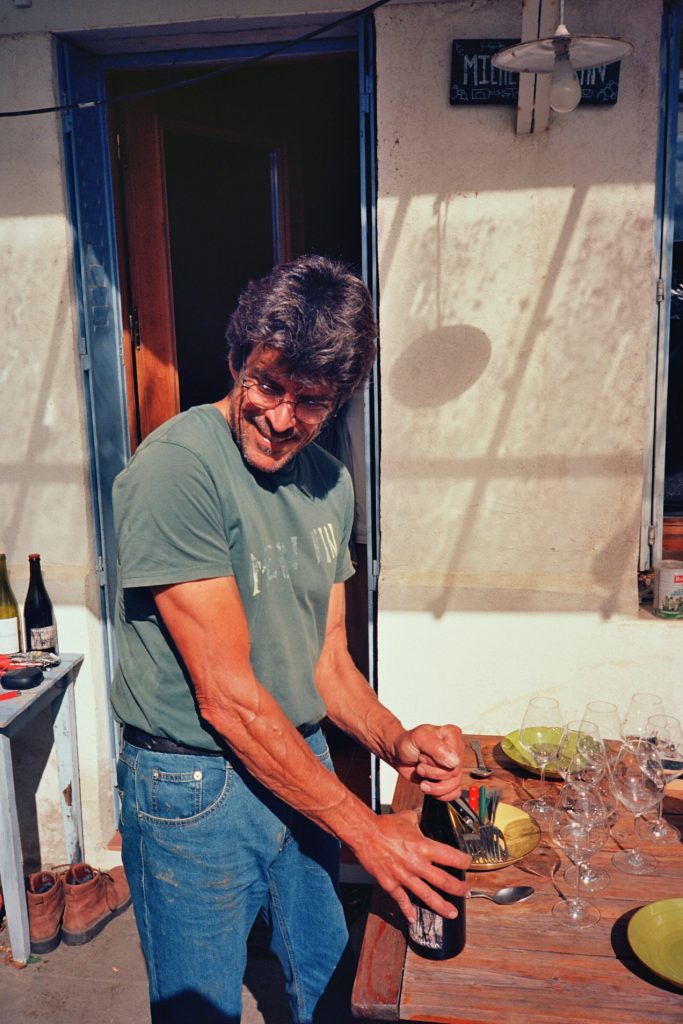
For us, Michel embodies the philosophy we strive to showcase in our portfolio: positioned at an intersection in the natural wine movement that embraces the liberty for wines to express themselves more naturally, while remaining steadfast in a commitment to precision and uncompromising standards of taste. Like us, Michel believes that traditional regional practices are not to be discarded but rather reimagined—honoring the past while welcoming innovation and new forms of expression.
Journey to winemaking
On his journey to becoming a winemaker, Michel immersed himself in the Chenin Blanc variety, learning from experts like François Pinon, Vincent Carême, Damien Delecheneau, and many others. Michel focuses exclusively on dry wines, a rarity within the Vouvray appellation, which he chose to leave after the 2017 vintage. His pursuit of quality and dryness leads him to harvest only perfectly ripe grapes, unaffected by botrytis. To achieve this, he picks his plots in multiple batches and meticulously sorts the grapes before pressing.

A ‘paysan’ connection to the land
Michel Autran identifies as a paysan—a term that traditionally referred to peasants but, for him, symbolizes a deeply intentional, symbiotic relationship with nature. His winemaking ethos centers on low-impact viticulture and minimal intervention, allowing the natural character of the vines to shine. Working closely with the land, Michel adopts biodynamic practices and even employs horse plowing on his steepest plots, underscoring his commitment to preserving the delicate balance of the ecosystem. His bond with the land extends beyond a profession and can be described as a way of life.
Dedicated to maintaining an intimate scale, Michel’s Domaine spans 3.8 hectares—a size he deliberately keeps small to personally oversee each aspect of the winemaking. This allows him to foster a close relationship with his terroir, a dedication we believe translates to an exceptional quality in his wines.
Farming philosophy: balancing solitude & intimate collaboration
In many of our favorite wine regions, we observe a collaborative spirit where winemakers share ideas, creating a virtuous cycle that elevates the region as a whole. These exchanges foster individuality, where subtle differences and stylistic choices are seen as complementary, enriching the region’s expression. At the same time, there’s a shared responsibility to balance innovation with tradition, resulting in wines that reflect not only the personality of the winemaker but also the character of the vineyards. This dynamic was something we were eager to explore with Michel.
Michel emphasizes the importance of balancing shared perspectives with solitude to deepen his connection to the land. While sharing insights on the technical aspects of winemaking can be helpful, he believes it’s essential to develop confidence in one’s own perceptions: “It’s about sharing those perceptions you have about the grapes—whether they’re ripe or not, how they taste to you versus to me. I think those are very personal perceptions. Life’s perceptions are personal too, and we can share them. But I think there’s a need for a certain solitude around those moments as well, because otherwise, I might feel overly influenced or like I’m just copying what someone else has told me.”
Michel further explains that while collaboration is valuable, true connection and understanding in these exchanges happen only with a few trusted individuals: “It’s about being in a space where you can feel secure, because you’re in a zone of doubt. There’s a kind of intimacy in these exchanges. It means you need to feel reassured that what you share won’t be used against you or misunderstood, even if it’s not intentional.”
Farming philosophy: remaining alive & inspired
Michel’s philosophy extends beyond the vineyard and cellar; he sees winemaking as a dynamic, evolving process that requires a deep sensitivity to the natural world. Within the natural wine movement, concepts like vibrancy and liveliness are integral to the vocabulary, but Michel acknowledges the ambiguity surrounding these terms and delves deeper into their significance for him. “It’s true,” he explained, “that wines that are filtered, low in yeast, sulfited, and all that—when we taste them, they can feel very lifeless. For me, the goal is to make wines that remain alive—though the word ‘alive’ is complicated because it’s hard to define exactly what that means.”
For Michel, the notion of “alive” goes beyond what’s in the glass; it also means staying adaptable and avoiding rigid methods. “We remain alive in our work as long as we’re open to adjusting to the situation at hand. Soils and vines react differently to changing climates, so we don’t follow a strict formula. The only routine we might stick to is pruning, but even then, it’s about understanding the vine’s history to shape its future. If you comprehend what the vine has experienced—whether it was stressed or ready to produce more—you can guide it forward.”
In his commitment to keeping a sense of meaning in his winemaking, Michel draws inspiration from sources beyond wine. “For me, other influences—whether musical, literary, or otherwise—are also significant. They hold as much meaning for me as the sensory experiences of wine in shaping my approach. What I experience in cinema, at concerts, contemporary dance, and other art forms plays a crucial role,” he shared. This approach underscores his belief that artistic expression across fields resonates with the same care and intention he brings to his vineyards. These diverse influences help him keep his work both vibrant and adaptable in the vineyard.
Conducting harvest
Michel Autran conducts his harvests with a close-knit team, and his meticulous approach can extend well into October, as was the case in 2024. He focuses on harvesting perfectly ripe, botrytis-free grapes in multiple passes, followed by at least two years of aging in barrels and another two years in bottles.
For Michel, the harvest is one of the most critical stages in winemaking, a culmination of all the effort put into the vineyard throughout the year. He acknowledges that while terroir has a legacy, the harvest presents a key moment for winemakers to make expressive choices. “With the vineyard heritage we have and the winemakers we have, most of us are working with similar soils and planted vines. It’s not something you can easily change in less than fifteen or twenty years to completely restructure a vineyard. And yet, wines express themselves differently depending on the winemaker. I think the timing of the harvest is a significant factor in this expression—choosing whether to pick or not.” To illustrate his point, he draws a musical analogy: “I used to say that the soil is like a musical score, the climate is like the instruments, and the winemaker is the conductor who puts on the concert. The concert is the final result. So, all the rehearsal work is like all the work you do throughout the year in the vineyard, and your final concert is your harvest, and then it’s done.”
Michel’s Approach to Ripeness
Through recent warmer vintages like 2016 and 2020, Michel’s approach to ripeness, particularly phenolic ripeness with Chenin Blanc, has evolved. In these warmer years, high light exposure can degrade acids, raising concerns about low acidity. However, Michel discovered a balance through phenolics: “There’s a balance that forms with the phenolic part, which is quite important for Chenin.” He notes that these tannins, while initially lean, integrate well with aging. “Since 2016, I’ve been focusing much more on the phenolic ripeness when deciding when to harvest Chenin.”
Traditionally, Loire wines are known for their vibrant acidity, but in warmer vintages like 2020, heat and water scarcity shifted the balance, leading to wines where phenolic ripeness played a more prominent role. The result is a style where phenolic bitterness, not acidity, defines the wine’s structure. “I almost take more pleasure in them because they offer less acidity but more phenolic bitterness. Not vegetal bitterness, but tannic bitterness that doesn’t dry out the mouth.” This shift has deepened his understanding of how Chenin can express itself under more extreme conditions, resulting in wines with distinct texture and complexity.
In contrast, the 2021 harvest benefited from more balanced weather, allowing for an earlier harvest and grapes that Michel referred to as “the perfect expression of ripeness.” He characterized the year as “a very typical Loire vintage—cool and wet, with some frost in the spring and a slow start.” The vines shed some clusters early, resulting in less fruit. He noted, “People talk a lot about frost, but we also experienced cluster abortion, where the vine doesn’t fully develop its clusters. This occurs because floral initiation happens the year before and completes during bud break. When bud break is slow and temperatures are cool—around 12-13°C in April—the vine doesn’t grow much, causing the clusters to shrivel.” Michel observed, “We saw a lot of that in 2021, at least in my vineyard—more losses from that than from frost.” The season also faced challenges from mildew and botrytis at harvest time. Yet, he concluded, “the 2021 wines turned out well, so maybe we weren’t as under-ripe as it felt at the time.”

Working in the cellar
Much like Richard Leroy, Michel embraces a patient approach, favoring long élevage. He ages his Chenin Blanc for a minimum of two years in barrels and stainless steel, under ideal conditions in his underground caves carved from chalky limestone. His cellar is meticulously organized and spotless, reflecting his unpretentious yet deeply knowledgeable commitment to terroir-driven winemaking. Michel often insists on his wines spending an additional two years in bottles before reaching the shelves, allowing them to develop complexity and depth.
However, Michel is not dogmatic in his approach; he listens to what each wine needs. For example, the 2021 vintage of Les Enfers Tranquilles was ready for release before the 2020 vintage. He elaborated, “It’s really a long-aging vintage. I stopped selling it because it needed more time. It’s tasting good now, but a year ago it was still a bit tight. It has had two years of élevage—one year in barrels, one year in tanks, and now two years in bottle. It’s in a good place now for drinking.” This flexibility and careful attention to detail exemplify his dedication to supplying wines that reflect his craft, allowing consumers the choice to drink them now or to keep them for many years to come.